

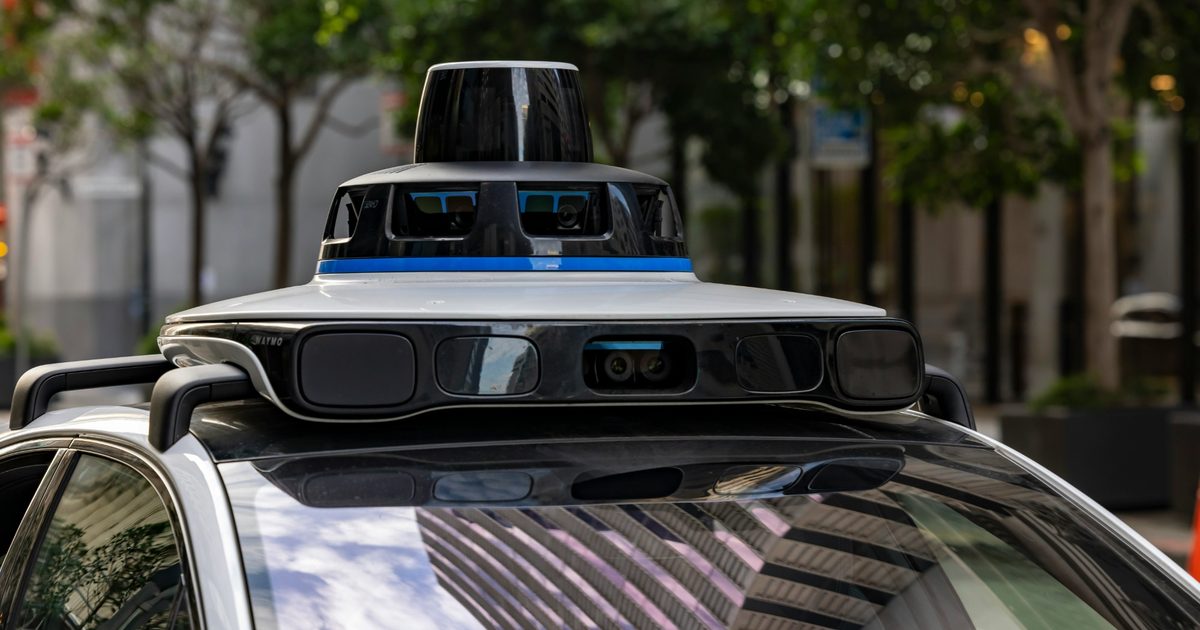
Self-driving cars have made impressive strides in navigating everyday traffic, but they still struggle with one of the most critical aspects of driving: handling unexpected and dangerous situations. Stories of autonomous vehicles hesitating at emergency scenes or making erratic swerves have fueled public skepticism and highlighted a fundamental flaw in how many current systems are designed. While they excel at mimicking human driving patterns learned from vast datasets, they often fail when forced to improvise—and more importantly, they cannot clearly explain their decisions.
A team at Seoul National University, led by professor Jun Won Choi from the Department of Electrical and Computer Engineering, believes they have found a way to tackle this core problem. Their new AI model, called SafeDrive, introduces a novel decision-making framework that forces the car to consider multiple possible actions and evaluate each one for safety before committing. The research was recently selected as a highlight paper at CVPR 2026, an honor that goes to only about 3% of all submissions. This recognition places SafeDrive among the most impactful contributions to computer vision and autonomous driving research this year.
How SafeDrive Changes Decision-Making
Most end-to-end autonomous driving systems work by observing millions of miles of human driving data and then directly mapping sensor inputs to steering, braking, and acceleration commands. This method works well in predictable environments, but it essentially treats driving as a pattern-matching problem. When an unforeseen event occurs—like a pedestrian stepping out from behind a truck or an emergency vehicle weaving through traffic—the neural network may produce an output that is statistically common yet unsafe in that specific context. Furthermore, these black-box systems offer no insight into why they chose a particular action, making it nearly impossible for engineers to diagnose failures or for regulators to certify safety.
Choi's team designed SafeDrive with a completely different philosophy. Instead of generating a single driving trajectory, SafeDrive first produces several plausible paths using a trajectory generator. Each path is then combined with the car's real-time perception data—such as LIDAR point clouds, camera images, and radar readings—to form a holistic scene understanding. A dedicated safety scoring module, which the researchers call Fine-grained Safety Reasoning, evaluates each candidate path by assessing factors like collision risk, comfort, adherence to traffic rules, and interaction with other road users. The path with the highest safety score is selected and executed. This multi-path evaluation allows the system to avoid dangerous decisions that might slip through a greedy single-output model.
The key innovation lies in how safety is quantified. Rather than relying on a simple binary safe/unsafe label, Fine-grained Safety Reasoning uses a continuous scoring function that considers spatial and temporal margins. For example, a path that steers left to avoid a stationary object might be scored down if it brings the car too close to oncoming traffic, while a path that brakes smoothly would receive a higher score. The system can also weigh different criteria based on context: in a school zone, reducing speed might be prioritized over maintaining progress. This granular evaluation not only improves safety but also provides a transparent audit trail—engineers can inspect the scores of each path to understand exactly why the car acted as it did.
Addressing Safety and Explainability
SafeDrive directly confronts the two biggest weaknesses of current end-to-end systems: safety in edge cases and explainability. By generating multiple trajectories and explicitly reasoning about their safety, the model avoids the trap of committing to a single risky maneuver. This is particularly valuable in scenarios where the optimal action is counterintuitive—for example, when swerving is more dangerous than braking hard. Traditional imitation-learning models might swerve because that's what a human driver often does, but SafeDrive can evaluate that swerve and reject it if the sensor data indicates it would lead to a collision.
Explainability is another major benefit. Regulatory bodies and insurance companies increasingly demand that autonomous systems provide justifications for their actions. With SafeDrive, every decision comes with a documented comparison of alternatives and their safety scores. This makes it easier to debug failures, refine the model, and build public trust. Choi's team emphasizes that transparency is not just an afterthought but a core design principle of the architecture.
The technical details of Fine-grained Safety Reasoning involve a combination of attention mechanisms and cost functions that operate over a shared representation of the driving scene. The model learns to weigh different sensor modalities appropriately—for instance, relying more on cameras for lane markings and LIDAR for obstacle detection. The trajectory generator is also conditioned on the safety scores, creating a feedback loop that encourages the generation of safer paths over time. During training, the model is exposed to a diverse set of challenging driving clips, including near-miss events, construction zones, and adverse weather conditions, ensuring it can generalize beyond the typical highway cruising scenarios.
Significance for South Korea's Autonomous Driving Ambitions
This work carries particular weight for South Korea's technology ecosystem. As reported by outlets covering the research, SafeDrive is the first Korean-made end-to-end autonomous driving paper to earn a highlight spot at CVPR, one of the world's most prestigious AI and computer vision conferences. The achievement signals that South Korean research labs are no longer just following the lead of US and Chinese players but are developing original, internationally competitive solutions. The country has ambitious goals for commercializing autonomous vehicles by the late 2020s, and breakthroughs like SafeDrive provide the foundational technology needed to reach them.
The model has already moved beyond the research stage. SafeDrive has been integrated into EAD, a reference autonomous driving platform backed by Korea's Ministry of Trade, Industry and Energy. This platform serves as a testbed for collaboration between academia and industry. Choi's team is currently working with domestic autonomous driving companies to deploy SafeDrive in real vehicles for on-road testing. The immediate focus is on validating the safety scoring system in complex urban environments, where unpredictable pedestrian behavior, variable traffic patterns, and narrow streets create a demanding test case.
Looking ahead, the researchers plan to scale up the model by training on larger and more diverse datasets, including data collected from their own fleet of test vehicles. They are also exploring ways to compress the inference pipeline so that SafeDrive can run efficiently on embedded hardware, a necessary step for commercialization. The goal is to eventually offer a complete software stack that automakers can license and customize for their own platforms.
In the broader context of the autonomous driving industry, SafeDrive represents a shift from purely data-driven methods to a hybrid approach that combines learned behaviors with explicit reasoning. Many companies, from Waymo to Tesla, are grappling with the same tension between end-to-end neural networks and modular systems that separate perception, prediction, and planning. SafeDrive offers a middle ground: it retains the flexibility of end-to-end learning but injects a safety reasoning layer that can be independently validated and improved. This could accelerate regulatory approval by giving safety inspectors a clear window into the vehicle's decision process.
The implications extend beyond passenger cars. Delivery robots, autonomous trucks, and even drones could benefit from the same multi-trajectory evaluation framework. Any system that must make real-time decisions in uncertain environments, while under scrutiny for safety, can adopt the Fine-grained Safety Reasoning approach. As edge cases continue to challenge autonomous systems, models that think before they act—and explain why—will become increasingly indispensable.
Source:Digital Trends News