

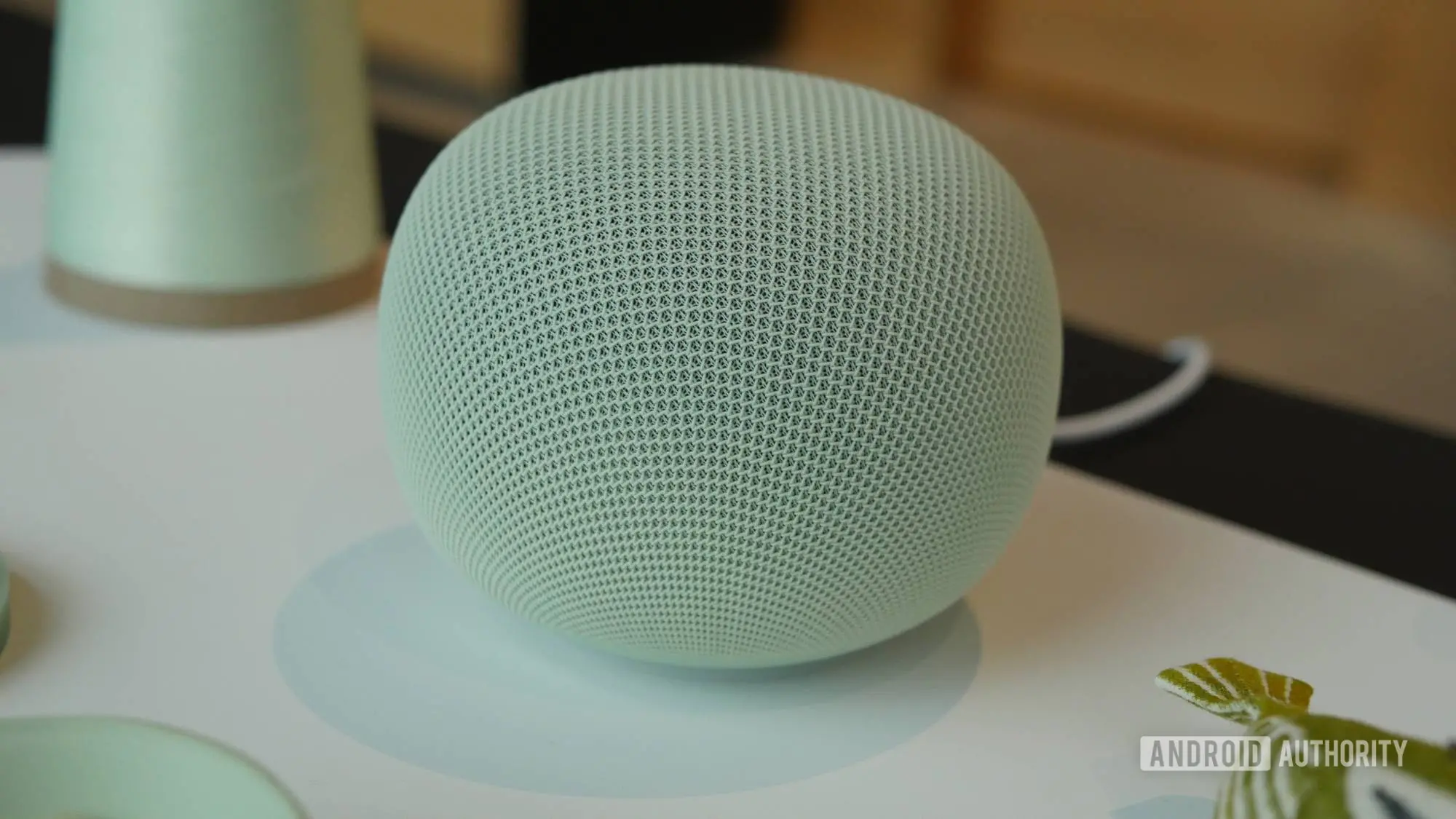
A Reddit user has managed to purchase Google’s upcoming Home Speaker from a Walmart store prior to its scheduled launch, providing an early unboxing and hands-on experience that reveals both pleasant surprises and a glaring hardware concern. The most significant finding involves the power cable, which appears to be permanently attached to the speaker itself, sparking discussions about repairability and user convenience.
Early Acquisition and Unboxing
The user, who frequently travels for work, spotted the new Google Home Speaker sitting on a shelf at a Walmart location. A store associate, unaware of the product’s pre-release status, sold it to the customer. The Redditor then shared an unboxing video and detailed first impressions on the platform, offering the tech community a rare early look at Google’s latest smart speaker.
In the video, the speaker’s packaging resembles that of previous Nest audio devices, with minimal waste and a clean design. Inside, the speaker itself is accompanied by a power brick and a short printed guide. However, the power cable linking the speaker to the brick immediately drew attention because it cannot be detached from the device.
The Permanent Power Cable: A Design Nightmare
According to the buyer, the Google Home Speaker comes with a non-removable USB-C cable approximately five feet long. The cable connects to a separate 30W power brick that can be replaced, but the end attached to the speaker is fixed. “Unfortunately, the biggest thing that stood out to me was the irremovable power cable,” the Redditor wrote, calling it a “nightmare for repairability.”
This design choice appears to mirror that of some earlier smart speakers, such as the original Google Home, which also had a non-detachable cable. However, the company’s more recent Nest Audio allowed users to disconnect the power cord from the speaker via a standard barrel jack. Many reviewers and consumers praised that improvement, making the regression in the new model puzzling.
The permanently attached cable raises several practical concerns. If the cable gets damaged—by a pet, furniture, or accidental tugging—the entire speaker may need to be replaced or undergo complicated internal disassembly. Repairability is a growing concern among consumers and regulators. The European Union has pushed for standardized, replaceable parts in electronics, and companies like Apple have faced scrutiny for soldered components. Google’s decision to affix the cable undermines efforts to reduce e-waste and extend product lifespan.
Moreover, the fixed cable limits placement flexibility. Users cannot replace a short cable with a longer one, nor can they easily route the cable through tight spaces. The five-foot length may be insufficient for some setups, forcing users to rely on extension cords or power strips. For a device meant to sit on a shelf or countertop, such a constraint feels unnecessary.
Positive Sound Quality and Audio Performance
Despite the hardware disappointment, the Redditor’s impressions of the speaker’s audio capabilities are largely positive. The user, who claims experience with professional audio equipment, notes that the sound quality exceeded initial expectations. “The midrange is well-defined, and low frequencies are punchy for a speaker this size,” they wrote. They recommend slightly boosting the treble in the equalizer settings for clearer highs.
The speaker reportedly gets quite loud, easily filling a living room. The user plans to make it their primary speaker for everyday listening—a strong endorsement. If these impressions hold, the Google Home Speaker could deliver competitive sound for its price bracket, potentially challenging the Amazon Echo Studio and Apple HomePod mini.
However, sound quality alone may not compensate for the cable issue. Consumers often prioritize convenience and long-term durability when investing in smart home devices. A removable cable would have added no extra cost and would have significantly improved the user experience.
Touch Controls and Setup Experience
The speaker’s touch controls are another highlight. According to the buyer, hidden capacitive buttons beneath the fabric mesh allow volume adjustments and play/pause functions. The lights embedded underneath are barely visible when not in use, giving the device a clean, minimalist look. During operation, they illuminate subtly to indicate which area to touch.
Setup proved straightforward. Using an existing Google Home account, the user configured the speaker in under ten minutes. The Google Home app guided them through Wi-Fi connection, account linking, and voice assistant setup. This ease of setup aligns with Google’s track record for smart speakers.
Build Quality Concerns: Loose Fabric Mesh
Not every aspect of the design impressed. The user noted that the fabric mesh covering the speaker feels somewhat loose compared to the rigid internal body. They expressed concern about potential tearing or stretching over time, especially if the speaker is moved frequently. While this could be an isolated flaw with that specific unit, it raises questions about quality control and long-term durability.
The fabric mesh is a common aesthetic choice for smart speakers, offering a soft, home-friendly appearance. However, a loose fit can lead to an uneven surface or gaps where dust may accumulate. Google has previously used taut fabric on the Nest Audio, so any loosening would be a regression.
Comparison with Competitors and Market Context
Google’s Home Speaker enters a saturated smart speaker market dominated by Amazon’s Echo lineup and Apple’s HomePod series. Amazon offers the Echo Dot, Echo Studio, and Echo Show devices—all with detachable power cables. Apple’s HomePod mini also uses a removable cable. By reverting to a fixed cable, Google risks alienating consumers who value repairability and flexibility.
Right-to-repair advocacy groups have increasingly pressured tech companies to design products that can be disassembled and fixed without special tools. Google itself has made strides in software support, promising long update cycles for its Pixel phones. Yet this hardware decision seems to contradict that philosophy.
Additionally, the speaker’s pricing and positioning remain unclear. If it sits at a similar price point to the Nest Audio, consumers may find it hard to justify choosing a model with a permanent cable when alternatives exist. However, if Google intends the Home Speaker as a budget option, some compromises may be accepted.
Historical Context: Google’s Smart Speaker Evolution
Google’s first smart speaker, Google Home, launched in 2016 with a non-removable power cable. The following year, Google Home Mini followed suit. In 2019, the Nest Audio debuted with a detachable cable, marking an improvement. Now, with the new Home Speaker, Google appears to have taken a step backward. It is unclear why the company made this choice—possibly to reduce manufacturing costs, simplify internal design, or maintain a specific aesthetic.
The speaker also marks a branding shift. Google initially used the “Google Home” name, then moved to “Nest” for its smart home products. The return to “Google Home Speaker” suggests a consolidation of branding, possibly to align with the larger Google Home ecosystem, which includes displays like the Nest Hub.
Implications for Consumers and the Environment
For the average user, a fixed power cable may not be a dealbreaker until it breaks. But e-waste is a growing environmental concern. According to the United Nations, global e-waste reached 53.6 million metric tons in 2019, with only 17.4% collected and recycled. Small electronics like smart speakers contribute to this waste stream. By making products less repairable, manufacturers encourage premature replacement.
European regulations, such as the Ecodesign Directive, are already pushing for longer product lifetimes and repairable designs. The EU has mandated that smartphones and tablets must have replaceable batteries by 2027. While smart speakers are not yet in the crosshairs, the trend suggests that consumers and regulators will increasingly demand sustainable design.
Google has made some environmental commitments, including using recycled materials in some products. The Google Home Speaker, according to the unboxing, uses at least some recyclable packaging. But the cable issue undermines those efforts.
What This Means for Early Adopters
The Reddit user’s experience is just one data point, but it raises flags for potential buyers. Those who prioritize repairability may choose to wait for official reviews or consider alternative speakers. Others may accept the trade-off for potentially better sound quality and seamless Google integration.
The user also mentioned that the speaker’s internal construction might allow for repair, but that would involve opening the device, which is not user-friendly. Google may offer a cable replacement service, but that would likely require shipping the speaker to a service center, causing inconvenience.
In the meantime, the early unboxing has generated significant discussion on Reddit and other forums. Some commenters expressed disappointment, while others shrugged off the cable as a minor issue. The debate highlights the diverse priorities of smart speaker users.
As Google prepares for a formal launch, it remains to be seen if the company will address these concerns, perhaps through a revised design or added accessories. However, for now, the Google Home Speaker’s most talked-about feature is the one users cannot unplug.
Source:Android Authority News