

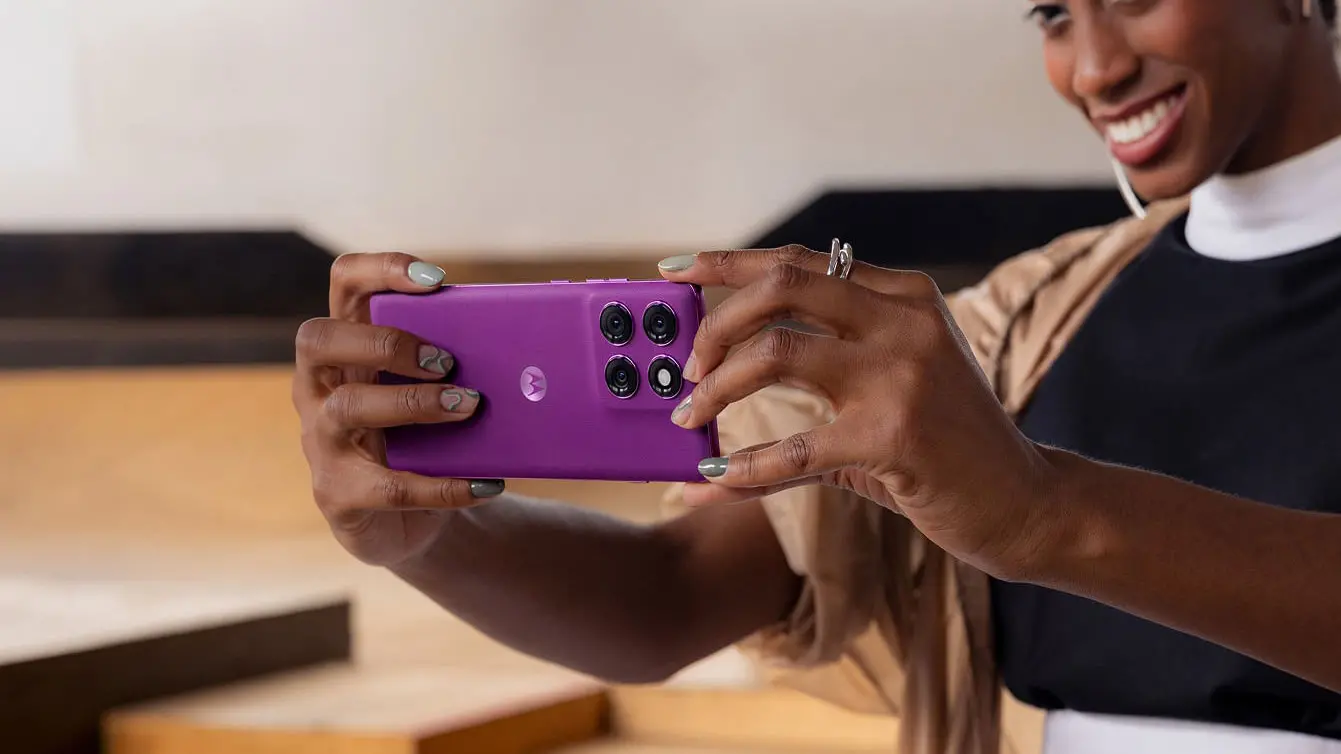
Motorola has taken another step forward in its Android 17 beta program, expanding availability to the Moto Edge 60 Pro in India. Early testers are now sharing a wealth of details about the upcoming operating system update, which appears to introduce several major features and refinements. Among the most notable additions are a Dynamic Island-style Live Updates implementation, a brand-new AI assistant named Qira, and a significant overhaul of the device's haptic feedback system.
According to Reddit user athulrox47, who received the beta on their Moto Edge 60 Pro, the update brings a long list of changes. These include a new Dynamic Island feature that mirrors Apple's approach, new quick tiles with the ability to resize them, updated icons for Wi-Fi, cellular network, and battery, and a redesigned volume interface. The settings menu has also been revamped, and there are new customization options for the lock screen. Perhaps most intriguingly, the beta introduces a new Moto AI assistant called Qira, which appears to be the company's answer to Google Assistant or Samsung's Bixby. Other changes include improved cloud connectivity via Smart Connect, a new notification management system, and stronger haptics that users describe as noticeably more precise and satisfying.
The official changelog provided by Motorola for the beta is surprisingly sparse given the update's size—approximately 5GB. However, community members like Fanboy_Moto on X (formerly Twitter) have provided a much more detailed breakdown. According to their analysis, the home screen icons are now tinted to match the system's color palette, the status bar features new icons, and there is a "Classic Control Centre" option that mimics the Pixel UI's combined notification panel and Quick Settings interface. This requires a second swipe down to reveal the full panel, a design choice that some users may prefer over the traditional split approach.
Live Updates Evolve into a Dynamic Island
One of the most eye-catching features in the Android 17 beta is the evolution of Motorola's Live Updates system. Previously, Live Updates followed a Pixel-like style, appearing on the left side of the status bar. Now, they are integrated around the camera cutout—a design reminiscent of Apple's Dynamic Island. This change allows for more prominent notifications for music playback, timers, navigation, and other ongoing activities. Fanboy_Moto shared a video demonstrating the feature in action, showing how apps minimize to the bottom of the screen rather than directly into the cutout, with the Live Update then appearing independently around the camera. While the animation logic may not be perfect, the functionality is clearly underway.
The Live Updates appear to support major apps, including those for music, timers, and potentially third-party applications through standard Android APIs. This move aligns Motorola with a growing trend among Android manufacturers—including Realme, Xiaomi, and vivo—to offer Dynamic Island-like experiences. It also hints at Google's own efforts to bring a similar feature to stock Android in future versions.
Qira: Motorola's New AI Assistant
The introduction of Qira represents a significant strategic shift for Motorola. While the company has previously relied on Google Assistant as the default AI, Qira appears to be a custom-built assistant designed to integrate deeply with Motorola's hardware and software. Beta testers report that Qira can handle tasks such as setting reminders, controlling smart home devices, and providing contextual information. The assistant is accessed via a new icon in the app drawer search bar, though interestingly, Fanboy_Moto notes that the MotoAI search bar option has been removed from the HelloUI app drawer in this build, suggesting that Qira may be replacing the previous AI-in-search functionality. It remains to be seen whether Qira will coexist with Google Assistant or eventually become the primary assistant on Motorola devices.
Haptics and User Interface Overhaul
One of the most universally praised changes in the beta is the improvement to haptic feedback. Users describe the vibrations as stronger, more distinct, and better aligned with user interactions. This is a subtle but important enhancement that can significantly affect the overall feel of the device. Motorola seems to have invested in new haptic motors or refined the software algorithms to deliver a more premium tactile experience.
The interface receives numerous tweaks beyond the Live Updates and control center. Lock screen customizations now include options for clock styles, color accents, and wallpaper effects—though testers note the absence of a depth effect, which they hope will come in a future update. The volume slider has been redesigned to resemble the Pixel UI's thin, pill-shaped slider, a cleaner look compared to the previous blocky style. In the HelloUI app drawer, folders now use a 3×3 grid instead of the older 2×2 layout, making better use of space. The background blur has been improved, and the app titles have been removed, giving the drawer a cleaner appearance. Additionally, a dedicated "Create folder" button has been added, simplifying organization.
Additional Features and Future Outlook
Fanboy_Moto also spotted a Landscape Stereo feature, which likely improves audio balance when using the device horizontally. The beta retains features introduced in Android 16, such as the battery health submenu and Enhanced HDR brightness (a carryover from Android 16 QPR 2). This suggests that Motorola is not only adding new features but also maintaining compatibility with Google's ongoing Android developments.
The Android 17 beta is currently limited to shortlisted users who registered through Motorola's community forums. As testing continues, a broader regional rollout is expected, followed by expansion to additional Motorola models. Early reports indicate that the build is stable enough for daily use, which bodes well for a relatively smooth transition to a stable release. With these new features, Motorola is positioning itself to compete more aggressively in the mid-range and premium segments, offering experiences that were previously exclusive to Pixel or flagship devices. Users can expect more details to emerge as the beta progresses and as Motorola likely issues additional updates based on feedback.
Source:Android Authority News