

The Art of Gentle Manipulation
A robot can stride across a stage with perfect balance, yet that same machine might shatter a wine glass the moment it tries to pour. The difference between walking and grasping lies in the complexity of control. Walking requires managing the center of mass and adjusting to uneven surfaces, but grasping demands real-time feedback about force, slip, and object geometry. For years, roboticists have focused on locomotion, and humanoid robots now navigate stairs, run, and even perform backflips. However, the hands—those intricate tools that humans use for thousands of daily interactions—have lagged behind. 1X Technologies aims to close that gap with its latest innovation: tendon-driven hands for the NEO humanoid robot, designed specifically for delicate domestic tasks.
What Makes a Hand Useful at Home
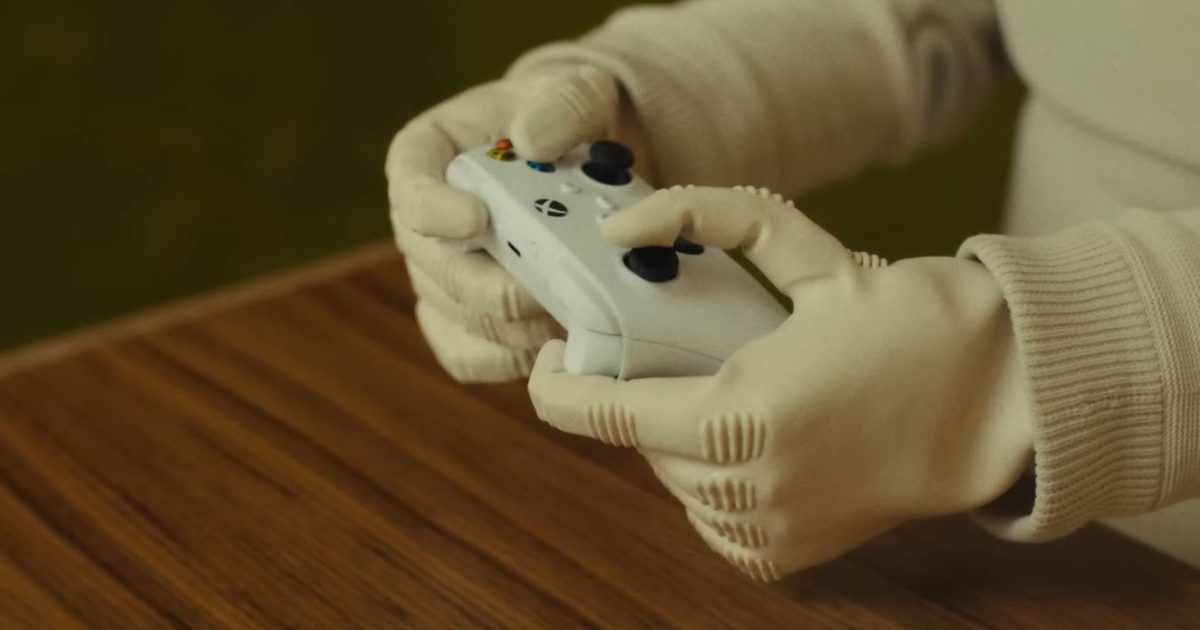
The NEO hand boasts 25 degrees of freedom, with 22 distributed across the fingers and palm and three more in the wrist. For comparison, the human hand has roughly 27 degrees of freedom, so the robot hand approaches biological complexity. Each joint is actuated by tendons—cables that mimic the way human muscles and tendons control finger movement. This tendon-driven architecture allows the fingers to yield when pushed, a property known as backdrivability. In traditional industrial robots, joints are stiff and powerful, which is fine for lifting heavy parts but disastrous for handling a wet glass or a ripe tomato. Backdrivable joints give way under excessive force, preventing the robot from crushing objects or damaging itself. The tactile skin covering the fingers and palm measures both pressure and lateral shear. When an object starts to slip, the skin detects the change and the control system adjusts the grip force in milliseconds, far faster than a human could react.
Why Kitchen Chores Expose Robotic Weaknesses
Household environments are chaotic. Objects are not precisely positioned; they appear in different locations, with varying shapes, weights, and surface properties. A factory robot might pick up the same component thousands of times, always from the same fixture. At home, a robot must handle a ceramic mug, a stainless steel pot, a wet sponge, and a fragile wine glass—all in the same afternoon. The margin for error is thin. Too little force and the object slips; too much and it breaks. Force control is as important as dexterity. NEO’s tendon system enables the robot to apply just enough pressure to hold an object without deforming it. The fingers can also bend beyond typical human ranges, allowing the hand to wrap around irregular shapes like a corkscrew or a whisk. This flexibility is crucial for tasks that require a firm but gentle grasp, such as picking up a stack of dishes or folding a shirt.
Other Robotics Approaches to Grasping
Several other companies and research labs have developed robotic hands, but most fall into two categories: rigid industrial grippers and soft pneumatic actuators. Rigid grippers are fast and strong but lack adaptability. Soft hands can conform to objects but often lack the precision to manipulate small items. Tendon-driven hands represent a middle ground—they provide both strength and compliance, because the cables can be tensioned for power or allowed to slack for gentleness. This is not an entirely new concept. Early work on the Utah/MIT Dextrous Hand in the 1980s pioneered tendon-driven designs, but the motors and controllers of that era were too large and slow for practical use. Modern advancements in miniaturized motors, sensors, and real-time control have revived the approach. 1X is not the only player. Shadow Robot Company’s Dexterous Hand and the Robotiq line of grippers offer similar capabilities, but NEO is designed as an integrated humanoid, with the hands as part of a whole-body system for navigating and interacting with human spaces.
Beyond the Fingers: Sensors and Safety
The tactile skin on NEO’s hands is a key enabler. It uses capacitive or resistive technology to measure pressure distribution, similar to how a touchscreen detects your finger. But it also measures shear—the force that causes an object to slip sideways. This dual measurement allows the robot to anticipate failure. If the glass begins to tilt, the hand can adjust its grip before the object tips. The hand is rated IP68, meaning it is dust-tight and can be submerged in water beyond one meter. This is essential for a robot that will work near sinks, handle wet dishes, or clean up spills. Additionally, the materials used are food-safe, because the robot might handle utensils or cookware. These practical details show that 1X is thinking about real-world deployment, not just academic demonstrations. The motors and electronics are sealed, and the tendon cables are routed through protective sheaths to prevent wear.
The Role of Software in Domestic Success
Hardware alone cannot solve the grasping problem. Software must identify the object, determine its orientation, choose a grip strategy, and execute the movement in a cluttered, dynamic environment. 1X uses neural network-based perception systems trained on thousands of household items. The robot must recognize that a coffee mug with a handle requires a different grip than a stemware glass. It must also deal with occlusion—when other objects block the view. The control loop for grasping runs at hundreds of hertz, constantly updating the commanded forces based on sensor feedback. But even the best software can fail if the object is wet, slippery, or oddly shaped. The company is betting that its combination of high-fidelity sensing and backdrivable actuation will give NEO the robustness needed for unsupervised operation. However, as the article notes, demos showing the robot playing a drum or picking up a single object are not proof of readiness. The real test will be autonomous, sequential tasks: clearing a table, washing dishes, or folding laundry from start to finish without human intervention.
Historical Context: From Industrial Arms to Home Helpers
The dream of a household robot has been around since the 1960s, but early attempts were limited by computing power and sensor technology. The first industrial robot arms, like the Unimate, were installed in factories for heavy lifting. Over the decades, robots became more precise and versatile, but they remained confined to structured environments. The emergence of mobile manipulators—robots that can move and use arms—opened new possibilities. Companies like Willow Garage’s PR2 and later, the Fetch and Freight robots, demonstrated research in autonomous manipulation. These platforms had grippers that could pick up objects, but they struggled with fragile items. The PR2 could open doors and fetch drinks, but it often relied on suction or parallel-jaw grippers that provided a secure hold but little finesse. The SRI International’s (now SRI Robotics) work on compliant grippers and the development of the DARPA Robotics Challenge pushed the field forward. Now, humanoids like NEO, Tesla Optimus, and Figure 01 are targeting the consumer market. NEO’s hands represent a significant step, because they prioritize the subtlety of touch over sheer force.
Challenges Remaining for Home Humanoids
Despite impressive hardware, several obstacles remain. Power consumption: humanoid robots need a lot of energy to walk and manipulate simultaneously. NEO is designed for efficiency, but battery life for a full day of chores is unproven. Cost: each hand contains dozens of sensors, motors, and cables. Manufacturing them at scale is expensive. 1X has not disclosed pricing, but early humanoids can cost hundreds of thousands of dollars. Consistency: the real world is infinitely variable. A robot that performs well in a test kitchen may fail when faced with a sticky stove or a loose cabinet door. Safety: robots that can crush a glass can also harm a person. Backdrivability reduces the risk, but full safety certification is still needed. Social acceptance: people must trust a machine with their fragile possessions and, potentially, with their children or pets. The tactile skin and gentle forces are designed to build that trust, but one major incident could set back the entire field.
What the Next Demonstrations Must Show
1X has released videos of NEO’s hands drumming on a table and picking up a plastic bottle. These clips highlight the speed and smoothness of the tendon-driven digits, but they are carefully staged. The true benchmark will be a sustained task in an actual home. For example, unloading a dishwasher—handling wet, slippery plates, cups, and silverware of different shapes, placing them into cabinets without dropping or breaking. Or folding a pile of laundry, which requires not only grasping but also flattening and aligning fabric. Another challenge is cooking: picking up a raw egg, cracking it, and separating the yolk from the white. These are tasks that humans find trivial but that push robotics to the limit. The company states that the software still needs to catch up. That is an honest admission. The next twelve months should reveal whether NEO can transition from a research prototype to a practical assistant. If the tendon hands can perform reliably in messy, real-world kitchens, they could mark a turning point—not just for 1X, but for the entire humanoid robot industry.
Ultimately, the success of home robots will be measured not by their ability to walk, but by their ability to handle a glass of water without spilling a drop. The hand is the primary interface between the robot and the human world, and 1X has designed one that prioritizes adaptability and safety. But hardware is only half the equation; robust perception and planning are the other half. The coming years will determine whether tendon-driven hands are the key that unlocks the domestic robotics market, or just another step on a long road. Until then, every successful pickup is a promise, and every dropped object is a reminder of the gap between demonstration and reliability.
Source:Digital Trends News