

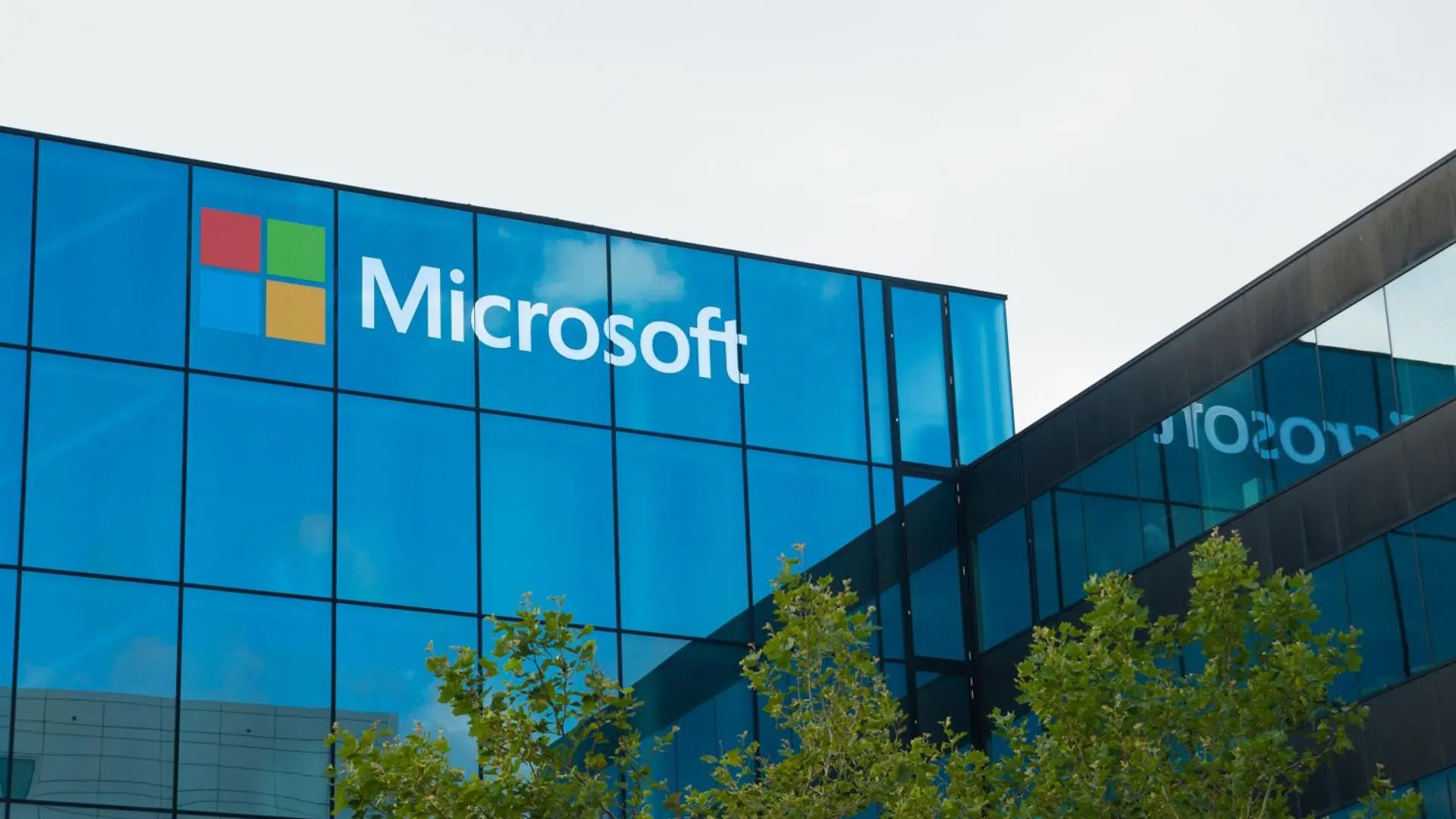
Bitcoin held steady near $64,000 on Thursday as a sharp rally in technology stocks, led by Microsoft's better-than-expected earnings, helped lift risk appetite across markets. The world's largest cryptocurrency traded at roughly $63,900 in early U.S. hours, slightly lower on the day but still supported by a broader recovery in AI-linked equities.
Microsoft's cloud unit grew at its fastest pace in four years, while the company also maintained its spending guidance, exactly the signal investors had been waiting for after Alphabet's caution earlier in the season. That sent Microsoft shares up as much as 15%, putting the software giant on track for its biggest one-day gain since the height of the pandemic rally. The surge lifted the Nasdaq Composite by more than 2% and helped reverse a recent slide in AI infrastructure names.
Bitcoin's correlation with tech and AI momentum was again on display, with the cryptocurrency tracing the moves in chips and cloud software rather than reacting to any crypto-specific news. The digital asset remains range-bound, with traders watching the macro backdrop, especially moves in the dollar and Treasury yields.
Apple slips despite earnings beat
Apple reported fiscal third-quarter earnings that topped Wall Street expectations, but shares fell 2.5% in after-hours trading. The company posted earnings per share of $2.02, versus the $1.89 consensus, and revenue of $109.4 billion, above the expected $108.7 billion. Gross margins came in at 50.1%, ahead of company guidance of around 48%.
Investors noted that part of the beat appeared to be driven by tariff refunds, which raised questions about the sustainability of the margin improvement. The stock had been a safe haven in recent weeks, rising 15% month-over-month and trading near a record high entering the report. The after-hours decline reflected some profit-taking after a strong run.
Amazon books massive Anthropic gain
Amazon, meanwhile, delivered a headline earnings number that included a major one-time boost. The company reported second-quarter earnings per share of $5.75, far above the $1.81 consensus, thanks largely to a $53.4 billion gain on its investments in AI startup Anthropic. Revenue of $200.6 billion also topped forecasts, and Amazon's third-quarter revenue guidance came in ahead of Street expectations.
Shares jumped 6% in after-hours trading as investors focused on the underlying cloud and e-commerce strength. The Anthropic gain underscores the growing value of strategic AI stakes, which have become an increasingly important part of the earnings picture for big tech companies.
Coinbase slumped after disappointing Q2 results
Coinbase shares fell about 5% in after-hours trading Thursday after the crypto exchange reported second-quarter results that reflected a weak period for digital asset trading. Revenue came in at $1.22 billion, below the $1.29 billion consensus. Transaction revenue was $599 million, versus expectations of $628 million.
Subscription and services revenue totaled $555 million, missing estimates of $599 million. That line is closely watched because it includes USDC interest income, staking, custody, and other recurring businesses that can offset trading volatility. However, the quarter was difficult for crypto markets. Bitcoin fell roughly 14% during Q2, while ether lost about 25%, cutting trading volumes across spot platforms.
CEO Brian Armstrong pointed to market share gains, saying on X that Coinbase reached a record 10.3% share of global crypto trading volume in the quarter. CFO Alesia Haas acknowledged the challenging environment, noting industry spot volumes fell more than 20% and total crypto market capitalization declined by double digits. That contributed to a 14% quarter-over-quarter drop in total revenue.
Analysts have been focused on whether Coinbase can reduce its dependence on transaction fees. The company's newer initiatives, including derivatives, prediction markets, and its Base layer-2 network, are seen as key to that effort. The company also said it would discuss its outlook on a call with investors.
Strategy books $8.2 billion bitcoin loss
Strategy, the world's largest corporate bitcoin holder, reported a net loss of $8.2 billion for the second quarter after the cryptocurrency's price decline forced a massive writedown. The loss was driven almost entirely by an $8.32 billion unrealized markdown on its bitcoin holdings under fair-value accounting.
The company held 843,775 bitcoin as of July 26, up 25% from the start of the year. At current prices, that stash is worth roughly $54.8 billion, compared with an acquisition cost of $63.7 billion.
Despite the paper loss, shares barely moved, as investors had already anticipated the writedown. The focus was on the company's balance sheet and financing strategy. Strategy raised $17.06 billion through at-the-market stock offerings this year, repurchased $1.5 billion of convertible notes at an 8% discount, and expanded its U.S. dollar reserve to $3.75 billion. CFO Andrew Kang said that reserve is enough to cover more than 2.1 years of preferred dividend and interest payments.
The company also broke with its long-standing "buy and hold forever" approach by selling about $218.4 million worth of bitcoin under its new BTC Monetization Program to raise cash and fund preferred stock dividends. Executive Chairman Michael Saylor said the company is continuing to build its "Digital Credit" business despite the weaker price environment. Strategy also established a $1 billion share repurchase program for its common stock, although no buybacks have been executed yet.
Macro data and Fed watch
Economic data released Thursday offered a mixed picture. The core PCE price index for June rose just 0.1%, better than the 0.2% expected, and down from 0.3% in May. Year-over-year core PCE rose 3.3%, in line with forecasts and lower than May's 3.4%. The headline figure was seen as modestly positive for inflation, though the so-called "supercore" measure remained sticky at around 4%, according to 21Shares' head of macro.
Meantime, the preliminary estimate of annualized second-quarter GDP growth came in at just 1.5%, well below the 2.1% forecast. Initial jobless claims rose to 197,000 from 188,000 the previous week, still a very low level.
Treasury yields moved higher as investors digested the Fed's recent policy decision. The Federal Reserve held rates steady, but Chairman Kevin Warsh's post-meeting comments were seen as hawkish. Markets now assign roughly 60% odds of a 25 basis point hike at the September meeting, according to CME FedWatch. Longer-duration yields rose sharply, with the 30-year Treasury yield climbing above 5.24%, its highest since 2007. The real yield on the 30-year bond hit nearly 3%, a level not seen since 2008, creating potential headwinds for assets that offer no yield, such as gold and bitcoin.
The dollar weakened despite the hawkish Fed, with the Dollar Index falling to 100.67. A softer dollar is generally supportive for bitcoin, though rising real yields could offset that support.
Yen surges, raising intervention concerns
The yen surged sharply against the dollar Thursday, dropping more than two full figures in a matter of minutes. The move was so quick and large that it suggested intervention by Japanese authorities, who have been wary of excessive yen weakness.
The carry trade, in which investors borrow yen to buy dollar-denominated assets, can unwind violently when the yen strengthens. The most notable example in the crypto world came in August 2024, when a yen surge triggered a sharp selloff in bitcoin. Markets kept climbing Thursday despite the yen's jump, but the risk remains on traders' radar.
Crypto policy and legislation
Treasury Secretary Bessent took to X to urge passage of the Clarity Act, criticizing Senate Democrats for delaying a vote on the legislation. "The Senate needs to vote NOW on this landmark legislation … America will lead or America won't. It's not more complicated than that," he wrote. The bill has been a focal point for the crypto industry, though critics argue it lacks consumer protections.
Digital asset sector developments
Aave, the decentralized lending protocol, proposed exiting six blockchain networks where deposits have collapsed. The proposal covers leaving Sonic, Scroll, zkSync, Metis, Soneium, and Aptos, after their revenue fell below support costs. Deposits on Sonic fell 74% over six months to $7.6 million, while Scroll deposits dropped 86% to $2.2 million. Aave would freeze new activity and raise interest rates to help users wind down positions.
In the U.K., the Bank of England held its benchmark rate at 3.75%, with three dissenting members favoring a hike. The bank said inflation is expected to rise later in the year due to energy prices and the conflict in the Middle East.
On the institutional side, Intercontinental Exchange, parent of the New York Stock Exchange, said it expects "significant entities" to move on-chain by late 2026 or early 2027. CEO Jeffrey Sprecher said blockchain could enable round-the-clock settlement, collateral transfers, and lending, though it cannot replace the NYSE's matching engine. ICE partnered with OKX in March to distribute tokenized NYSE products.
Data center stocks rebounded sharply Thursday after CNBC reported that Leopold Aschenbrenner's Situational Awareness fund had sold all of its public investments in one enormous block trade. The fund, once a poster child for the AI trade, suffered steep losses. Its exit gave investors a green light to re-enter the beaten-down names. IREN, Hut 8, Cipher Mining, and Keel Infrastructure rose between 18% and 28%. Marathon Digital, Riot Platforms, CleanSpark, and Bitdeer also gained about 20%. Citadel purchased a large portion of Situational Awareness' public stock portfolio, the WSJ reported.
DRW founder Don Wilson continued to make the case for regulating perpetual futures as futures rather than swaps. He argued that regulation should follow economic substance and risk, not terminology. He pointed to historical examples where centrally cleared swaps were reclassified as futures without changing the product structure.
Bitcoin was last seen near $64,800, up about 0.8% from its level 24 hours earlier. The Nasdaq continued to climb, with Microsoft's gains leading the way, while Meta tumbled after its earnings miss. The day's action underscored how intertwined crypto remains with the broader risk asset complex.
Source:Coindesk News