

Miro CEO says AI must be built into workflows, not bolted on
Miro co-founder and chief executive Andrey Khusid has a blunt message for companies trying to become more productive with artificial intelligence: do not simply put AI on top of existing teams. Doing so, he argues, misses the deeper changes required to make the technology pay off.
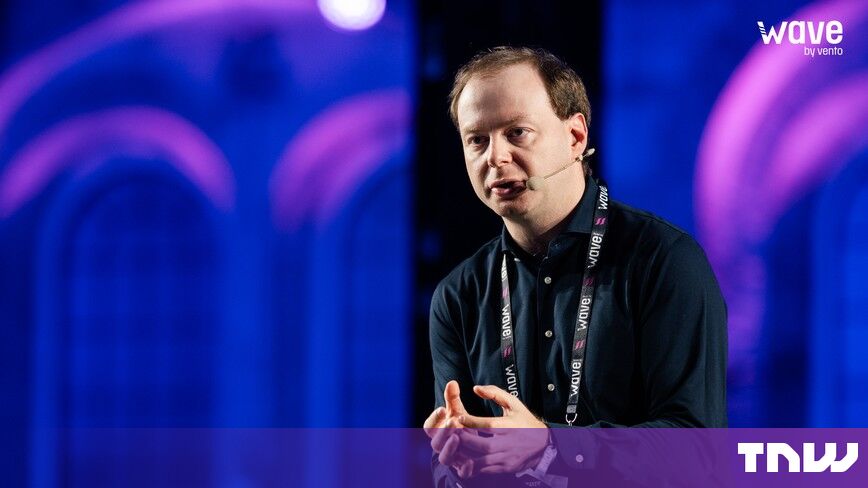
Speaking at an industry event in Turin on Wednesday, Khusid said the bigger challenge is to rethink work from first principles. Instead of adding AI tools to a traditional organizational chart, companies should design the workflow first and then add humans where they can contribute unique value. The session, titled 'Thinking Together in the Age of AI', focused on how teams can collaborate when AI becomes a constant presence in daily work.
His comments come at a moment of intense experimentation across the business world. Generative AI tools are now used routinely by individuals, but many companies are still struggling to translate those personal gains into organization-wide improvements. Khusid’s argument is that the gap is not mainly about model quality or access. It is about operating models, context, and accountability.
From personal productivity to company-wide redesign
Khusid said most people now use AI tools such as popular chatbots every day. The hard part is changing how whole companies operate. Personal productivity can rise while the organization remains slow, because work still moves through the same handoffs, approvals, meetings, and systems.
Companies run on complex workflows, he explained, in which work passes from one person to the next. Each person holds a different piece of context, and that context is rarely in one place. A designer may know the customer problem, an engineer may know the technical constraint, a product manager may know the business priority, and a support agent may know the real-world failure. AI cannot produce useful outcomes if it only sees fragments.
The first job, Khusid said, is to bring that context together so teams can work from a shared understanding. Only then can AI help with reasoning, drafting, prototyping, or decision support. Spreading AI across an existing operating model without that foundation will not give the gains people expect.
Miro, a collaborative visual workspace company, has tested this internally. In some areas, it set up parallel teams that did the same work with AI. The company built the process around those teams, learned what worked, and then scaled the model to the rest of the organization. That approach treats AI as a reason to redesign work, not as a feature to be layered onto old routines.
Miro’s next chapter and the Bending Spoons deal
Khusid’s appearance in Italy came a month after Milan-based Bending Spoons agreed to buy Miro for $1.355bn. Bending Spoons expects the deal to close in the fourth quarter, subject to approvals. Miro has about $600m in annual recurring revenue, according to Bending Spoons. The company was valued at $17.5bn in January 2022, when it raised $400m.
Khusid said he could not talk about the acquisition yet. He added that he was happy to be in Italy, describing it as possibly 'a new home for Miro'. The deal would mark a significant moment for a company that helped define the visual collaboration category. Miro’s whiteboard-style canvas became widely used for brainstorming, diagramming, sprint planning, and remote workshops, especially during the shift to distributed work.
Miro is 15 years old. Khusid said much of its code is already written with AI help, and the company has merged systems to give AI better context. That internal work reflects the same argument he made on stage: context is the raw material for useful AI, and fragmented systems limit what the technology can do.
He also said there has been little disruptive change in models lately. It is already clear what they can do over the next three years. So Miro builds around that rather than chasing every release. That is a notable position at a time when many companies feel pressure to adopt every new model and tool as soon as it appears.
More voices, more noise
AI gives quieter people a better way to share their ideas, Khusid said. They can quickly turn a prompt into a prototype that others can see. That can flatten hierarchies and bring forward perspectives that might otherwise be lost in meetings dominated by the loudest voices.
But it also creates far more content. If everyone throws AI output at their team, he warned, it overwhelms the team and slows everyone down. The result can be a flood of polished but low-value material that shifts the burden to colleagues. A widely cited management publication has warned about AI 'workslop' in companies, and the problem is easy to recognize: AI-generated drafts, summaries, and recommendations that look complete but lack ownership, judgment, or real context.
Khusid’s answer is accountability. Each person has to own every piece of what they bring. AI can help produce an idea, a design, or a plan, but a human must be responsible for its quality and consequences. Without that discipline, more AI-generated output can make an organization less effective, not more.
This point is especially important as agents become more capable. If AI agents can take actions, send messages, update systems, or make recommendations, the question of who owns the outcome becomes central. Khusid said humans and AI agents already work side by side in startups and large companies, but people stay accountable. Miro is building a system where people and agents work on the same canvas.
Intelligence at the centre
Organizations were built around people and hierarchy, with knowledge held by individuals, Khusid said. In new companies, a central intelligence knows almost everything that happens. People tap into it to decide and move fast. That central intelligence may combine documents, messages, code, customer data, and operational signals into a shared layer that both humans and AI can use.
Established companies have to rebuild their own intelligence infrastructure and rethink which roles they need, he said. That is not just a technology project. It touches reporting lines, decision rights, incentives, and the way knowledge is captured. Startups built this way move faster and decide better, which creates urgency for everyone else.
Adoption trends support the idea that many companies are still early. In July, UK figures showed businesses had tripled their AI adoption, though most still used it only lightly. Tripling from a small base can still mean that AI is confined to individual tasks rather than embedded in core workflows. The gap between experimentation and transformation remains wide.
Khusid’s vision of the workplace is not one where AI replaces teams. It is one where people and agents share a common workspace, with visual decision-making as the main way teams decide. Within three years, he expects Miro to rely more on voice and conversation, with visual decision-making as the main way teams decide. Voice can lower the friction of capturing context, while a visual canvas can help groups see relationships, trade-offs, and progress.
That combination could change how meetings work. Instead of long discussions that end with unclear notes, teams might speak naturally while AI agents organize the context on a shared canvas. Humans would still choose the direction and own the decisions, but the overhead of documenting, summarizing, and coordinating could shrink.
Founder lessons and the long road to traction
Khusid said Miro started in 2011 but only saw meaningful traction in 2016. That five-year gap is a reminder that category-defining companies often take years to find their moment. The company had to build a product, a market, and a habit of collaboration that many teams did not know they needed.
His advice to founders is to work on something they love and to listen to their own intuition. In a period when AI is reshaping every software category, that advice cuts against the urge to chase every trend. Khusid’s own message is consistent: understand the workflow deeply, bring context together, and design for accountability. AI can then be added where it genuinely helps, rather than placed on top of teams that were never built for it.