

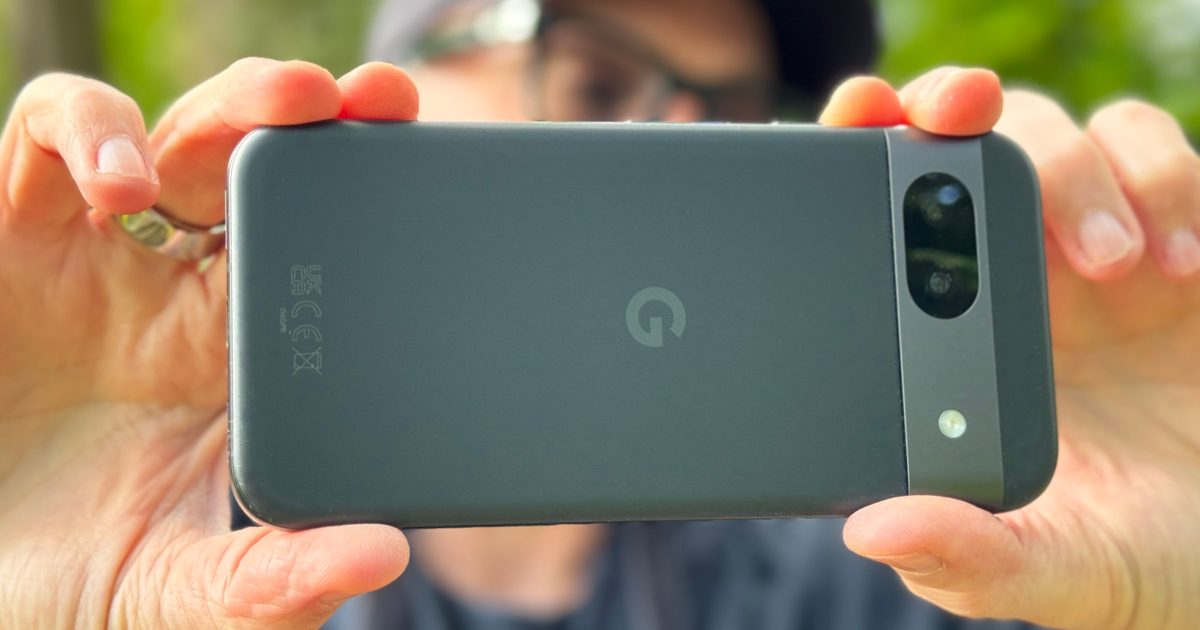
When Google released the Pixel 8a in 2024 as a $499 midrange device, its seven-year software support pledge seemed ambitious but abstract. Few consumers buying a midrange phone expected it to remain a priority years later. Yet in early 2025, the Pixel 8a received a Pixel Drop that added on-device AI features—including Recorder summaries powered by Gemini Nano—that had initially been exclusive to the premium Pixel 8 Pro. This update demonstrated that Google is willing to extend AI capabilities to older, cheaper hardware, even as Apple begins to impose stricter limits on which iPhones can run its latest artificial intelligence models.
Apple’s approach has created a fragmented experience within its own product lineup. The standard iPhone 17, launched at $799 and still sold as a current-generation device, cannot run Apple’s largest on-device AI model because it requires at least 12GB of RAM. The iPhone 17 has 8GB, pushing the feature to the iPhone Air, iPhone 17 Pro, and iPhone 17 Pro Max. This means a phone that is brand new and actively marketed is excluded from the company’s most advanced AI capabilities, creating a tiered experience that is not immediately obvious to customers. The technical justification—RAM requirements for running large language models locally—does not change the perception that Apple has introduced a new kind of premium segmentation.
The Evolution of AI Feature Distribution
Apple has historically handled software updates uniformly. A given iOS version brought the same features to all iPhones that could run it, with differences limited to hardware-driven capabilities like camera enhancements. The introduction of Apple Intelligence changed that calculus. Now, features like enhanced Siri expressiveness, systemwide dictation improvements, and advanced photo editing tools are gated not just by iOS version but by underlying hardware specs. The iPhone 15 Pro and all iPhone 16 models can run the broader AI suite, but the largest model—the one offering the most capable on-device processing—requires 12GB of RAM, effectively creating three tiers of AI eligibility within a single generation.
Google, by contrast, has shown more flexibility. When Gemini Nano debuted in December 2023 with the Pixel 8 Pro, the regular Pixel 8 and Pixel 8a were excluded. But by June 2024, Google expanded the feature to both cheaper phones through a developer option, enabling on-device Recorder summaries and Smart Reply in WhatsApp. This expansion was not seamless—the developer toggle made the feature feel experimental rather than fully supported—but it demonstrated that hardware boundaries can be moved. Google has since integrated these features more deeply into the user experience, and the Pixel 8a now runs AI tasks that were once reserved for Google’s flagship.
Redefining the Meaning of Software Support
Long-term software support has become a major selling point for smartphones. Google and Samsung now promise seven years of updates, matching Apple’s track record. But as AI becomes a larger part of the operating system, the value of that promise depends on whether new AI features actually arrive on older devices. A phone that still receives security patches but misses all new AI capabilities is functionally less useful over time. Google’s Pixel Drops have consistently added new features to older Pixels, including camera improvements, privacy tools, and now AI functions. The Pixel 4a, for example, received a feature drop in 2022 that added new photo editing tools. The Pixel 6 series got Live Translate. The Pixel 8a got Gemini Nano. This pattern suggests that Google views its older devices as part of an ongoing ecosystem, not as products to be forgotten.
Apple’s approach raises questions about what “software support” really means. An iPhone 17 can run iOS 27, but it cannot run the most advanced on-device AI model that ships with that iOS version. This distinction is hidden from customers who might assume that buying a new iPhone ensures access to all new features. The fine print of Apple Intelligence eligibility effectively creates a new hardware tier within the same product year, one based on RAM rather than processor generation. Historically, Apple segmented features by Pro versus non-Pro or by generation, but never by random access memory within the same generation.
Broader Industry Implications
Google is not alone in pursuing a more inclusive AI strategy. Samsung has also extended Galaxy AI features to older devices, such as the Galaxy S22 series, through One UI updates. Features like Circle to Search and AI photo editing have trickled down to midrange Galaxy A series phones within a year of their debut. The key difference is that Samsung and Google often rely on cloud-based processing for AI tasks, which reduces the need for the latest hardware. Apple’s emphasis on on-device processing, driven by privacy concerns, creates hard hardware limits that cloud-based solutions can circumvent. However, Apple could choose to run some AI models in the cloud to reach older devices, as it does with certain Siri queries today. The company’s decision to lock the largest model to 12GB of RAM suggests a strategic choice, not a technical inevitability.
For consumers, this means that the phone they buy today may not age as gracefully as its software update promise implies. A Pixel 8a purchased in 2024 is now running features that did not exist at launch, thanks to Google’s willingness to push AI boundaries downward. An iPhone 17 purchased in 2025 will never run the best on-device AI that iOS 27 offers, because its RAM is fixed. This disparity will only grow as AI models become more demanding. The useful life of a phone is increasingly defined by its ability to run new AI features, not just by the version number in the settings menu.
Google has also drawn its own lines. Some of the newest Pixel 10 features remain exclusive to that hardware, while others depend on country, language, subscriptions, or cloud access. The company can spread features more widely when processing happens on its servers. but when local AI is required, older chips and less RAM can become obstacles. The Pixel 8a’s Tensor G3 chip is still capable enough for Gemini Nano, but future models may exceed its capabilities. Google’s seven-year promise will eventually fail to deliver the latest AI features to the Pixel 8a—but so far, the company has been proactive in closing the gap.
Apple’s premium tier inside its current lineup sends a different message. A customer who pays $799 for an iPhone 17 today may discover next year that their device cannot run a marquee AI feature that ships with iOS 28. That feature will require 12GB or more, a spec that only the Pro models of this year met. The iPhone 17 buyer will be left with a phone that is only two years old but already excluded from the top tier of Apple Intelligence. This is a departure from the past, where a two-year-old iPhone could still run all new software features, albeit sometimes with slower performance.
Both companies are still figuring out how to balance AI ambition with hardware compatibility. Google’s approach of retrofitting features through developer options and gradual rollouts shows a willingness to experiment. Apple’s approach of setting firm hardware floors shows a commitment to a consistent user experience on supported devices. Each strategy has trade-offs. Google may sometimes deliver features that feel slightly beta, while Apple may leave some users behind. For the moment, the Pixel 8a owner—someone who spent $499 on a phone expected to last seven years—is getting a better deal than the iPhone 17 owner who spent $799 on a device that is new but already missing the latest AI. The gap may not be permanent Apple could revise its eligibility criteria as it optimizes models for lower RAM, or as cloud AI becomes more prominent. But as of now, the Pixel 8a shows that a phone does not have to be premium to keep receiving premium features, and that a software update promise is only as good as the features it actually delivers.
Source:Digital Trends News