

Key facts
- Revolut CEO Nik Storonsky says the company wants to become a global technology group built in Europe, comparable in scale to Meta, Google or OpenAI.
- Revolut already builds foundation models trained on transaction data and large language models, and is building its own data centres.
- The fintech plans AI agents for shopping, spending advice, stocks and funds, and will open its platform so third-party agents can connect through MCP with customer authentication.
- Storonsky has about 50 direct reports, removes middle management where possible, and hires for ambition, raw brain power and skills.
- He says crypto is a great technology but mainly used for speculation, and his venture firm QuantumLight uses models rather than human judgment to pick investments.
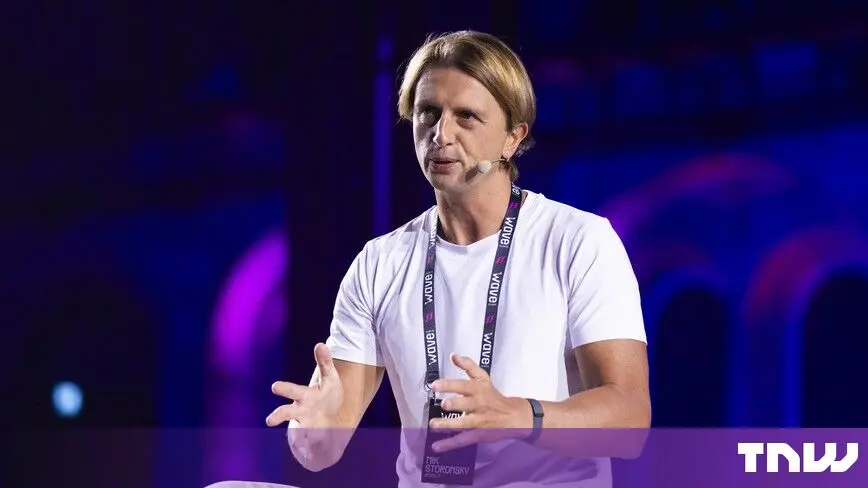
Nik Storonsky, chief executive of Revolut, used a stage in Turin to set out an ambition that stretches far beyond digital banking. He said the company wants to grow into a global technology company on the scale of the biggest United States groups, but built in Europe. In conversation with Exor chief executive John Elkann, Storonsky described what he called a European dream: to create a business similar to Meta, Google or OpenAI, but out of Europe. That would mean offering other technology services and products, not only banking, though still closely related to finance.
The comments place Revolut at the centre of a broader debate about European technology sovereignty. Europe has produced successful fintechs, industrial software companies and deep-tech firms, but it has struggled to build consumer internet platforms with the same global reach as their American counterparts. Storonsky's framing is deliberately ambitious. He is not describing a bank with an app. He is describing a platform company that happens to have banking at its core, and one that could eventually be valued at levels associated with the world's largest technology groups. A recent share deal involving Storonsky was reported to target a $500bn valuation for Revolut, a figure that would make it one of the most valuable private technology companies in the world.
Building its own models
Storonsky said Revolut already builds its own foundation models, trained on transaction data, as well as its own large language models. The company is also building its own data centres to train them. The goal, he said, is not to compete directly with American technology companies but to reach a similar scale. That distinction matters. Many European financial institutions rely on third-party cloud providers and externally developed AI models. Revolut's approach suggests a desire to control more of the stack, from data and compute to models and customer-facing agents.
Owning that stack is expensive and technically demanding. Training foundation models requires large volumes of high-quality data, significant computing power and specialised engineering talent. Data centres add further cost, energy and regulatory complexity. Yet for a company with hundreds of millions of transactions, the potential payoff is significant. Transaction data can help models understand spending patterns, merchant categories, fraud signals and customer preferences. Large language models can then turn that understanding into interfaces that feel more like conversations than forms.
The context is a European AI compute gap. At the same event, former Vodafone chief executive Vittorio Colao said Europe has less than 2 gigawatts of AI computing capacity. That is a small fraction of the capacity being built in the United States and China. For European companies that want to train and run advanced models, access to compute is a strategic concern. Revolut's decision to build its own data centres can be read as a response to that constraint, as well as a way to keep sensitive financial data under tighter control.
AI agents and an open platform
Storonsky described a future in which AI agents will be able to shop for customers using Revolut's secure card details. Those agents could also provide advice on spending, stocks and funds. Revolut plans to open its platform so third-party agents can talk to its own agents through MCP, a standard way to connect AI tools. Every action would be authenticated by the customer. He said he would rather keep the platform open than closed and miss features.
The open approach reflects a wider shift in how technology companies think about AI. Instead of building a single walled garden, some platforms are trying to become hubs where external agents and services can plug in. In financial services, that raises questions about security, liability and fraud. If an AI agent can initiate a purchase or move money, the authentication and permission layer becomes critical. Revolut's emphasis on customer authentication suggests it wants to allow innovation without giving up control over sensitive actions.
The company has already moved to bring AI features into its subscriptions. In July, it partnered with OpenAI to bundle ChatGPT Go into its plans. That partnership gives Revolut customers access to a popular AI assistant while keeping the fintech's own agents and financial tools at the centre of the experience. It also shows how AI is becoming a competitive battleground for subscription products, not just a back-end efficiency tool.
How AI changes management
AI is also changing how Storonsky runs the company. He said he has always built systems around people's strengths and weaknesses. He is still working out how to build them around AI instead. That is a significant admission from a founder known for his hands-on style. If AI can handle more routine analysis, coding and customer support, then the shape of teams and the role of middle management may change.
Storonsky said he has about 50 direct reports and removes middle management where he can. He sometimes works directly with developers and designers. When something does not work, he goes straight to a manager's own team to judge it himself. He compared a company to an orchestra. A founder should be able to play almost every instrument, he said, so that he can tell who plays well. That analogy captures his preference for deep involvement over layered hierarchy.
Revolut hires for three things: ambition, raw brain power and skills. If he could pick only two, he would take brain power and drive, because skills can be learned. Young people who think from first principles often beat experience, he said. Revolut gives them more responsibility until something breaks. That approach can accelerate growth and innovation, but it also risks errors. In a regulated financial business, the line between empowering talent and exposing the company to operational risk is a delicate one.
Trading, crypto and investors
Storonsky worked as a trader before founding Revolut. Trading taught him discipline about risk and to change his mind as new information arrives. Too many people in business stick with an opinion because they chose it in the past, he said. The first two or three years of Revolut were about survival, because it was losing a lot of money. That experience shaped his approach to risk, capital and decision-making. It also helps explain why he is comfortable making bold public statements about scale and technology.
On crypto, he said it is a great technology, but its main use is speculation, because governments will not allow money to be free. That view is pragmatic rather than ideological. Revolut has offered crypto trading to customers, but Storonsky does not present crypto as a replacement for state money. Instead, he treats it as a technology with limited current use cases beyond speculation, at least under existing regulatory conditions.
Difficult fundraising rounds led him to start QuantumLight, his venture firm, which picks investments with models rather than human judgment. The firm reflects his belief in data-driven decision-making and his willingness to challenge traditional venture capital methods. Investors should leave a good team alone unless it asks for help, he said. That principle may sound simple, but it is often ignored. For Storonsky, the best support is often not interference but access to capital, networks and patience.
The broader picture is of a founder trying to turn a fintech into a technology platform at a moment when AI is reshaping both finance and software. Revolut's own models, data centres and agent strategy are ambitious, and they will be tested by regulation, competition and the limits of European infrastructure. Yet the direction is clear: Storonsky wants Revolut to be more than a bank, more than a European challenger, and more than a collection of apps. He wants it to be a global technology company with European roots, and he is willing to build much of the underlying technology himself to get there.
Source:TNW | Fintech-ecommerce News