

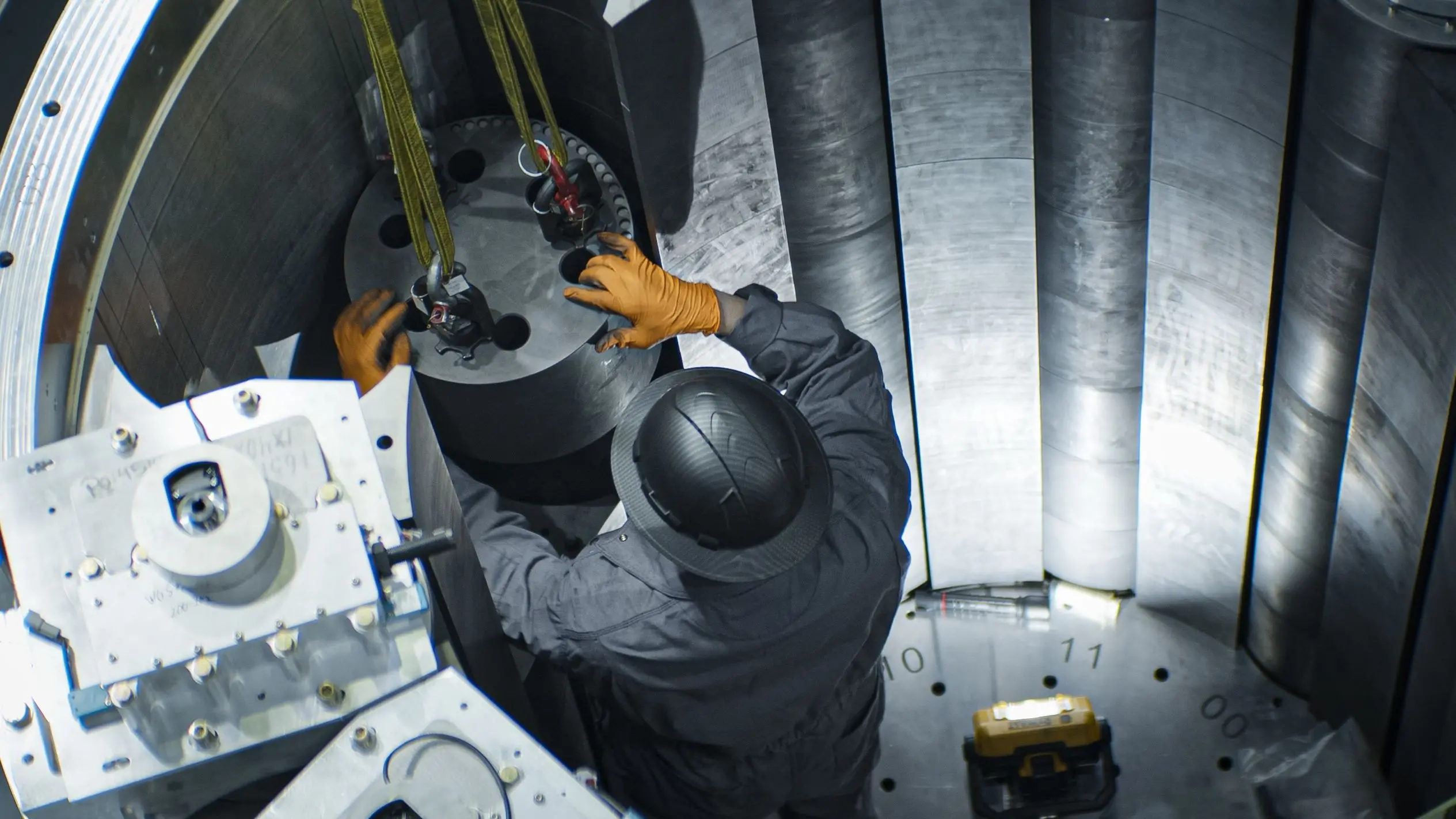
In a major vote of confidence for the future of advanced nuclear energy, a U.S.-based startup has secured nearly $500 million in new funding to develop small modular reactors (SMRs) for the U.S. military. The investment, announced earlier this week, is one of the largest ever raised by an advanced nuclear company and is earmarked specifically for designing and deploying reactors that can provide clean, reliable power to defense installations across the country.
The startup, which has been operating in relative obscurity for the past six years, is now emerging as a key player in the race to bring next-generation nuclear technology to the defense sector. The funding round was led by a consortium of private equity firms, strategic energy investors, and at least one major defense contractor. While the exact breakdown was not disclosed, sources familiar with the deal said the round was oversubscribed, reflecting strong institutional appetite for nuclear innovation.
Why the Military Wants Nuclear Power
The U.S. Department of Defense (DoD) is one of the largest energy consumers in the world, relying on a fragile electric grid that is vulnerable to cyberattacks, extreme weather, and physical attacks. Military installations, from bases in Oklahoma to remote radar stations in the Arctic, have experienced multiple power outages in recent years, some lasting for days. In an era of great-power competition, energy resilience is no longer merely a convenience but a strategic necessity.
Nuclear power offers a unique solution: a concentrated, carbon-free source of energy that can operate around the clock, independent of external fuel supplies. Small modular reactors, which are typically defined as reactors with an electrical output of less than 300 megawatts, are particularly attractive because they are compact enough to be installed on a base footprint, require less water cooling than traditional reactors, and can be designed to operate for years without refueling.
The U.S. military has already begun exploring nuclear options through programs like Project Pele, which aims to build a mobile microreactor that can be shipped to the field. But this new startup's approach goes further, focusing on stationary SMRs that would be permanently installed at strategic installations to power critical infrastructure, data centers, and even electric vehicle fleets.
The Technology Behind the Startup
According to company materials, the startup is developing a high-temperature gas-cooled reactor (HTGR) that uses tri-structural isotropic (TRISO) particle fuel. TRISO fuel is renowned for its robustness: each uranium particle is coated in layers of carbon and ceramic materials that can withstand extreme temperatures without melting. This inherent safety feature allows the reactor to operate at low pressure and eliminates the need for many active safety systems, making it simpler and cheaper to deploy than traditional light-water reactors.
The reactor design is designed to be factory-fabricated and transported by truck or rail to the site, which could significantly reduce construction time and costs. Company officials claim that a single unit could power a mid-sized military installation for a minimum of ten years before requiring fuel replacement. In a published white paper, the startup envisions clusters of microreactors deployed across a base, providing distributed power that can continue to operate even if one unit is taken offline for maintenance or in the event of an attack.
This design philosophy aligns with recent directives from the Pentagon, which has emphasized the need for energy resilience and the ability to generate power locally. In 2023, the DoD launched a pilot program to evaluate advanced nuclear installations at two U.S. bases, and the startup is believed to be one of the finalists.
The Funding Round and Its Significance
The nearly $500 million round is not just a financial milestone; it is a signal that investors are betting on the convergence of two powerful trends: the global push toward decarbonization and the urgent need for secure energy in the defense sector. Nuclear technology, long considered too expensive and complex, is experiencing a renaissance due to modular designs, advances in materials, and pressure from governments to reduce emissions.
The round also comes at a time when venture capital interest in nuclear energy has surged. According to industry tracker PitchBook, global nuclear startups raised over $3 billion in 2024, a record amount. This startup's round is among the largest single investments in an advanced nuclear company in history, rivaling earlier raises by firms like NuScale Power and X-energy.
The identity of the investors could be telling. Sources say the round included participation from a major aerospace and defense company, which may provide manufacturing expertise and help navigate security clearances. Another participant is a large utility company, likely interested in adapting the military reactor design for civilian grid use in the future. The involvement of these strategic investors suggests that the technology is not merely a niche defense project but a stepping stone toward broader commercial deployment.
Regulatory and Licensing Challenges
Despite the momentum, the startup faces a challenging regulatory landscape. Nuclear reactors in the United States, whether for civilian or military use, must be licensed by the Nuclear Regulatory Commission (NRC) or, in the case of many defense applications, meet strict standards set by the Department of Energy and the Pentagon's own nuclear regulator.
The NRC has been criticized for its slow, cumbersome review process, which was designed for large, conventional reactors and often takes over a decade to complete. However, recent legislation, including the ADVANCE (Accelerating Deployment of Versatile, Advanced Nuclear for Clean Energy) Act, has mandated that the NRC streamline licensing for advanced reactors. The startup has reportedly already held pre-application meetings with regulators and is aiming for a construction permit within two years.
Another hurdle is securing the necessary fissile material. High-assay low-enriched uranium (HALEU) is fuel needed for many advanced reactor designs for military applications. The current domestic supply is limited, with only a small amount produced in the U.S. each year. Federal agencies are working on programs to expand HALEU production, and the startup's funding could help cover the cost of securing a reliable fuel supply chain.
Implications for National Security and Energy Policy
If successful, this project could transform the way the U.S. military powers its bases. Today, many installations are increasingly electrified, with growing fleets of EV vehicles and smart microgrids, but they remain tethered to the civilian grid. A nuclear microreactor would give installations a degree of autonomy that is currently impossible with diesel generators, which require constant fuel deliveries and produce emissions and noise.
Energy experts point out that the military has long been a technology showcase. The civilian nuclear industry, for instance, grew out of the Navy's nuclear propulsion program. A successful SMR deployment on a military base could prove the commercial viability of the technology, accelerating adoption by utilities and industrial companies seeking reliable clean power for data centers, hospitals, and remote mining operations.
At the same time, the project raises questions about cost overruns, public acceptance, and the long-term liability of transporting and disposing nuclear waste. The startup has addressed these concerns by promising that its reactor will produce less waste than traditional designs and that it will adhere to the highest security protocols. But the U.S. still lacks a permanent repository for spent nuclear fuel, and any new reactor program will need to tackle this longstanding issue.
The Road Ahead
The company says it will use the new capital to finish its engineering design, conduct further materials testing, and begin site preparation at an undisclosed location. It has signed a memorandum of understanding with the U.S. Army Corps of Engineers to evaluate potential base sites, with an eye toward breaking ground on a pilot reactor by 2027. If all goes as planned, the first reactor could be operational by 2030, just in time to meet growing energy demands from the Pentagon's modernization efforts.
Beyond the military, the startup has expressed interest in deploying its reactors on civilian sites, including remote communities and industrial facilities that need to reduce their carbon footprint. The funding will allow the company to scale up its workforce, which currently stands at roughly 200 engineers and nuclear scientists. A second investor call is reportedly planned for later this year to raise additional capital for a dedicated fuel facilities.
The announcement has sparked significant buzz in the nuclear industry, with several analysts comparing this moment to the early days of the commercial jet engine or the internet. While the technology is decades old in concept, the startup's approach to manufacturing and deployment could fundamentally lower the barriers that have hindered nuclear expansion. At the same time, critics warn that the military angle may distract from the need for independent oversight and public participation in decisions that will shape the future of energy.
For now, the company is focused on execution. In a statement released to Fortune, the CEO said: "Our mission is simple: to provide the U.S. military with an energy source that is equally reliable on the battlefield as well as the home front. This funding brings us one step closer to a future where every base has a clean, secure, and resilient source of power."
Source:TechRadar News