

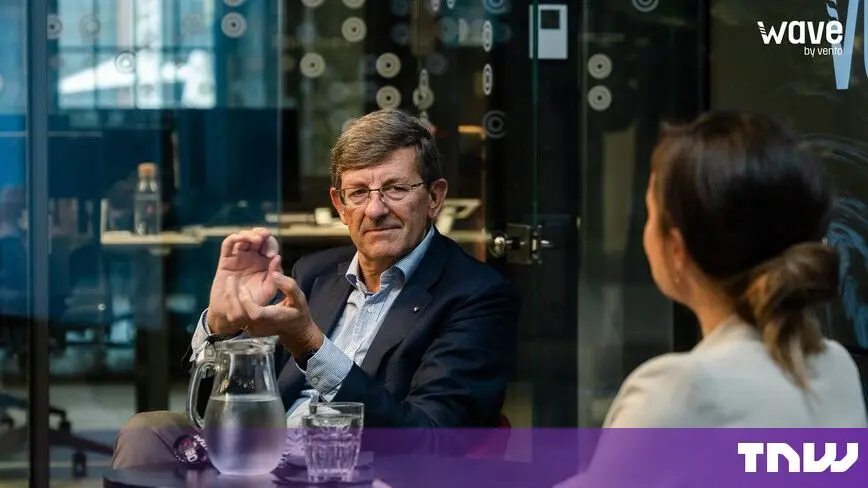
Vittorio Colao, the former chief executive of Vodafone and Italy’s former minister for technological innovation and digital transition, has delivered a blunt warning to Europe: the continent missed the big digital wave, and it cannot afford to miss the next one.
Speaking at a closed-door press question-and-answer session in Turin on Friday, the final day of the Wave by Vento event, Colao said Europe has less than 2 gigawatts of AI computing capacity. That is not enough, he said, and Europe needs to build more.
"Europe missed the big digital wave. Fine, 20 years," Colao said. But the next wave, driven by artificial intelligence, is arriving now, and Europe should not be left behind again.
Colao ran Vodafone from 2008 to 2018, turning the mobile operator into one of the world’s largest telecommunications groups. He later served as Italy’s minister for technological innovation and digital transition in Mario Draghi’s government. That combination of corporate and public-sector experience gives his assessment particular weight.
Key facts from Colao’s remarks
- Europe has less than 2 gigawatts of AI computing capacity and needs more, Colao said.
- He spoke at a closed-door press Q&A in Turin on Friday, the last day of the event.
- "Europe missed the big digital wave. Fine, 20 years," he said. "Europe should not miss the next one."
- Europe is starting to put money into computing, but the speed is not right. The skills are there.
- The most important thing governments can do is make the first three to five years of a company’s life far simpler.
- Italy, Germany and France remain places of administrative and labour-law complications, he said.
- A digital health company he works with has different operating models in France, Germany, the UK and Italy.
- He called the EU’s "28th regime" for companies "un topolino" — a little mouse. It stopped at simple registration.
- He wants public procurement opened to small companies, with a small share of contracts set aside for them.
- He is sceptical of governments acting as venture capitalists. A state fund of funds is fine, as is public money for strategic projects such as chips and energy.
- Europe needs a real single capital market, or savings and investment union, with depth.
- Euronext and the German and Swiss exchanges together have nothing compared with the American market, he said.
- He is more optimistic about European investors’ appetite for risk than five years ago.
- Two changes are needed: successful founders reinvesting their money, as in Sweden, and pension funds putting money into venture.
- The single thing he looks for in a founder is an obsession with customers and product.
- He wants clean, detailed revenue figures.
- On AI, there is some risk because development ran as a race without the safeguards a more traditional company would have added.
- Cyber defence needs much closer cooperation because reaction time matters. The UK’s National Cyber Security Centre is ahead of others.
- Europe did the right thing in creating its cyber security authorities, but they need more resources.
- Europe is also too self-critical, he said.
Europe’s AI compute gap
Colao’s headline number is stark. Europe has less than 2 gigawatts of AI computing capacity. In the AI era, compute is not an abstract technical metric. It is the raw capacity that determines how quickly models can be trained, how many experiments can be run, and how much of the next generation of software can be built on the continent.
The former Vodafone chief said Europe is beginning to put money into computing. The problem is speed. Investment decisions, permitting, energy connections and public support are not moving at the pace of the global AI race. Yet Colao also pointed to a strength: the skills are there. Europe has researchers, engineers, entrepreneurs and universities. What it has lacked is the ability to scale those assets quickly and keep the resulting companies in Europe.
The European Union has taken some steps. In July, the EU opened bidding for AI "gigafactories" to add computing capacity. That is a recognition that the continent needs sovereign or at least locally available compute. But Colao’s comments suggest the scale and speed remain insufficient. Less than 2 gigawatts is a small fraction of what is being built in the United States and China. If Europe wants to host the next generation of AI companies, it needs to close that gap.
The first three to five years
For Colao, the most important thing governments can do is not a grand industrial strategy or a new subsidy programme. It is to make the first three to five years of a company’s life far simpler.
He singled out Italy, Germany and France as places where administrative and labour-law complications still weigh heavily on young companies. The problem is not only red tape in one country. It is the fragmentation of rules across the single market. A company that wants to grow across Europe often has to rebuild its legal, tax, employment and compliance model in every country it enters.
Colao gave the example of a digital health company he works for. It has been "amazingly successful in France, good success in Germany, but already a different model," he said. "We’re going into the UK, another model. We came to Italy, another model." Each market requires a different approach, which slows expansion and raises costs.
He was equally critical of the EU’s "28th regime" for companies, a proposed optional EU-wide corporate framework that sits alongside the 27 national regimes. Colao called what has come out of it "un topolino" — a little mouse. No member state, Italy included, proposed adding labour, tax and administrative rules, he said. So the initiative stopped at the simple part: registration. That is not enough to create a genuine single market for startups.
He also wants public procurement opened to small companies. Governments are huge buyers of technology and services, but their tenders are often designed for large incumbents. Setting aside a small share of contracts for smaller companies would give young firms a first customer, a reference and revenue. That, in turn, would help them scale.
Yet Colao is sceptical of governments acting as venture capitalists. He does not want the state picking winners in the way a VC fund does. A state fund of funds is fine, he said. So is public money for strategic projects such as chips and energy. Those are industrial policy, not venture capital. The distinction matters: governments can build infrastructure and support strategic capacity, but they are not good at choosing the next consumer app or enterprise software winner.
A single capital market with depth
Asked how Europe can keep companies from listing in the United States, Colao said the answer is a real single capital market, or savings and investment union, with depth. Europe’s exchanges are too small and too fragmented. Euronext and the German and Swiss exchanges together have nothing compared with the American market, he said.
The problem is not a lack of reports or diagnoses. "We can write yet another report," Colao said. "But it’s time to start doing." Each member state agrees in principle, he added, and then asks for something that slows the system down. The result is a capital market that remains national in practice, even when the rhetoric is European.
Colao is more optimistic about European investors’ appetite for risk than he was five years ago. But he identified two changes that have to happen. First, successful founders need to reinvest their money, as they do in Sweden. That is already happening, he said. Second, pension funds need to put money into venture. That requires rule changes, because pension funds are often constrained by regulation that discourages higher-risk, long-term investments.
His view was reinforced at the same event. On Wednesday, Luca Ferrari of Bending Spoons told the same event that capital is no longer Europe’s big barrier. That is a significant shift. If capital is less of a problem, then the remaining obstacles are market fragmentation, regulation, procurement, talent mobility and the ability to scale within Europe.
What growth investors look for
Colao also offered a simple test for founders. The single thing he looks for is an obsession with customers and product. A founder who is focused on customer quality from the first few million in sales is the best sign that a company can scale to 500 million, he said. He also wants clean, detailed revenue figures. Vague metrics and unclear reporting are red flags.
That advice is familiar, but it carries weight from someone who has run a large public company and worked in government. In his view, the best founders are not the ones who talk most about fundraising or macro trends. They are the ones who understand their customers deeply and can measure what is happening in the business.
AI risk and cyber defence
On AI, Colao said there is some risk. Part of the problem is that development ran as a race without the safeguards a more traditional company would have added. AI systems are being deployed at global scale, and the safeguards need rules that everyone respects. National rules alone will not be enough if the technology operates across borders.
Cyber defence needs much closer cooperation, he said, because reaction time matters. He described the UK’s National Cyber Security Centre as ahead of others. Europe did the right thing in creating its cyber security authorities, but they need more resources. The threat is not static, and neither can the response be.
Colao also said Europe is too self-critical. The continent has a habit of focusing on its failures while underestimating its strengths. Yet the same event heard a striking prediction: on Thursday, the chief executive of a startup data platform told Wave that Europe’s first trillion-dollar startup may already exist. If that is true, the challenge is not only to create such a company, but to keep it in Europe, help it scale, and build the conditions for the next one.
Source:TNW | Government-policy News