

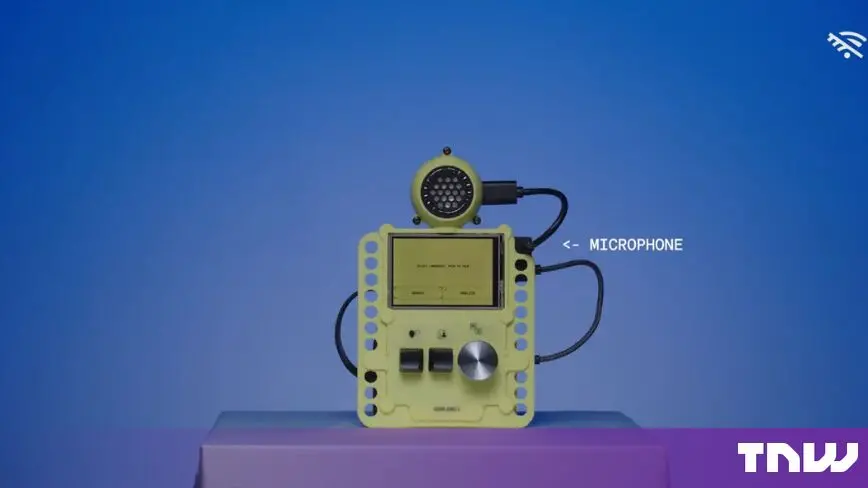
Google, in collaboration with its Antigravity team, has developed a remarkable prototype that brings offline AI translation to a small, affordable single-board computer. Dubbed the Gemma Translator, the device runs entirely on a Raspberry Pi 5, using Google's smallest open-weight AI model, Gemma 4 E2B, to process speech locally. This means no internet connection is required at any point—everything from speech recognition to translation and audio output happens on the device itself.
The prototype consists of a Raspberry Pi 5, a microphone, and a speaker, all housed inside a custom 3D-printed enclosure. The result is a self-contained translation gadget that can operate in the most remote locations on Earth—whether in a desert, a dense forest, or a disaster zone where cellular networks and Wi-Fi are unavailable. Google has made the entire project open source, including the code, the hardware design, and the 3D-printable case files, allowing anyone with a Raspberry Pi to build their own offline translator.
This effort is a significant step forward in the ongoing trend of shrinking artificial intelligence models to run on edge devices. While cloud-based translation services like Google Translate and Microsoft Translator are widely used, they depend on a stable internet connection to send audio to remote servers for processing. That dependency becomes a critical weakness in scenarios where connectivity is unreliable or deliberately restricted. The Gemma Translator eliminates that weakness by bringing the entire AI pipeline on-device, a feat that was nearly impossible just a few years ago due to the computational demands of neural machine translation.
The Rise of Gemma Models and Edge AI
Google introduced the Gemma family of open-weight models in April, offering four distinct sizes to cater to different deployment scenarios. The E2B variant, which stands for Edge-to-Base or edge-optimized, was specifically designed to run on low-power hardware such as the Raspberry Pi 5 or Nvidia Jetson Nano. With a mere 2.6 billion parameters, the E2B model is tiny compared to the giant language models that power cloud-based AI services, yet it is surprisingly capable at tasks like translation, summarization, and even simple conversation.
The development of such small yet competent models is a result of extensive research in model distillation, quantization, and efficient architecture design. By compressing the knowledge of larger models into smaller ones, researchers have managed to retain much of the original model's accuracy while drastically reducing the memory footprint and computational cost. For example, quantization techniques reduce the precision of the model's weights from 32-bit floating-point to 8-bit integers, allowing the model to run on devices with limited RAM and processing power.
The Raspberry Pi 5, released in late 2023, is a significant upgrade over its predecessors, featuring a quad-core Cortex-A76 processor running at up to 2.4 GHz, along with up to 8 GB of LPDDR4X RAM. This hardware is capable of running a 2.6-billion-parameter model in real-time, especially when the model is optimized using frameworks like TensorFlow Lite or ExecuTorch. The Gemma 4 E2B model is available under the permissive Apache 2.0 license, which permits both personal and commercial use without restrictions.
How the Gemma Translator Works
The translation process begins when the user speaks into the microphone. The audio is captured by the device's sound card and processed using a local speech recognition system. Although the original prototype uses a lightweight speech-to-text model, the Antigravity team has optimized it to work seamlessly with Gemma 4 E2B. Once the speech is converted to text, the Gemma model translates the text into the target language. Finally, a text-to-speech engine converts the translated text into audio, which is played through the speaker.
One of the key technical challenges is ensuring that these three steps—speech recognition, translation, and speech synthesis—run efficiently on a device with limited resources. The team addressed this by using shared memory buffers and asynchronous processing, allowing the model to start translating as soon as the first few words are recognized. This pipeline design reduces latency and makes the device feel responsive, even though it is performing all processing locally.
Another important aspect is the choice of languages. The prototype currently supports a small set of languages, but because Gemma 4 is a multilingual model, it can be fine-tuned for many more. The open-source nature of the project means that developers and researchers can extend the language coverage by fine-tuning the model on additional language pairs and integrating them into the device's software.
Use Cases and Implications
The potential applications for an offline AI translator are vast and impactful. Travelers visiting countries where they do not speak the language often struggle with connectivity issues, especially when roaming costs are high or when they venture into rural areas. A device that works offline can provide real-time translation for conversations, directions, and emergency situations without incurring data charges. For humanitarian organizations and emergency responders, communication is a matter of life and death. In disaster zones where infrastructure is destroyed, a battery-powered offline translator can help rescue teams communicate with survivors who speak a different language.
Privacy and confidentiality are also crucial in many contexts. Business negotiations, medical consultations, and legal proceedings often involve sensitive information that should not be transmitted to cloud servers. An offline translator ensures that all audio and text data remain on the device, eliminating the risk of data breaches and surveillance. This makes the technology particularly attractive for government agencies, corporate executives, and healthcare providers who handle classified or personal information.
In education, offline translation devices can help students who are learning a new language, allowing them to practice pronunciation and receive instant feedback on their speech. Similarly, they can assist in classrooms with students from diverse linguistic backgrounds, bridging communication gaps and fostering inclusion. For accessibility, the device can be adapted to serve as a communication aid for individuals who have speech impairments, converting their words into text or another language in real-time.
The Antigravity Platform
The prototype was built using Antigravity, Google's agentic development platform that was announced at the company's I/O developer conference. Antigravity is designed to simplify the creation of AI-powered devices and applications by providing a suite of tools for model deployment, edge computing, and agent orchestration. Developers can use Antigravity to package AI models for specific hardware targets, manage device fleets, and create user interfaces without deep expertise in embedded systems.
The Gemma Translator is one of the first projects built with Antigravity that targets non-developers, meaning it is a physical product that ordinary people can use without any technical knowledge. This represents a shift in Google's strategy, moving from purely cloud-based AI to a hybrid approach where some tasks are handled on-device, enhancing privacy and responsiveness.
The platform's name itself suggests a move toward autonomous AI agents that can operate independently of constant cloud connectivity. While cloud AI will continue to play a dominant role for tasks that require massive computational power, edge AI is poised to complement it by enabling real-time, always-available intelligence in small form factors.
The Future of Edge AI and Open Models
As open-weight model sizes continue to shrink while their capabilities expand, we can expect to see a proliferation of devices like the Gemma Translator. The Raspberry Pi 5 costs about $80, making it an inexpensive platform for experimentation and product development. The Gemma 4 E2B model is free to download and use, and the 3D-printed case can be fabricated for a few dollars. This low barrier to entry means that hobbyists, startups, and established companies can quickly prototype and commercialize similar offline AI devices.
However, there are still challenges to overcome. The quality of on-device translation, especially for complex sentences and low-resource languages, may not yet match cloud-based systems that use much larger models. The audio quality of the built-in microphone and speaker could also be improved for noisy environments. Battery life, though not a concern for a Raspberry Pi plugged into a wall socket, would need to be addressed for portable use. But these are engineering problems that will be solved as technology advances.
Another significant development is the emergence of multimodal edge models that can process not only text and audio but also images and video. Future iterations of the Gemma family might incorporate vision capabilities, allowing a device to translate text from a restaurant menu or a road sign simply by pointing a camera at it. Combined with offline natural language understanding, this would create an incredibly versatile travel companion.
The decision by Google to open-source the Gemma models and the Translator project is a strategic move to foster an ecosystem of developers and hardware manufacturers. By allowing anyone to build and sell devices based on its technology, Google hopes to challenge the dominance of proprietary AI solutions from other companies. It also aligns with the broader trend of democratizing AI, putting advanced machine learning capabilities in the hands of millions of creators worldwide.
For the time being, the Gemma Translator remains a prototype and not a commercial product. Google has not announced any plans to sell the device or integrate it into its existing product lineup. Nonetheless, it serves as a proof of concept for a future where artificial intelligence is pervasive, private, and accessible. It demonstrates that powerful AI does not have to be confined to gigantic data centers; it can be embedded in small, energy-efficient devices that work anywhere, at any time, without asking for an internet connection.
The components for building a working offline translator are already available for anyone who wants to undertake the project. The open-source code, the free model weights, and the affordable hardware mean that the next great translation device might not come from a giant tech corporation, but from a small team of makers in their garage. The era of offline AI has begun, and it is expanding faster than ever.