

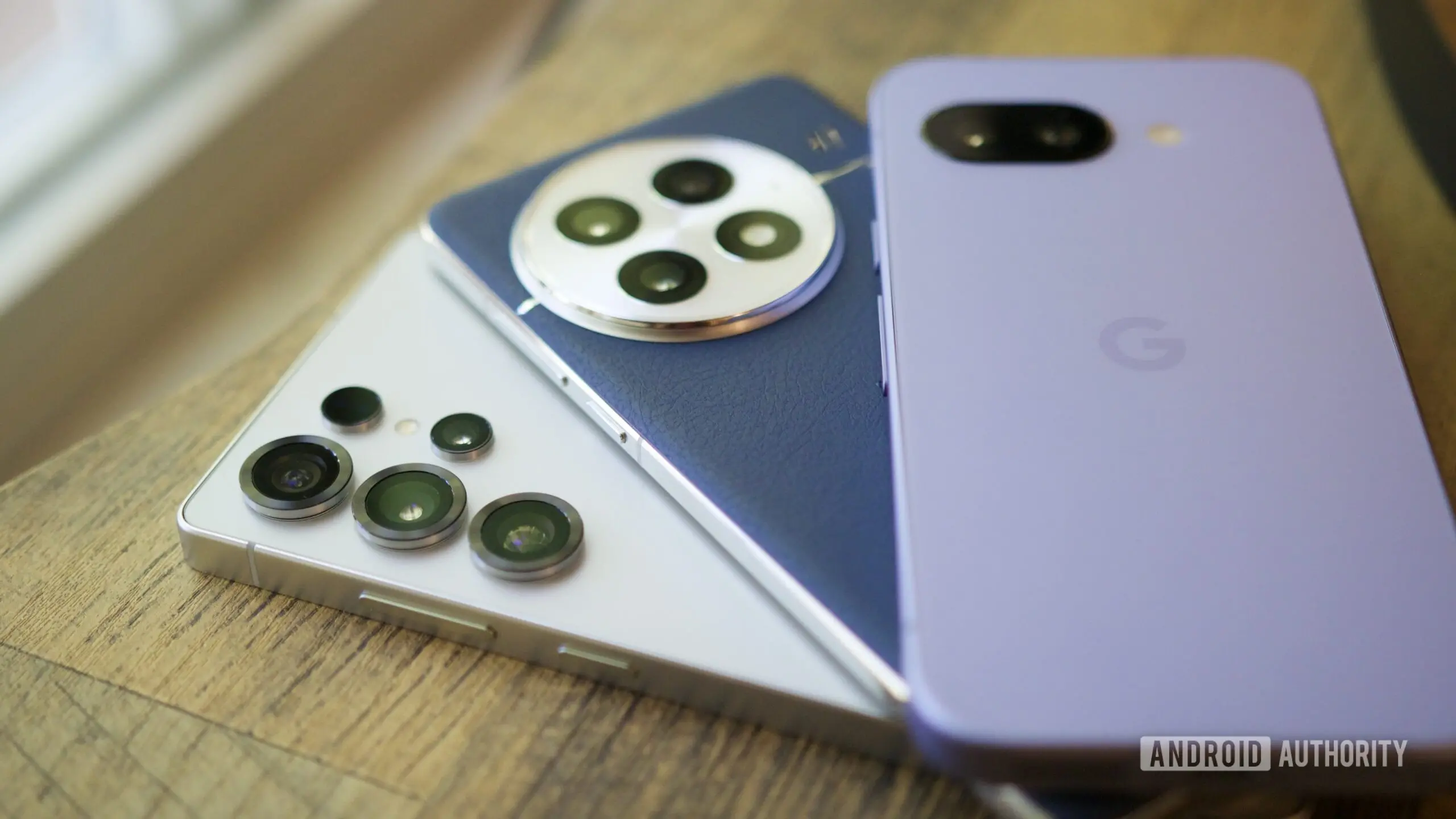
Just because we're Android experts doesn't mean we always recommend the latest shiny flagship on pre-order. For years, we have championed looking one or two generations back to find the best bang for your buck. That advice feels even more relevant in 2026, as rising phone prices make older Android phones – which often bear a striking resemblance to their newer counterparts – look like exceptionally smart purchases. But we wanted to know which previous-generation device you'd actually pick if you decided to skip this year's model.
We polled our readers in a recent feature on the best older Android phones to buy instead of a new 2026 model. The list covered five contenders: the Samsung Galaxy S25, Motorola Moto G Stylus 2025, Google Pixel 9a, Samsung Galaxy A56 5G, and Motorola Razr 2025. Each phone made a compelling case that you don't necessarily need the newest version to get a great experience. But which one won the hearts of our audience?
Survey Results: Galaxy S25 Edges Out Pixel 9a
Perhaps unsurprisingly, the Galaxy S25 came out on top, capturing 28.8% of the vote from over 2,000 readers. However, it wasn't a runaway victory. The Google Pixel 9a was hot on its heels with 25.6% of the vote. After that, there was a notable drop to the Samsung Galaxy A56 5G with 15.7%, the Motorola Moto G Stylus 2025 with 14.6%, and the Motorola Razr 2025 with just 9.2%. The remaining 6% of respondents indicated they would choose something else entirely, which we'll delve into later.
The top two choices make a lot of sense, albeit for slightly different reasons. The Galaxy S25 is the most obvious alternative to the popular Galaxy S26 for Samsung loyalists. It offers an incredibly similar phone – same flagship performance, stunning Dynamic AMOLED display, and premium design – without the S26 price tag. The Pixel 9a, on the other hand, is more of a pure value play. It's a solid Android favorite with Google's outstanding camera processing and clean software experience, and at the time of writing, it's still about $200 cheaper than the Galaxy S26 on Amazon. In fact, the Pixel 9a isn't much cheaper than the upcoming Pixel 10a, so you're spoilt for choice when it comes to Google alternatives.
Why the Razr 2025 Lagged Behind
We were a bit surprised to see the Motorola Razr 2025 landing well behind the rest of the pack. It's a phone we praised for its stylish design and practical foldable screen. Yet even when a foldable starts looking tempting on price – the Razr 2025 is often discounted well below its original MSRP – many buyers still prefer a traditional smartphone form factor. This suggests that the foldable market, while growing, still faces resistance from consumers who prioritize durability, battery life, and a familiar slab design over the novelty of a folding screen. The survey underscores that for most people, a conventional candy-bar phone remains the safer, more practical choice.
Reader Alternatives: Galaxy S23 Ultra and Beyond
One of the poll options allowed readers to indicate another choice, and several of you offered creative alternatives to buying the latest Android phone. For example, user Aidanleon99 argued that the Samsung Galaxy S23 Ultra “does exactly what the average user needs for approximately 500 euros,” adding that you can “get 95% of what the S26 does for a fraction of the cost.” The S23 Ultra still boasts a powerful Snapdragon 8 Gen 2 chipset, a fantastic 108MP camera system, and an S Pen – all features that remain highly capable in 2026. Others have gone even less mainstream: one reader picked up a HONOR Magic 6 Pro in “fab condition” for 350 (presumably USD), while another bought a new Sony Xperia 5 IV from China for just £323. These choices highlight the growing ecosystem of competitive alternatives beyond the usual Samsung and Google duopoly.
There was also some pushback against the idea of upgrading often at all. Rusty Harris summed up that side of the discussion pretty bluntly: “Unless you have damaged your old phone, you don’t need to be upgrading every flipping year.” This sentiment reflects a broader shift in consumer behavior: with phones becoming more mature and incremental improvements from year to year, many users are satisfied with devices that are two or three years old. A couple of readers also questioned the poll options themselves, either suggesting alternatives like the OnePlus 13 or arguing that the Galaxy S25 series doesn't really feel old yet. That last point is fair – the S25 was released just over a year ago, and it still holds its own against the S26 in many real-world scenarios. It also reinforces the key message: you don't need to buy a 2026 model to get a great smartphone.
The Bigger Picture: Why Older Phones Make Sense in 2026
The survey results are a microcosm of a larger trend in the smartphone industry. Prices for flagship phones have steadily climbed past the $1,000 mark, with some ultra-premium models reaching $1,500 or more. At the same time, the pace of true innovation has slowed: battery life improvements are marginal, camera sensors have plateaued, and processors are already more than fast enough for most tasks. As a result, a phone from 2024 or 2025 can easily last two or three more years with only minor compromises.
Furthermore, the Android ecosystem offers strong value in mid-range and older flagships. Devices like the Galaxy S25, Pixel 9a, or even the Galaxy S23 Ultra provide near-flagship performance at a fraction of the cost. They also receive extended software support from manufacturers – Samsung now promises four major OS upgrades and five years of security updates, while Google offers at least three years of OS upgrades and five years of security patches. This means that buying a one- or two-year-old phone doesn't mean sacrificing security or new features.
Another factor is the second-hand market. Many users are now comfortable buying refurbished or gently used phones from reputable sellers, which further reduces costs. For instance, a refurbished Galaxy S25 in excellent condition can be found for under $500, while a brand-new Galaxy S26 might cost $800 or more. The savings can be used on accessories, a new smartwatch, or simply saved for a future upgrade.
Finally, the survey highlights a shift in how consumers perceive value. The old mantra of “buy the latest and greatest” is being replaced by a more pragmatic approach: buy what meets your needs, even if it's a generation or two behind. As one reader commented, “I only upgrade when my current phone dies or becomes unusable. My Galaxy S21 is still working perfectly, so why would I spend $1,000 on a new phone?” This mindset is increasingly common among tech-savvy users who recognize that the law of diminishing returns applies strongly to smartphones.
In conclusion, the survey results confirm that when faced with the choice of an older model over the latest 2026 device, the majority of readers gravitate toward proven, reliable options like the Galaxy S25 and Pixel 9a. The strong showing of these two phones underscores the importance of brand loyalty and overall value. Meanwhile, the appeal of foldables like the Razr 2025 remains niche, likely due to concerns about crease, durability, and higher repair costs. For those willing to look beyond the big names, alternatives from OnePlus, HONOR, and Sony offer compelling features at bargain prices. Ultimately, the smartest phone purchase in 2026 isn't necessarily the newest one – it's the one that best fits your budget, usage habits, and willingness to embrace a previous-generation device that still delivers an excellent experience.
Source:Android Authority News