

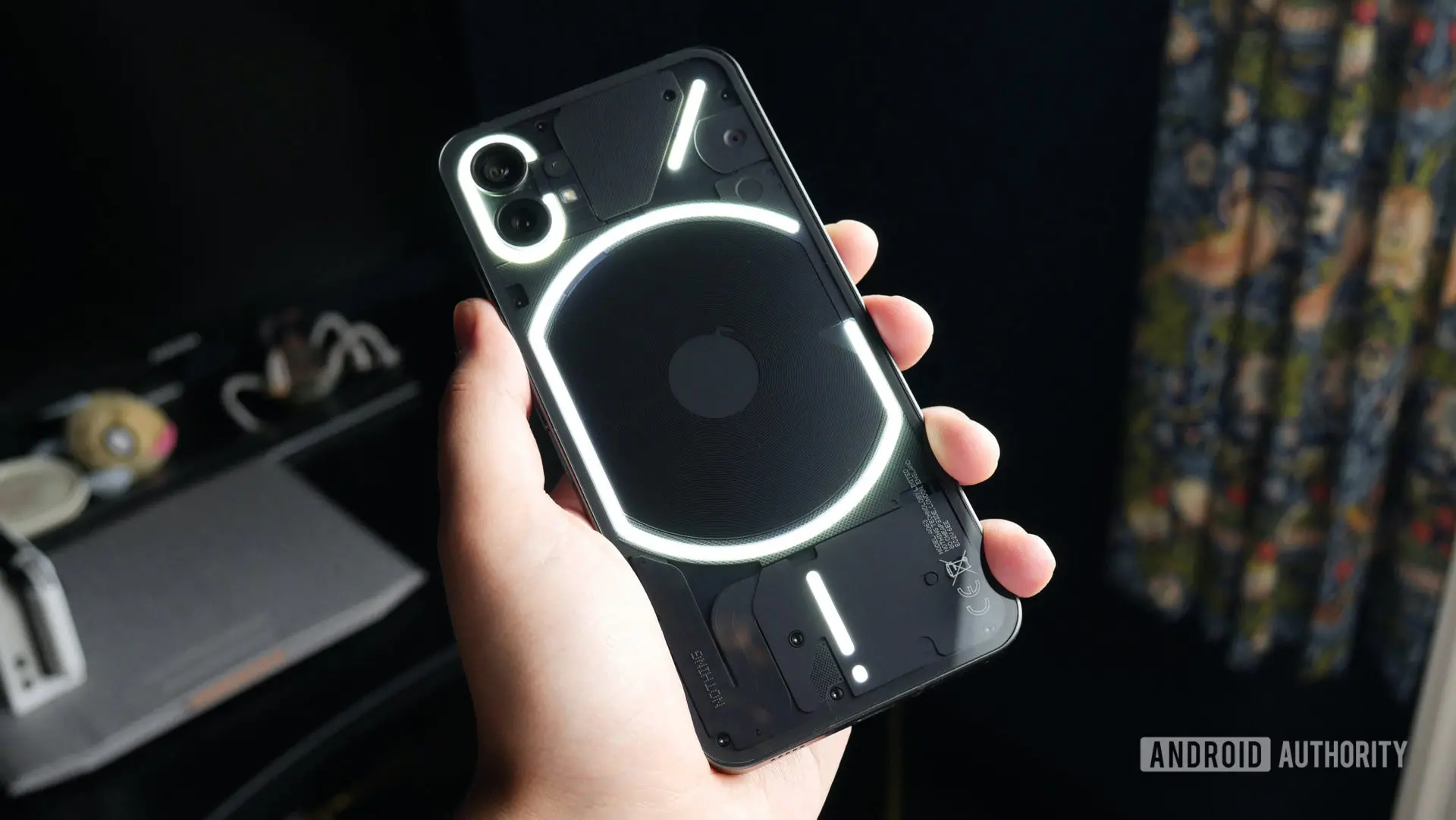
Nothing has officially pulled the plug on software support for its very first smartphone, the Nothing Phone 1. The device is now receiving its final update — the July 2026 Android security patch — bringing a close to a chapter that began nearly four years ago when the Phone 1 debuted in July 2022. This final build includes the latest security patches, general bug fixes, and enhanced system stability, but marks the end of the road for major Android version upgrades and future security patches.
The announcement came via a post on Nothing's community forums, where the company expressed gratitude to the Phone 1 community and reflected on the device's significance. According to Nothing, the Phone 1 was the birthplace of Nothing OS — the company's custom Android skin — and laid the foundation for the software experience that continues to evolve on newer models like the Phone 2, Phone 2a, and beyond. While the phone will remain fully usable, users should not expect further OS updates or guaranteed security patches after this point.
The Journey from Android 12 to Android 15
When the Nothing Phone 1 first hit the market, it ran Android 12 out of the box. Over the course of its software lifecycle, it received three major Android version upgrades: Android 13, Android 14, and finally Android 15. Although some enthusiasts managed to sideload Android 16 onto the device through custom ROMs, Nothing officially stopped at version 15. The company held to its promise of three years of Android updates and four years of security patches — a commitment that, while not industry-leading, was respectable for a first-generation device from a new player in a fiercely competitive market.
During its support window, the Phone 1 saw regular monthly and quarterly security patches, with the company frequently rolling out performance tweaks and camera improvements. The final update, version 2.5.6, bundles the July 2026 security patch alongside optimizations for system stability. Nothing notes that users may experience temporary overheating or increased battery drain while the update installs, but these side effects are normal and will subside once the installation completes.
The Signature Design That Defined Nothing
Beyond its software, the Nothing Phone 1 is remembered for its distinctive design language — a transparent back that exposed internal components, LED dot-matrix strips called the Glyph Interface, and a minimalist aesthetic that drew inspiration from consumer electronics of the early 2000s. The Glyph Interface allowed users to assign different light patterns for notifications, ringtones, and even charging status, creating a visual language that became synonymous with the brand. This design philosophy carried over to later Nothing phones, including the Phone 2 and the Phone 2a, which refined the concept while retaining its core identity.
The phone's unibody frame, made from recycled aluminum, and its utilitarian packaging also aligned with Nothing's sustainability goals. The company emphasized repairability and environmental consciousness, even if the final update now renders the Phone 1 less future-proof for security-conscious users. For those who continue using the phone, Nothing encourages them to remain cautious about app permissions and to avoid installing software from unverified sources, as future vulnerabilities will no longer be patched.
Impact on the Smartphone Market
When Nothing entered the smartphone space, it faced immense skepticism. Founded by Carl Pei, a co-founder of OnePlus, the company aimed to disrupt the market with a focus on design and community engagement — similar to the early days of OnePlus. The Phone 1, though not a flagship killer in terms of raw specs, carved out a niche for itself among tech enthusiasts and design aficionados. It featured a mid-range Qualcomm Snapdragon 778G+ processor, a 50-megapixel dual camera system, and a 6.55-inch OLED display with a 120Hz refresh rate. While components like the processor were already aging at launch, the phone's software fluidity and unique look attracted a loyal user base.
The Phone 1's end of life also underscores a broader industry trend: the increasing length (and occasional shortening) of software support cycles. Samsung and Google now offer seven years of updates for their high-end phones, while brands like Apple support devices for five to six years. Nothing's four-year security commitment, while adequate for its time, now seems modest. However, for a startup's first product, it was a solid effort that kept the device secure for a reasonable period.
From a market perspective, the Phone 1 helped establish Nothing as a credible player in the Android ecosystem. It sold over 500,000 units in its first few months — a strong showing for a new brand — and paved the way for subsequent models that expanded the lineup into multiple price segments. The Phone 2 (2023) brought a flagship-tier Snapdragon 8+ Gen 1 chip, while the Phone 2a (2024) offered a budget-friendly alternative with a redesigned transparent back and a reduced Glyph Interface. Each generation built on the lessons learned from the Phone 1, both in hardware and software.
What the End of Support Means for Users
For current Nothing Phone 1 owners, the final update is both a milestone and a warning. Without future security patches, the device becomes increasingly vulnerable over time — especially as new exploits are discovered for older versions of Android. Nothing recommends that users consider upgrading to a newer phone if they handle sensitive data or use the device for banking and payments. However, for those who use the phone primarily for media consumption, calling, and light apps, the Phone 1 will continue to function well. The company also notes that third-party app developers may gradually drop support for Android 15, though the transition will be slow.
Nothing has also committed to keeping the phone's core features operational, including the Glyph Interface and camera app. The company says it will continue to maintain the Phone 1's drivers for essential hardware like the display and sensors, but any security vulnerabilities discovered after July 2026 will not be addressed. This is standard practice across the industry, but it's a reminder that even beloved devices eventually reach obsolescence.
The Phone 1's final update also serves as a case study in the challenges of maintaining software for devices with custom hardware. The Glyph Interface, for instance, required continuous driver optimizations to ensure compatibility with new Android versions. Nothing managed to keep this feature functional through all three major updates, a feat that smaller OEMs sometimes struggle with.
The Legacy of the Nothing Phone 1
In its community post, Nothing framed the Phone 1 as a seminal device — not just for the company, but for the smartphone industry as a whole. It demonstrated that consumers still crave originality in a market dominated by slabs of glass and metal. The transparent back, once a gimmick on early smartphones like the HTC U11+, became a signature statement for Nothing. The Glyph Interface, meanwhile, revived the idea of LED notification lights in an era where most phones relied solely on screen notifications or always-on displays.
Nothing also leveraged the Phone 1 to build a strong community-oriented brand. The company frequently solicited feedback through its forums and social channels, and early adopters felt a sense of ownership over the product's evolution. This grassroots approach mirrored the early OnePlus days and helped Nothing differentiate itself from more established competitors. Even now, as the Phone 1 enters its fossilization phase, the community remains active, with users sharing battery life tips, camera presets, and customizations.
The end of support does not erase the Phone 1's contributions. It gave Nothing a foothold, allowed the company to refine its software in real-world conditions, and proved that a design-first philosophy could succeed — albeit in a niche. For many users, the Phone 1 was their introduction to Nothing's ecosystem, and the transparent back with its glowing Glyph Interface will likely be remembered as a design icon of the early 2020s.
As the company moves forward, it will likely continue to iterate on the design language and software experience that the Phone 1 inaugurated. With new models like the rumored Phone 3 and further expansion into the affordable segment via the Phone 2a series, Nothing is showing no signs of slowing down. The Phone 1 may have reached the end of the road in terms of updates, but its spirit lives on in every Nothing device released since.
In the meantime, Phone 1 owners can take comfort in knowing their device was part of a pioneering journey — one that challenged conventions and proved that a little transparency can go a long way.
Source:Android Authority News