

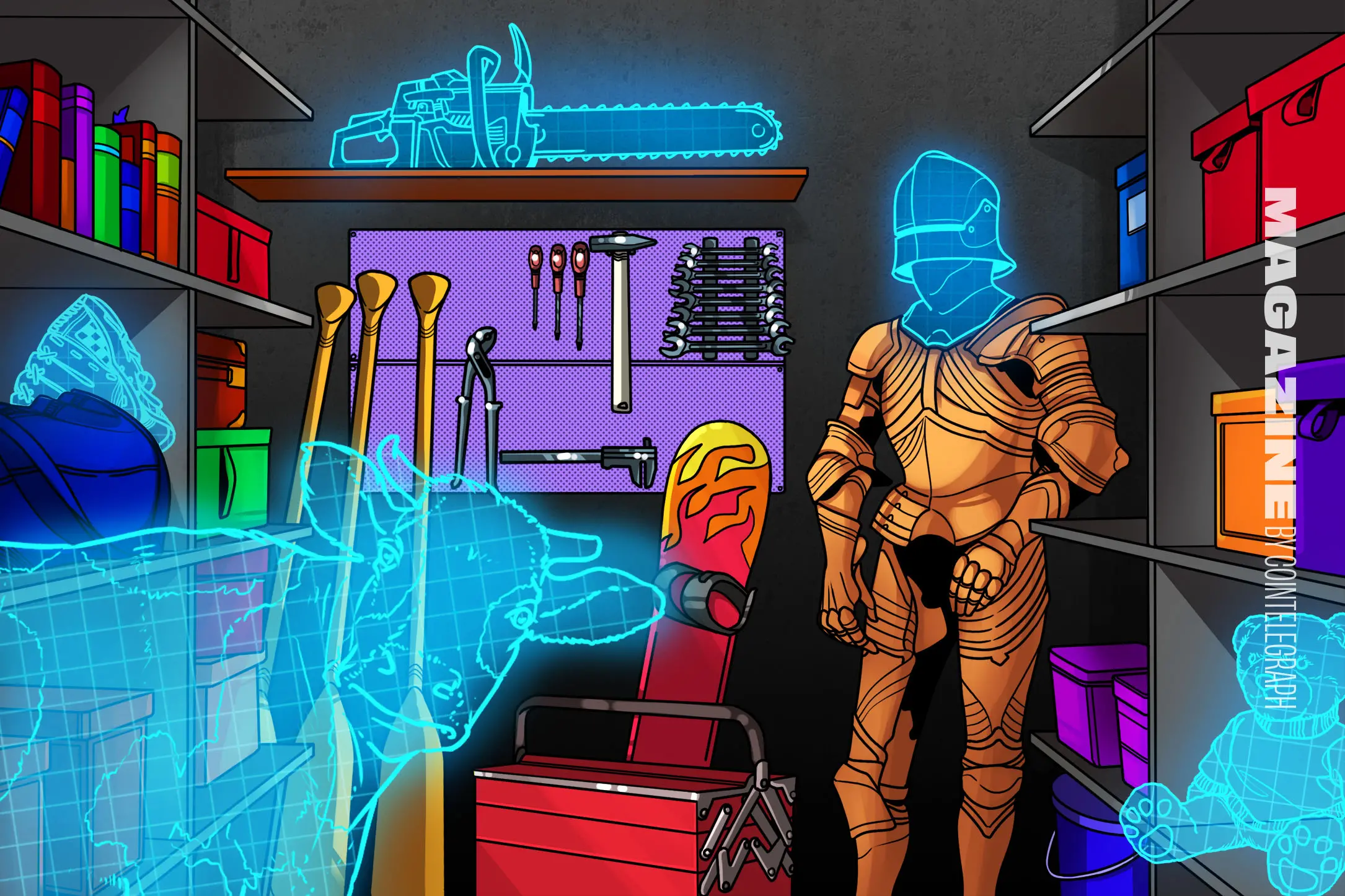
Tokenization has opened the door to a world where virtually any asset can be represented on a blockchain. The latest proof came from Brazil, where a farmer used 10 cows as collateral to secure a loan of 100,000 Brazilian real (about $19,600). The cattle were turned into digital tokens, each tied to an encrypted identity, allowing the farmer to access credit without giving up his herd. It was a practical demonstration of how blockchains can bring real-world assets into the digital realm. But if cows can be tokenized, what else can? The answer, as it turns out, is almost anything—including some truly bizarre examples that raise eyebrows and question the limits of digital ownership.
1. A year's worth of farts
Even the biggest proponents of tokenization, who predict that every asset will eventually move onchain, probably never envisioned this one. During the early pandemic lockdowns, filmmaker Alex Ramírez-Mallis recorded his own flatulence and minted each recording as a nonfungible token (NFT). To his surprise, he sold them for 0.05 ETH each—roughly $85 at the time—proving that, in the right circumstances, even the most personal emissions have market value. The project was as absurd as it sounds, but it highlighted how NFTs can turn anything unique into a tradeable digital certificate.
2. Cows
Brazilian cows have become unlikely stars of the tokenization world. Structuring a deal around livestock is no easy feat, but investment fund Target FIDC managed to give each cow a unique digital token linked to an encrypted digital identity. The first loan was worth just under $20,000, but it served as a proof of concept for something much bigger: the potential to support around $80 million in livestock-backed financing across participating farms. The agriculture sector generated trillions of dollars in value globally, so tokenized sheep, goats, and chickens could be next. It may sound odd, but it demonstrates that tokenization can be applied to physical, living assets with practical benefits.
3. Whiskey barrels
Whiskey is another asset that has found a natural fit onchain. Many premium Scotch whiskies increase in value as they mature, making casks an attractive investment for collectors. Tokenization allows investors to buy whole casks or fractional ownership of whiskey stored in bonded warehouses. Several projects now offer virtual ownership of these barrels, giving people exposure to the whiskey market without needing to manage the physical product. Just remember that if the market goes south, a digital JPEG of a barrel won't give you a drink.
4. Racehorses
Owning a racehorse has traditionally been reserved for the ultra-wealthy, who can afford breeding fees, training costs, and the lavish lifestyle that comes with the sport. Tokenization is changing that. By dividing a real thoroughbred into digital shares, everyday investors can now own a piece of a racehorse and potentially share in prize money, breeding income, or future sale proceeds. It's a way to lower the barrier to entry and spread risk among multiple owners. But experts caution that putting a luxury item on a blockchain doesn't automatically make it more liquid or valuable if the underlying legal rights and market structure remain unchanged.
5. Uranium
When people think about tokenized real-world assets, they usually picture government bonds, private credit, or real estate. Uranium is a different story. Tezos-backed metals.io has been offering tokenized uranium, a radioactive metal best known for powering nuclear reactors. Tezos co-founder Arthur Breitman argues that blockchain technology is well-suited for 'technology-flavored commodities' like uranium, providing reliable and auditable rails. Between November 2024 and July 2026, the platform saw around $21.5 million in trading volume across about 18,200 trades. While institutional interest remains cautious, it's an example of how even niche commodities can be brought onchain.
6. Fishy revenue
Tokenization can sometimes produce proposals that are as creative as they are strange. One such idea came from a Chilean fish-processing company that wanted to issue tokenized debt with returns tied to the value of the fish it sold. The token would represent a lender's contractual claim, with interest payments adjusting based on verified sales performance. It was a revenue-linked debt instrument in the truest sense. However, the project never made it to the blockchain. The underlying fish sales still relied on audits, commercial reporting, and legal agreements that couldn't be fully automated. It turned out that the biggest obstacle to tokenization isn't always the technology—it's the real world.
7. Music royalties
Music royalties have also been tokenized, giving fans a chance to own a piece of their favorite songs. In 2021, DJ and producer 3LAU offered fans 50% of the streaming rights to his single 'Worst Case' through his blockchain platform Royal. The following year, rapper Nas used the same platform to sell streaming royalty rights to two of his songs, 'Ultra Black' and 'Rare.' While the idea gained traction during the NFT boom, tokenized music royalties have yet to become a mainstream asset class. Streaming platforms often pay meager amounts to rights holders, meaning a fan who owns a tiny fraction of a track would need millions of plays to see meaningful returns. Still, it's a novel way to engage audiences and support artists directly.
8. Human skin
If tokenizing farts and cattle wasn't weird enough, how about a piece of your own body? In 2021, Croatian tennis player Oleksandra Oliynykova auctioned off the advertising rights to a 15-by-18-centimeter patch of skin on her right arm as an NFT. The winning bidder paid 3 Ether—around $5,400 at the time—for the right to choose the tattoo she would wear during tournaments for a year. Athletes have long sold sponsorship space on uniforms and gear, but she took the concept to an entirely new level, giving new meaning to 'skin in the game.'
9. A burned Banksy
Art collectors usually try to preserve masterpieces. Crypto enthusiasts, in this case, did the opposite. In 2021, a group calling itself Burnt Banksy bought a Banksy print called Morons (White) for roughly $95,000, livestreamed its destruction, and then minted the event as an NFT. The idea was to transfer the artwork's value from the physical world to the digital realm. The NFT sold for about $382,000, sparking debate over whether they had destroyed a valuable piece of art or created a new one. Either way, it proved that tokenization can turn even a fire sale into a profitable venture.
10. The first tweet
No list of odd tokenizations would be complete without the first tweet. Twitter co-founder Jack Dorsey tokenized his inaugural post—'just setting up my twttr'—and sold it as an NFT to crypto entrepreneur Sina Estavi for $2.9 million in 2021. It quickly became a symbol of the NFT boom. A year later, Estavi tried to resell it for a staggering $48 million, but the highest bid he received was a mere $6,800. The tweet itself is still visible to anyone on the platform, but only one person owns the blockchain certificate tied to it. Whether that certificate has any long-term value remains an open question, but it underscores that tokenization can create ownership in the most unexpected places.
Source:Cointelegraph News