

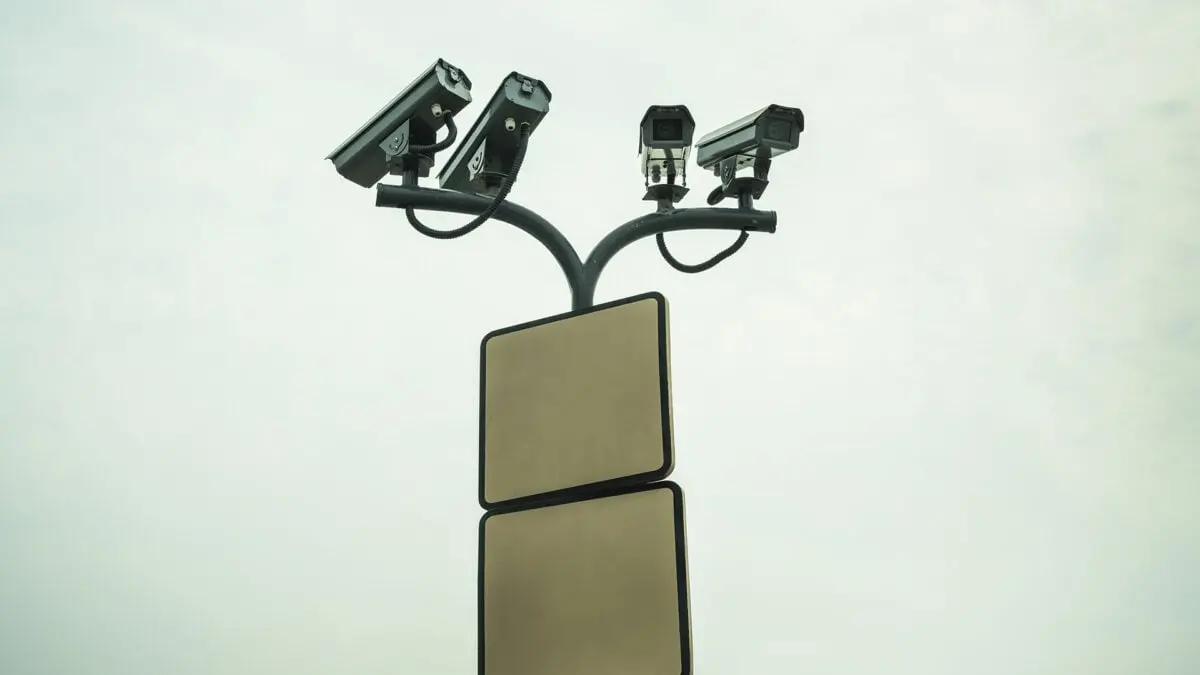
In recent months, the promise of AI-powered policing has collided with the harsh reality of false identifications, leaving two Florida men grappling with the aftermath of wrongful arrests tied to facial recognition software. The cases, one involving a father of 10 from North Carolina and another a Fort Myers retiree, underscore a growing concern among civil liberties advocates that automated surveillance tools are being deployed without adequate safeguards, often with devastating consequences for innocent individuals.
On June 12, 2026, news outlets reported that charges against Jalil Richardson, a 38-year-old Charlotte resident, were dropped after he spent 83 days in jail for a stolen vehicle crime he could not have committed. Richardson was identified by the Jacksonville Sheriff's Office (JSO) using an Automated Facial Recognition (AFR) system that matched his driver's license photo to surveillance footage from a Publix grocery store parking lot. Despite the system returning only an 85% confidence match—a figure well below what many experts consider reliable—investigators used it as probable cause to secure an arrest warrant. Richardson's wife, Jasmine Jackson, later provided timecards proving he was working in North Carolina, over 400 miles away, at the time of the alleged transaction.
The ordeal began in April 2025 when a victim reported purchasing a stolen car from a man he met at a Publix. The JSO's forensic unit ran the parking lot footage through its AFR database, which flagged Richardson as a potential match. Police later claimed that both the victim and his brother identified Richardson in photo lineups, though critics argue that such lineups can be tainted by the initial AI-generated suspect. Richardson was arrested at his Charlotte home after calling police to report an unrelated disturbance. He spent 33 days in a Mecklenburg County jail before being extradited to Florida, where he remained for another 50 days. Prosecutors eventually dropped five felony charges, including dealing in stolen property and grand theft, but by then the damage was done. Richardson lost his job, his car, and his home.
“It’s very traumatizing and unbelievable,” Richardson told local media. “I lost everything… There was no proper investigation done to even reach out to me or to see if I was even in Florida. He just automatically put a warrant out for my arrest.” His wife recalled the day officers arrived: “They handcuffed him in front of our children. They said the computer said it was him. That’s all they had.”
Richardson's case is not an isolated incident. In a separate lawsuit filed by the American Civil Liberties Union (ACLU) in April 2026, Robert Dillon, a 52-year-old Fort Myers man, is seeking damages after he was falsely accused of attempting to lure a 12-year-old child away from a McDonald’s in Jacksonville Beach. The arrest, which occurred in August 2024, was based on a facial recognition match from a system called FACESNXT, which compared cellphone photos of surveillance footage to Dillon's driver's license photo and returned a 93% match. Dillon told police he had distinctive scars from skin cancer surgery that ran from his hairline toward his nose—features that were clearly absent in the suspect images. “They showed me the pictures side by side, and the scars were nowhere near alike,” he said. “AI says I did this, how am I going to prove that I didn’t?”
Dillon was arrested at his home and spent a night in jail before posting bond by borrowing money and pledging his truck title. The charges were dropped two months later, but the ACLU’s lawsuit alleges that police omitted exculpatory evidence from the warrant application, including that a McDonald’s employee described the suspect as a regular customer and that license plate reader data showed no record of Dillon’s vehicle near the restaurant on the day of the incident. “When facial recognition technology generates false matches to innocent lookalikes, it can taint the investigation by tricking witnesses and police into mistakenly believing they’ve found the suspect,” the ACLU wrote in its complaint.
These cases add to a growing list of wrongful arrests linked to facial recognition technology across the United States. The ACLU identified Kimberlee Williams, an Oklahoma grandmother, as the 14th publicly known person to be wrongfully arrested after police relied on similar software. Williams spent six months in jail before charges were dropped. Richardson’s case, which surfaced after the ACLU’s report, would bring that count to at least 15. More than 20 cities and jurisdictions, including San Francisco and Boston, have banned police use of facial recognition due to concerns over accuracy and racial bias. Studies have shown that such systems disproportionately misidentify people of color, though both Richardson and Dillon are Black men.
In a statement to local press, the Jacksonville Sheriff's Office defended its use of facial recognition, describing it as “one tool among many available to investigators.” The agency emphasized that two photo lineups and a judge’s probable cause determination supported Richardson’s arrest, and that the State Attorney’s Office reviewed the case before prosecutors ultimately dropped it. “Facial recognition technology is used as one tool among many available to investigators,” JSO said. “In this case, it was one tool, but certainly not the only tool.” Critics argue that such reliance on flawed automated systems creates a dangerous feedback loop. “If the initial AI match is wrong, every subsequent step—photo lineups, witness statements, even judicial review—can be led astray,” said a technology ethics researcher from the University of Central Florida. “You end up with confirmation bias baked into the system.”
For the victims, the psychological and financial toll is long-lasting. Dillon told reporters that he now feels stigmatized in his community. “It’s ruined my life as far as being able to interact with children,” he said. “I feel like people are watching me. I feel like people are saying: ‘hey, there’s that guy that was on the news, stay away from him.’” Richardson, who is now working to rebuild his life, expressed similar fears about the lasting impact on his family. “My kids saw their father taken away in handcuffs because a computer said I did something,” he said. “How do you explain that to a child?”
Lawmakers in Florida and at the federal level have introduced bills to regulate the use of facial recognition by law enforcement, but none have passed. Meanwhile, companies that develop the software continue to market it as a crime-fighting tool, often downplaying error rates. In response to the growing backlash, some vendors have updated their systems to require higher confidence thresholds—typically above 90%—before generating a match. But as the Dillon case shows, even a 93% match can be wrong. The ACLU is calling for an outright ban on law enforcement use of facial recognition, arguing that the technology is fundamentally incompatible with civil liberties. “We are at a crossroads,” the ACLU wrote. “Either we let AI-driven surveillance erode our freedoms, or we draw a line and say that no algorithm should decide whether an innocent person goes to jail.”
The Florida cases highlight the human cost of that decision. In both instances, the men were hundreds of miles away from the crime scenes, their innocence corroborated by timecards, alibi witnesses, and physical evidence that police ignored in favor of a computer-generated match. Their stories serve as a cautionary tale about the rush to deploy untested technology in the criminal justice system, where false positives can have life-altering consequences. As Richardson put it: “They took everything from me because a machine made a mistake. And there was no one to say, ‘Wait, maybe we should check the facts first.’”
Source:Gizmodo News