

Bigger Sensor, Better Video
The DJI Osmo Pocket 4 finally delivers the upgrade that many creators have been hoping for: a 1-inch sensor. This jump in sensor size is significant because 1-inch has become the sweet spot for compact cameras, offering dramatically improved image quality while keeping the lens size manageable. The Pocket 3 already impressed with its video quality, but the Pocket 4 takes it further, especially in low-light conditions. The 37-megapixel sensor also captures excellent stills, though the camera remains primarily focused on video.
One of the standout new features is the ability to record 4K video at 240 frames per second, up from 120fps on the previous model. This allows for incredibly smooth slow-motion footage. The camera also supports 10-bit D-Log recording for greater dynamic range and color grading flexibility. In both daylight and after dark, the video quality is stunning, rivaling much larger and more expensive cameras.
Familiar Design, Minor Tweaks
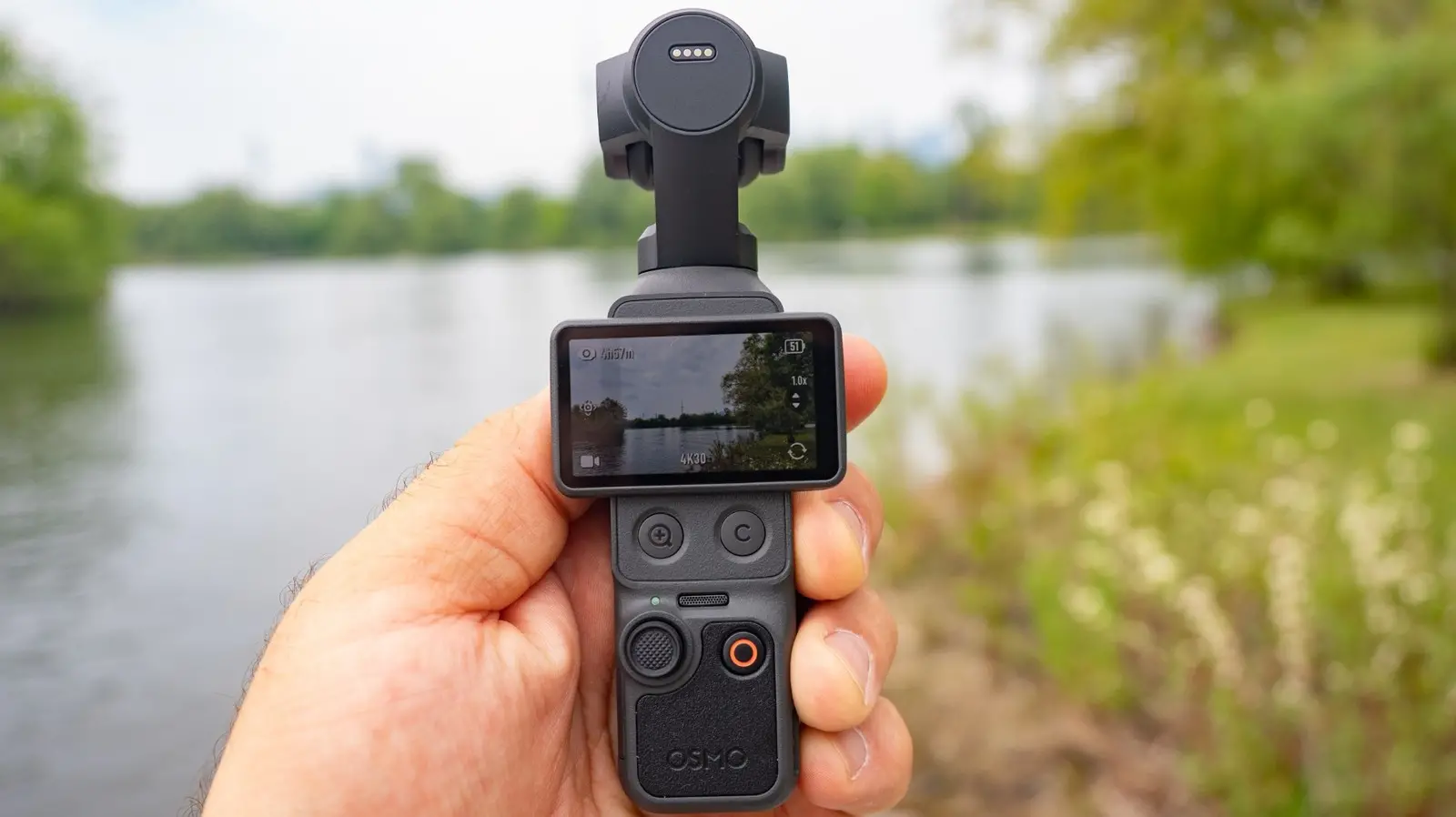
From the outside, the Pocket 4 looks almost identical to the Pocket 3. The button layout has been slightly rearranged, but anyone who has used a DJI Osmo Pocket camera will feel right at home. The same gimbal mechanism, flip screen, and overall form factor return. The screen still powers on when flipped horizontally and turns off when flipped vertically — a tactile quirk that many users appreciate.
One notable change is the accessory situation. The Pocket 3 came with a protective case that could hold lens attachments and accessories. The Pocket 4 replaces that with a gimbal clip for travel, which offers less protection and no storage for extras. This feels like a step backward, though the camera itself remains just as durable as its predecessor. The battery grip and mini tripod are still recommended for comfortable handheld use, and the new DJI Mic 3 pairs perfectly with the Pocket 4 for high-quality audio.
Reliable Autofocus and Smart Software
The autofocus system in the Pocket series has always been a strong point, and the Pocket 4 continues that tradition. It is snappy, reliable, and just works — essential for a camera used as a B-cam or for vlogging. The in-camera software and the Mimo app are well-designed and intuitive. The motionlapse feature, which lets you program gimbal movements during a timelapse, remains a favorite among creators.
Internal storage has been bumped to 107GB, providing a handy backup if you forget your microSD card. There is also a new adapter on the back of the gimbal for attaching an adjustable LED video light, which is great for vlogging in low light. The screen quality is excellent, and the flip-to-power mechanism helps prevent accidental battery drain.
Availability and Pricing Challenges
The biggest drawback of the Pocket 4 is availability, particularly in the United States. Due to regulatory disputes, DJI is not allowed to import the camera into the U.S., leaving American creators with limited options. The camera is currently sold by third-party sellers on platforms like Newegg Marketplace for around $788 for the Creator Combo, and on AliExpress for about $528 for the base model. However, these listings may not inspire confidence for buyers concerned about warranty and support.
Internationally, the camera is available directly from DJI at an MSRP of $477. This is a reasonable price for what you get, especially compared to the competition. For about $300 more, the Insta360 Luna Ultra offers a dual-lens system and a detachable remote control, but the Pocket 4’s superior autofocus and overall user experience may make it the better choice for many creators — provided they can actually buy one.
Who Should Upgrade?
If you already own a Pocket 3, the urge to upgrade may not be overwhelming, as that camera remains very capable. However, if you are in the market for a new compact gimbal camera, the Pocket 4 is the one to beat. The larger sensor, improved slow-motion, and extra internal storage make it a meaningful upgrade for video creators who need top-quality footage in a tiny package. The Pocket 3 has not dropped in price, so the Pocket 4 represents a better value for new buyers.
The DJI Osmo Pocket 4 is essentially the same brilliant camera as its predecessor, but with a sensor that finally brings it into the 1-inch club. Despite the lack of a dramatic redesign and the frustrating U.S. availability situation, it remains the gold standard for creators who want a portable, reliable, and powerful camera for daily vlogging, travel, and multicam setups.
Source:SlashGear News