

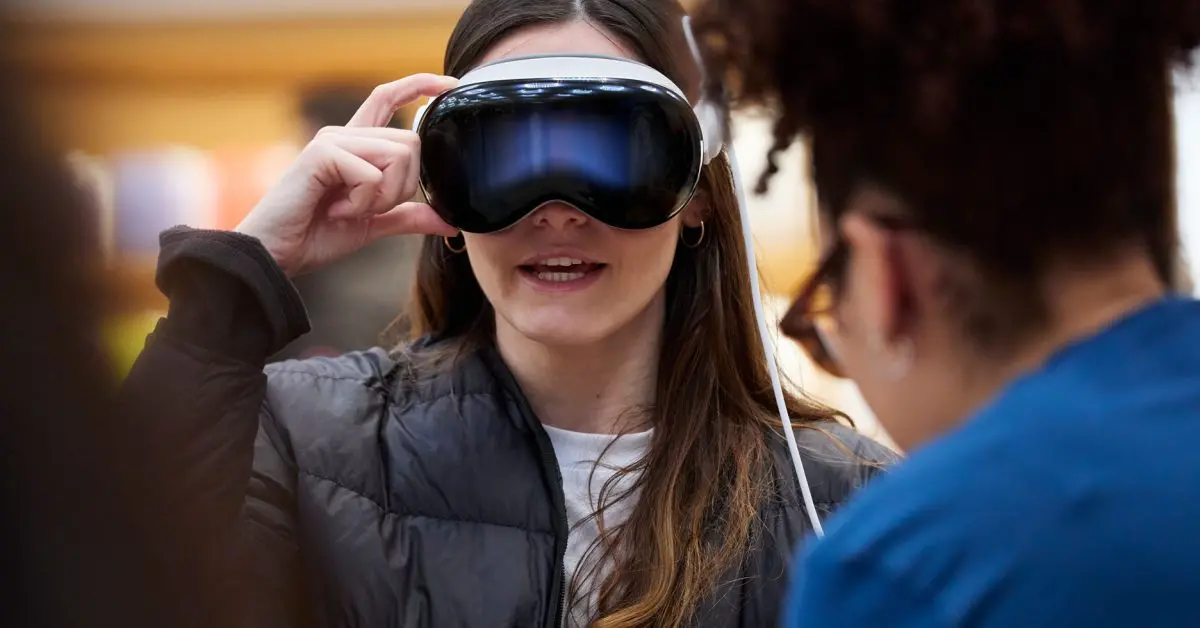
In a significant move that underscores its ambition to enter the hardware space, OpenAI has hired Paul Meade, the Apple executive who was in charge of the Vision Pro headset and the company's smart glasses initiative. According to a detailed report from Bloomberg, Meade is set to leave Apple by next week and will join OpenAI's hardware unit, which is developing a family of AI-first devices.
This marks the latest in a series of high-profile departures from Apple to OpenAI, which has been aggressively poaching talent from the iPhone maker since last year. OpenAI's hardware subsidiary, codenamed 'io', was announced in 2025 as a collaboration with legendary designer Jony Ive and several members of his former LoveFrom design firm. The explicit goal: to create a new category of AI-powered hardware that leverages conversational interfaces and advanced machine learning, free from the constraints of traditional smartphone ecosystems.
Paul Meade is a veteran Apple engineer with over 15 years of experience at the company. He first joined Apple in 2009 and quickly rose through the ranks. According to Bloomberg's sources, Meade was a key iPad program manager in 2010 and later became head of iPhone program management in 2012. In 2017, he moved to the Vision Products Group (VPG), taking over all hardware engineering by 2019. Under his leadership, the VPG developed the Apple Vision Pro, which launched in early 2024, and also spearheaded the early development of Apple's first smart glasses, now expected to be released in late 2027.
The hiring of Meade is particularly strategic for OpenAI. The company's hardware division, led by Jony Ive, has been quietly assembling a world-class team of designers and engineers with deep expertise in consumer electronics, mixed reality, and industrial design. Previous hires include Evans Hankey, who served as Apple's design chief for three years after Ive's departure, and Tang Ten, another longtime Ive collaborator. The team is believed to be working on a device that combines advanced natural language processing with augmented reality, potentially in the form factor of lightweight glasses or a wearable computing device.
Meade's departure from Apple comes amid a period of significant organizational change at the Cupertino-based company. Apple recently announced that John Ternus would succeed Tim Cook as CEO effective later this year. Ternus, who had been Apple's senior vice president of Hardware Engineering, oversaw the Vision Pro and other hardware initiatives. However, as part of a broader restructuring, Apple chips boss Johny Srouji was appointed chief hardware officer, a role that reports directly to Ternus. Srouji then initiated a controversial shake-up of Apple's hardware engineering unit, which included reassignments of several vice presidents and a flattening of the management hierarchy.
Bloomberg reports that with Srouji taking over all hardware, Meade and several other hardware leaders now report to Tom Marieb, the new vice president of hardware engineering, rather than directly to Srouji. Marieb, in turn, reports to Srouji, effectively pushing many of those executives down a level in the organization. This reorganization led to a number of vice presidents feeling they had been demoted, and Meade's decision to leave was at least partially influenced by this shake-up. His deputy, Fletcher Rothkopf, who has been in charge of product design for the Vision Pro and smart glasses, will now assume many of Meade's responsibilities within the VPG.
The move signals OpenAI's serious intent to compete not just in software and cloud services but in hardware. OpenAI's CEO Sam Altman has repeatedly stated that the company sees AI as a platform that can fundamentally change how people interact with technology, and that creating dedicated hardware is essential to delivering the best user experience. The company has already released ChatGPT as a standalone app on smartphones and desktops, but Altman has hinted that a dedicated AI device could be more intuitive and privacy-preserving than a general-purpose computer.
In addition to Meade and Ive's team, OpenAI has been building out its hardware engineering capabilities by recruiting experts from other tech giants, including Google, Meta, and Amazon. The company has also filed several patents related to wearable devices, voice interfaces, and adaptive displays. Industry analysts believe that OpenAI's first hardware product could launch as early as 2027, though the company has not confirmed a timeline.
Meade's expertise in mixed reality and smart glasses will be invaluable for OpenAI's hardware ambitions. The Apple Vision Pro, despite its high price point and limited consumer adoption, received critical praise for its technological sophistication, including its high-resolution micro-OLED displays, advanced eye-tracking, and seamless integration with the Apple ecosystem. Meade's team successfully navigated the complex challenges of miniaturizing high-performance optics and sensors into a lightweight headset form factor. For smart glasses, Apple aims to provide a more mainstream and affordable alternative, leveraging many of the same technologies.
OpenAI's hardware team will likely draw upon Meade's experience in managing large-scale engineering projects, supply chain logistics, and product development cycles. The company is also rumored to be exploring partnerships with manufacturers in Asia for component sourcing and assembly, similar to Apple's business model. However, OpenAI's open-source and service-oriented culture may lead to a different approach to hardware, such as offering modular upgrades or a subscription-based pricing model for future devices.
The poaching of yet another senior Apple executive highlights the intensifying competition for top engineering talent in the tech industry. With AI as the new battleground, companies like OpenAI, Google, Meta, and Apple are all vying for expertise in machine learning, hardware design, and user experience. Apple has long prided itself on its ability to retain executives, but the lure of working on cutting-edge AI hardware from scratch, without the legacy constraints of an established product line, has proven attractive to many.
Apple has not publicly commented on Meade's departure. However, the company is expected to continue its smart glasses development under Rothkopf's leadership, with a targeted release in late 2027. Meanwhile, OpenAI is likely to announce more details about its hardware plans and team expansions in the coming months.
Source:9to5Mac News