

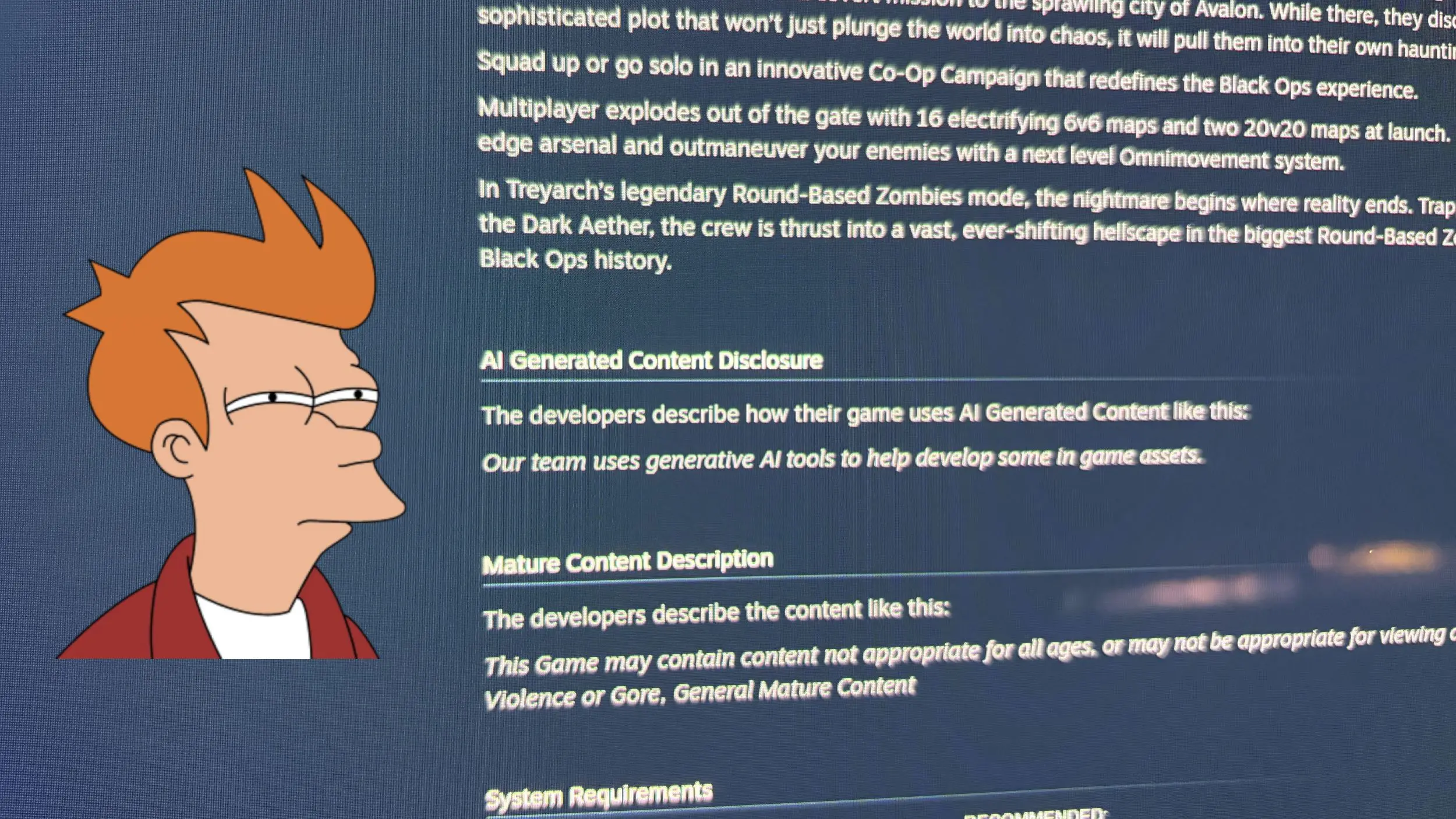
The gaming industry is no stranger to controversy, but a recent study has identified a trend that could fundamentally alter how developers approach artificial intelligence. Dubbed the 'AI stigma,' this phenomenon describes a measurable decline in sales for games that explicitly incorporate AI in their development process. According to the research, the numbers are staggering: titles associated with AI suffer a sales penalty that can reach up to 30% compared to similar games built without AI tools. This revelation has sparked intense debate among developers, publishers, and players alike.
What Is the AI Stigma?
The term 'AI stigma' refers to the negative perception and reluctance among consumers to purchase games that openly use artificial intelligence for content creation, storytelling, or even gameplay mechanics. Unlike the subtle integration of AI in matchmaking or difficulty scaling, the stigma specifically targets games that advertise AI-generated assets, dialogue, or design. The study, conducted by a team of economists and game researchers, analyzed sales data from over 500 titles released on major platforms between 2020 and 2024. It controlled for factors like genre, budget, marketing spend, and critic reviews to isolate the effect of AI disclosure.
The Study's Methodology
Researchers scraped public data from digital storefronts, developer blogs, and press releases to classify games based on their use of AI. They then created a matched sample of AI-flagged and non-AI-flagged games with similar characteristics. The results were clear: games that mentioned AI in their development narrative—even in a positive light—experienced a median sales drop of 23% relative to the control group. In some cases, the penalty exceeded 40% for games that heavily marketed their use of generative AI for art or narrative.
Key Findings: The Numbers Behind the Stigma
- Sales Penalty Range: 15-40% decline depending on prominence of AI usage.
- Genre Impact: The stigma was most pronounced in role-playing games and narrative-driven adventures, where players value human creativity.
- Platform Differences: PC gaming audiences showed a stronger aversion to AI than console players.
- Price Sensitivity: Discounted games with AI saw a smaller penalty, suggesting that price can partially offset distrust.
One of the most surprising findings was that the stigma persisted even when AI was used only for non-creative tasks like bug testing or procedural level generation. Players often could not distinguish the practical effects but reacted negatively to any association with AI. This indicates a deep-seated skepticism that extends beyond functional concerns.
Why Do Players Dislike AI in Games?
The study also surveyed over 2,000 players to understand the reasoning behind the stigma. The top reasons included:
- Perceived Lack of Soul: 68% of respondents felt AI-generated content lacks the emotional depth and uniqueness of human creation.
- Quality Concerns: 55% worried that AI would lead to repetitive, low-quality assets or narratives.
- Ethical Issues: 47% cited fears about job displacement for artists and writers.
- Loss of Trust: 39% said they felt deceived if a game used AI without clear disclosure.
Interestingly, players who were unaware of a game's AI use often rated it as highly as traditional games. This suggests the stigma is heavily influenced by labeling and perception rather than actual gameplay experience. In blind tests, participants could not reliably differentiate AI-generated content from human-made content, yet their purchasing decisions were heavily swayed by the mere mention of AI.
Impact on Developers
For independent developers, the AI stigma can be financially devastating. Small studios with limited budgets often turn to AI as a cost-saving measure, but the resulting sales penalty can erase any advantage. One indie developer interviewed for the study reported that their AI-assisted game sold only 20% of what a previous handcrafted title did, despite similar marketing and review scores. Larger studios are not immune either; major publishers have faced backlash and boycotts after revealing AI involvement in franchise entries.
However, the research also uncovered strategies to mitigate the stigma. Games that framed AI as a tool for enhancing human creativity—rather than replacing it—suffered smaller penalties. For instance, titles that emphasized 'AI-assisted artistry' or 'procedural storytelling guided by human writers' performed better than those touting 'fully AI-generated worlds.' Transparency also helped: games that clearly explained how AI was used (e.g., for background textures, not main character art) saw less of a sales hit.
The Role of Marketing
Marketing language plays a critical role. The study found that games using neutral or technical terms like 'machine learning' or 'algorithmic generation' fared better than those using 'AI' directly. This suggests that the term 'AI' carries its own negative connotations. Developers are now rethinking their communication strategies, with some choosing to omit AI involvement entirely to avoid the penalty—though this raises ethical questions about disclosure.
Future Implications
The AI stigma is not static; it may evolve as players become more familiar with the technology. Historical parallels exist, such as the initial resistance to computer-generated graphics or procedural generation in the 1990s. Over time, acceptance grew as quality improved and use cases became clearer. Some experts predict a similar trajectory for AI, but the current data suggests a long road ahead.
Regulatory bodies are also taking notice. Several consumer protection groups have called for mandatory labeling of AI-generated content in games, similar to nutritional labels on food. Such labeling could either formalize the stigma or, paradoxically, reduce it by setting standard expectations. Meanwhile, developer communities are debating whether to collectively avoid AI or to use it quietly behind the scenes.
The study's lead researcher noted, 'We are witnessing a market correction. Developers who rely too heavily on AI without addressing player concerns risk significant financial consequences. But those who use AI thoughtfully—as a supplement to human creativity—may find a middle ground.' The key takeaway is that the AI stigma is real, measurable, and powerful. It forces the industry to confront not just technical questions, but fundamental ones about art, authenticity, and the value of human labor in interactive entertainment.
Source:Windows Central News