

Gas and diesel combustion engines have dominated the transportation and industrial sectors for over a century, but the quest for cleaner alternatives has never been more urgent. Hydrogen, the most abundant element in the universe, has long been considered a promising candidate. Its potential as a fuel source was recognized as early as the 1800s, when hydrogen internal combustion engines were first demonstrated. In recent decades, hydrogen-powered vehicles have emerged, though widespread adoption has been slow due to infrastructure and cost hurdles. Now, a major breakthrough in maritime propulsion brings hydrogen closer to real-world application.
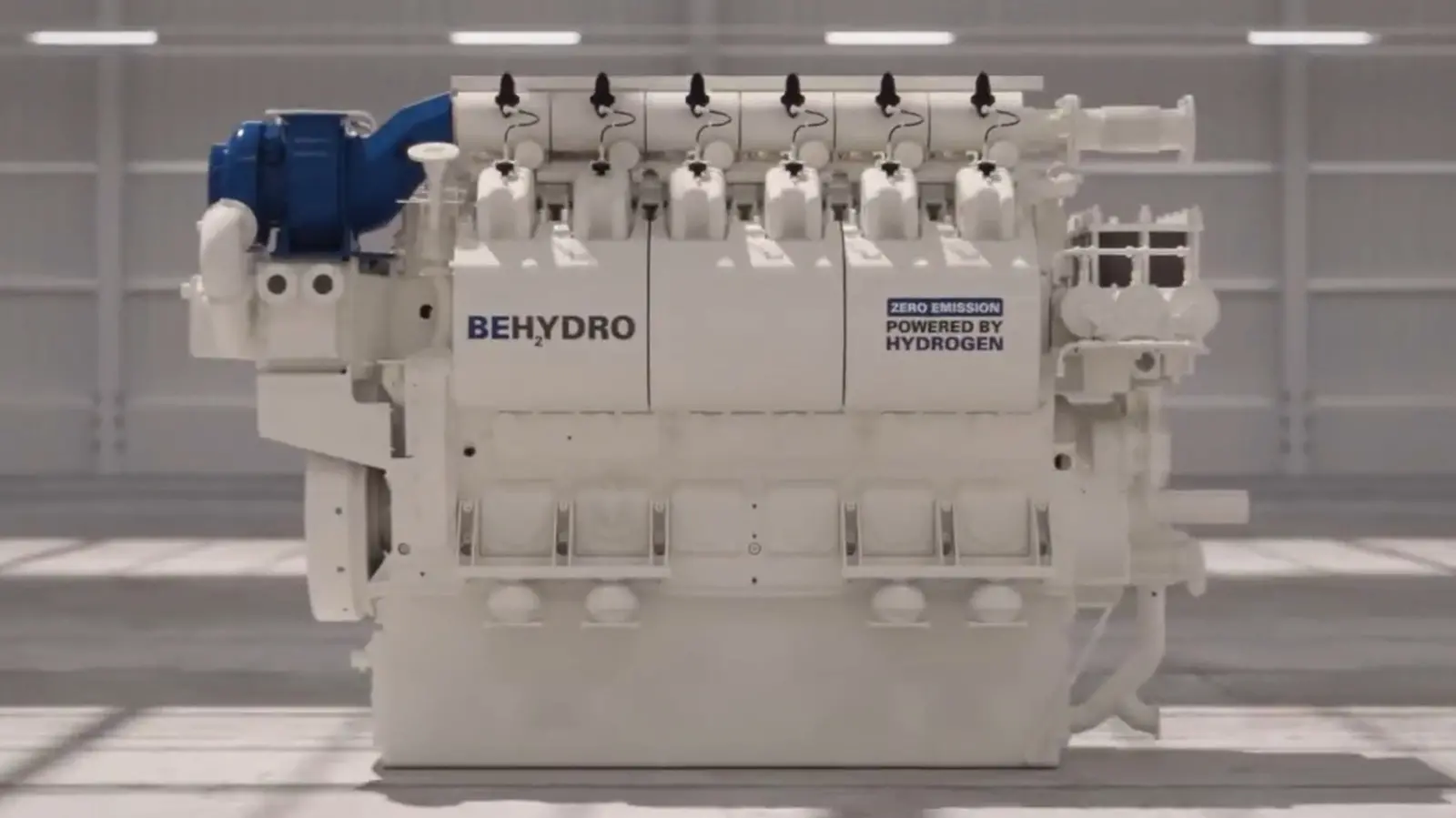
BeHydro, a partnership between the Anglo Belgian Corporation (ABC) and Compagnie Maritime Belge (CMB), has developed the world's first 100% hydrogen marine engine. This spark-ignited engine runs exclusively on hydrogen, eliminating the need for a secondary fuel like diesel that many hybrid systems require as a combustion catalyst. On June 24, 2026, Lloyd's Register, a leading international classification society, awarded BeHydro's engine a Type Approval Certificate. This certification confirms that the engine meets rigorous safety, performance, and reliability standards for use in marine environments. In essence, the engine is now deemed ready to safely power vessels in commercial shipping operations.
Achieving Type Approval is a significant engineering feat. The engine, available in variants generating between 1,000 and 2,670 kilowatts, can serve as either a primary propulsion system or an auxiliary power source aboard fossil-fuel ships. While diesel engines can still deliver higher power outputs, hydrogen technology is advancing rapidly. Recent research has produced hydrogen engines with efficiency levels reaching 60% and performance comparable to diesel. This progress positions hydrogen as a viable competitor in the race to decarbonize the shipping industry, which accounts for roughly 3% of global greenhouse gas emissions.
The Benefits of Hydrogen Combustion Engines
One of the most compelling advantages of hydrogen as a fuel is its cleanliness. When burned in an internal combustion engine, hydrogen reacts with oxygen to produce only water vapor and trace amounts of nitrogen oxides—no carbon dioxide, sulfur oxides, or particulate matter. This eliminates the harmful pollutants associated with conventional marine fuels, contributing directly to cleaner air and a healthier planet. For the shipping industry, which has long faced scrutiny for its environmental impact, hydrogen combustion offers a practical path toward meeting tightening emissions regulations set by bodies like the International Maritime Organization.
Beyond environmental benefits, hydrogen engines can be integrated into existing ship designs with relatively manageable modifications compared to completely new propulsion systems. They also leverage the familiarity and reliability of internal combustion technology, which eases the transition for engineers, crew, and maintenance personnel. BeHydro's engine, built on proven ABC platforms, exemplifies this approach. The company has leveraged decades of experience in medium-speed engines to create a hydrogen variant that meets industrial demands.
Challenges to Widespread Adoption
Despite the promise, several obstacles hinder the mainstream rollout of hydrogen marine engines. The most glaring issue is the lack of refueling infrastructure. Hydrogen refueling stations are scarce, especially in ports, and the logistics of producing, storing, and transporting hydrogen in large quantities remain underdeveloped compared to the entrenched fossil fuel supply chain. Additionally, hydrogen's low energy density at ambient temperature means that ships must either carry significantly more fuel or invest in advanced storage methods such as cryogenic liquid hydrogen or high-pressure tanks. These solutions add weight, cost, and complexity.
Another challenge is the current cost of green hydrogen—hydrogen produced via electrolysis using renewable energy. While cheaper than it was a decade ago, it remains more expensive than conventional marine fuels. However, economies of scale and policy incentives, such as carbon taxes and subsidies, are expected to narrow the gap over time. Moreover, the production of blue hydrogen (from natural gas with carbon capture) offers a transitional option, though it still involves fossil fuels. The long-term goal is a fully renewable hydrogen economy.
Historical Context and Engineering Breakthroughs
The journey of hydrogen engines stretches back to 1807, when Swiss inventor François Isaac de Rivaz built the first internal combustion engine fueled by hydrogen and oxygen. In the 20th century, hydrogen was used in niche applications like rocket propulsion and experimental vehicles. The automotive industry has seen sporadic efforts, such as BMW's Hydrogen 7 sedan in the 2000s, but high costs and infrastructure gaps prevented mass adoption. Meanwhile, in the maritime sector, hydrogen fuel cells have been tested on small vessels, but combustion engines offer higher power density and lower upfront costs for large ships.
BeHydro's achievement builds on decades of research. The company's engineers optimized combustion chamber design, injection timing, and spark ignition to ensure stable and efficient hydrogen burning. They also addressed challenges like knocking (uncontrolled ignition) and material embrittlement, which hydrogen can cause in some metals. The Type Approval process involved extensive testing under real-world conditions, including endurance runs, safety drills, and emissions verification. Lloyd's Register's certification provides independent validation that the engine can operate safely in marine environments without compromising performance or environmental targets.
Implications for the Maritime Industry
The decarbonization of shipping is a global imperative. The International Maritime Organization has set a target to reduce greenhouse gas emissions by at least 50% by 2050 compared to 2008 levels, with aspirations for full decarbonization later this century. Hydrogen combustion engines, alongside ammonia and methanol, are among the leading candidates to replace heavy fuel oil. BeHydro's certificate paves the way for shipyards and fleet operators to consider hydrogen propulsion as a credible option for newbuilds and retrofit projects.
Shipping companies are already exploring partnerships with energy suppliers to secure green hydrogen supplies. Port authorities in regions like Europe, Asia, and North America are investing in hydrogen bunkering facilities. For instance, the Port of Antwerp-Bruges, one of Europe's largest, has committed to developing hydrogen infrastructure. BeHydro's engine, produced in Belgium, fits well into this emerging ecosystem. If scaled successfully, hydrogen could significantly reduce the carbon footprint of global trade, which relies heavily on maritime transport.
As with any nascent technology, the road ahead involves continued refinement. BeHydro plans to work with partners to deploy its engine on pilot vessels in the coming years. These demonstrations will provide critical operational data, helping to optimize fuel efficiency and reliability. Meanwhile, research into hydrogen storage, fuel cell hybrids, and system integration will complement the combustion engine effort. The maritime industry is at a turning point, and BeHydro's hydrogen engine is a beacon of progress. Only time will tell how quickly hydrogen propulsion will become a standard option for vessels around the world.
Source:SlashGear News