

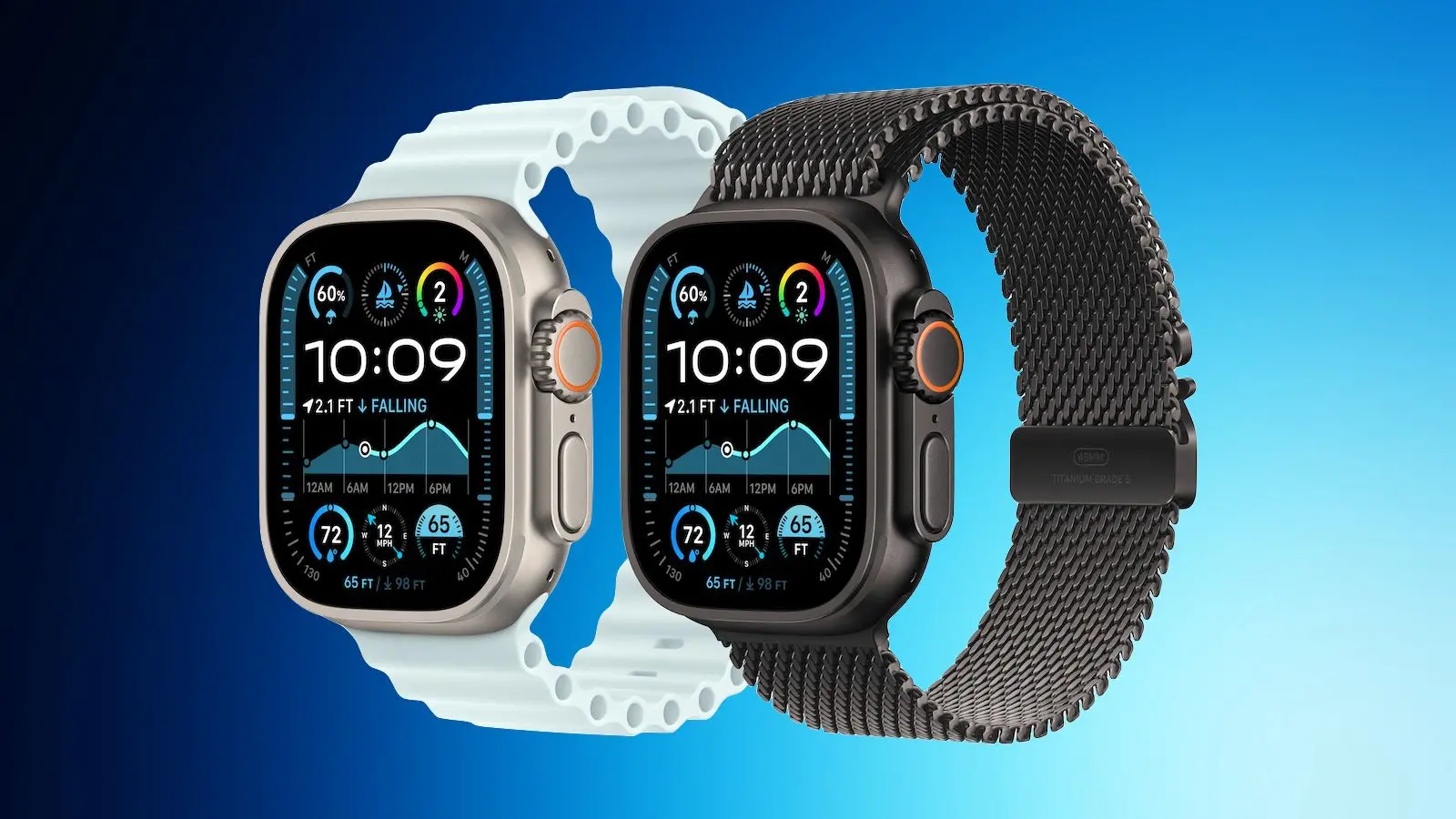
Apple Watch Ultra 4: Headline and Key Facts
Apple has updated its most rugged smartwatch with the fourth-generation Apple Watch Ultra. The Apple Watch Ultra 4 is positioned as the company's most expensive watch, starting at $799, and it is aimed at outdoor enthusiasts, athletes, and adventurers who need more durability, battery life, and specialized features than the standard Apple Watch can provide. The new model arrives at the beginning of its product cycle. Apple refreshed the Ultra line in September 2026, and no replacement is expected until 2027 at the earliest. That makes this a good moment for buyers who want the latest hardware without waiting for another generation.
Key Facts at a Glance
- Starting price: $799.
- Release timing: Refreshed in September 2026; the next model is not expected before 2027.
- Processor: S11 chip with a 64-bit dual-core processor, four-core Neural Engine, and 64GB storage.
- Display: 1,245 square millimeters, LTPO3 OLED, up to 3,000 nits, and 422 by 512 pixels.
- Case: 49mm aerospace-grade titanium in Natural Titanium or Black Titanium.
- Battery: Up to 50 hours; up to 84 hours with Low Power Mode; fast charging gives up to 18 hours from 15 minutes.
- Connectivity: Cellular 5G, satellite communications, Wi-Fi, Bluetooth 5.3, W3 chip, and second-generation Ultra Wideband.
- Health: Improved heart rate sensing, ECG, blood oxygen monitoring, sleep tracking, sleep apnea detection, hypertension alerts, temperature sensing, and a new readiness score.
- Outdoor features: Dual-frequency GPS, depth gauge, Depth app, Tides app, compass, waypoints, backtrack, and an 86-decibel siren.
- Durability: WR100, EN 13319, MIL-STD-810H, and operation from minus 4 degrees Fahrenheit to 131 degrees Fahrenheit.
What Is New in the Ultra 4
The biggest internal change is the S11 chip. Apple describes it as its most powerful wearable chip, and it brings a faster processor, more RAM, and a four-core Neural Engine. The S11 also supports new Audio Intelligence features such as Sound Recognition, Live Rewind, Siri Recap, and Shazam. Live Rewind can show a transcript of the previous 15 seconds of a conversation when the user presses the Digital Crown twice. Siri Recap creates high-level summaries of conversations during the day, while Sound Recognition can alert the wearer to sirens, alarms, doorbells, or a baby crying. These features are opt-in, and Apple says raw audio is processed in a secure hardware compartment and deleted after processing.
The Ultra 4 also adds new gesture controls. A single-handed tap gesture can open a widget in the Smart Stack, while Double Tap can answer calls, open notifications, play or pause music, and control timers. Wrist Flick lets users dismiss incoming notifications and calls with a movement of the wrist. These controls are designed to make the watch easier to use when the other hand is busy, which fits the Ultra's outdoor and athletic focus.
Design, Display, and Durability
The Apple Watch Ultra 4 keeps the same overall design as the Ultra 3. It has a rounded rectangular shape, slim bezels, and a 49mm titanium case that Apple says is built for endurance, exploration, and adventure. The case is made from aerospace-grade titanium, and the black version uses a diamond-like carbon coating for improved scratch resistance. Apple also uses a 3D printing process for the titanium case, building it layer by layer with aerospace-grade titanium powder. The watch is available in Natural Titanium and Black Titanium, both with a satin finish.
The display remains one of the Ultra's defining features. It has a viewable area of 1,245 square millimeters, which is the largest display area on any Apple Watch. The LTPO3 OLED panel reaches up to 3,000 nits of brightness and can dim to 1 nit for dark rooms. The low brightness mode allows for an always-on second hand. The flat sapphire crystal front is more durable than the glass used on standard models, and the raised case edges help protect the screen from impacts.
Durability is a major selling point. The Ultra 4 is certified to MIL-STD-810H, a standard used for military equipment and rugged gear. Apple says testing covers altitude, high and low temperatures, temperature shock, rain, humidity, immersion, sand and dust, freeze and thaw, ice and freezing rain, shock, vibration, and more. The watch works in temperatures from minus 4 degrees Fahrenheit to 131 degrees Fahrenheit. It is also water resistant to 100 meters and certified to WR100 and EN 13319, an international standard for diving accessories. Unlike standard Apple Watch models, it can be used for kitesurfing, wakeboarding, and recreational scuba diving to 40 meters.
Health and Fitness Tracking
Apple has upgraded the health sensing system in the Ultra 4. The watch uses updated optical and electrical heart sensors, larger and more power-efficient green LEDs, a blood oxygen sensor, and a temperature sensor. Apple says the Ultra 4 and the Series 12 offer the most accurate heart rate sensing in a wearable device. The optical heart sensor takes readings every five seconds throughout the day, and heart rate variability is measured more often than before. The heart rate app now shows a continuous heart rate reading and HRV data, including a recovery HRV metric that can identify signs of stress and recovery.
The new readiness score is one of the most notable health additions. Each morning, the watch analyzes recent activity, training load, vitals, and sleep score to produce a 0 to 10 score. The score comes with one of four recommendations: Recover, Pace Yourself, Ready, or Go For It. The score is not static and can change throughout the day as new health data arrives. This gives athletes and active users a clearer picture of how prepared they are for training or recovery.
The Ultra 4 also supports hypertension alerts. Apple says the watch cannot measure specific systolic and diastolic blood pressure, but it can look for patterns in heart rate data that may suggest hypertension. After collecting 30 days of heart rate information, the watch can determine whether patterns related to possible hypertension have been detected. Users who receive an alert can provide seven days of blood pressure testing with a cuff before contacting a doctor.
Other health features include ECG readings, sleep tracking with a Sleep Score, sleep apnea detection, crash detection, temperature measurements, and blood oxygen monitoring. The ECG app uses electrodes in the back of the watch and the Digital Crown to take a single-lead reading in about 30 seconds. Sleep tracking monitors REM, Core, and Deep sleep stages, along with wake time and sleep quality. Sleep apnea detection uses the accelerometer to sense small wrist movements associated with interruptions in normal breathing patterns. Temperature sensing is designed for women's health and can provide retrospective ovulation estimates. Blood oxygen monitoring is available, but in the United States the data can only be viewed on the iPhone because of an ongoing legal dispute. In other countries, the data is available on the watch itself.
Outdoor and Activity Features
The Ultra 4 is built for outdoor sports and exploration. It includes a Depth app that displays current depth, water temperature, duration underwater, and maximum depth reached. Apple has partnered with Huish Outdoors for the Oceanic+ app, which can turn the watch into a dive computer with dive planning, dive metrics, visual and haptic alerts, a no-decompression limit, ascent rate, and safety stop guidance. The Tides app provides information on high and low tides, rising and falling tides, tide height and direction, and sunrise and sunset.
The Compass app includes an analog compass and a digital view of bearing and direction. A scroll of the Digital Crown can show bearing, elevation, incline, latitude, and longitude. Users can drop waypoints with the Action button or the Compass Waypoint option, and those waypoints update in real time relative to the watch's position. The Backtrack feature uses GPS to record where the user has been, making it easier to retrace steps if they become lost or disoriented. The Action button is finished in international orange and can be customized to start workouts, mark segments, set compass waypoints, and more.
The watch includes three built-in microphones and dual speakers. The microphones use beamforming and wind noise reduction to improve call quality outdoors, while the speakers provide louder audio for calls and Siri interactions. An 86-decibel emergency siren can be activated by pressing and holding the Action button or side button. Apple says the siren can be heard up to 600 feet or 180 meters away and uses two alternating patterns, including a distress pattern and the universally recognized SOS pattern.
Battery Life and Connectivity
Battery life is one of the most important upgrades in the Ultra 4. The watch lasts up to 50 hours on a single charge, compared with 42 hours for the Ultra 3. With Low Power Mode and an additional battery-saving option that reduces heart rate measurements during workouts, battery life can stretch to 84 hours for multi-day adventures. The watch can last up to 18 hours with outdoor workout tracking, up to 25 hours in Extended Workout mode with full GPS and heart rate readings, and up to 45 hours in Max Extended Workout mode with GPS readings every second. Fast charging is supported, and 15 minutes of charging can provide up to 18 hours of battery life when using the included charging puck.
All Apple Watch Ultra models include cellular connectivity, but a carrier plan is required to use it. The Ultra 4 supports 5G and is the only Apple Watch with satellite connectivity. Emergency SOS via satellite works without a cellular plan, while satellite messaging and Find My location sharing require an active plan. Satellite features include emergency SOS, text messaging, and Find My updates. The watch also includes a W3 wireless chip, Bluetooth 5.3, and a second-generation Ultra Wideband chip. The UWB chip enables Precision Finding for a misplaced iPhone and supports features such as Car Keys. Dual-frequency GPS with L1 and L5 frequencies provides more accurate distance, pace, and route data, especially in urban environments or areas with trees and obstacles.
Buying Advice and Comparisons
The Apple Watch Ultra 4 is sold alongside the Apple Watch Series 12 and the Apple Watch SE 3. The Series 12 starts at $399 and is available in aluminum, ceramic, or titanium in 42mm and 46mm sizes. Compared with the Ultra 4, the Series 12 lacks satellite connectivity, does not have a siren, has shorter battery life, and uses a smaller and less rugged case. The Apple Watch SE 3 starts at $249 and is Apple's low-cost model. It has an older design and lacks some health sensors, including the blood oxygen sensor and the ECG app. The Ultra 4 remains the choice for buyers who need the largest display, the longest battery life, the most rugged build, and outdoor-specific tools such as the depth gauge, siren, and satellite communications.
For buyers with smaller wrists, the 49mm size may be a concern. The Ultra 4 is the largest Apple Watch Apple offers, and it may not fit everyone comfortably. Those who do not need the Ultra's feature set or who prefer a smaller watch should consider the Series 12. The Ultra 4 is also heavier than the 46mm ceramic Series 12, which is worth considering for all-day wear. Still, for athletes, divers, hikers, and outdoor users who want a single device for training, navigation, safety, and communication, the Ultra 4 is the most capable Apple Watch in the lineup.
What Comes Next
Apple is not expected to redesign the Apple Watch Ultra until 2028 at the earliest. The company is working on noninvasive blood glucose monitoring for a future Apple Watch, but that feature is still several years away. Apple is also considering LG Display's high-mobility oxide thin-film transistor technology for a future Apple Watch OLED display in 2027. Compared with current LTPO technology, high-mobility oxide can increase electron mobility for lower power consumption. A future Apple Watch could also include Touch ID, though it is unclear whether it would be placed under the display or integrated into the side button. For now, the Ultra 4 represents the current high point of Apple's rugged wearable line, combining titanium durability, long battery life, satellite safety features, and advanced health tracking in a single device. The next major design change is not expected before 2028, and noninvasive glucose monitoring remains several years away.
Source:MacRumors News