

Google will let you distribute vibe-coded Android apps with just a Google account
Key facts:
- Google Play will let people publish vibe-coded Android apps with only a Google account, without a paid developer account.
- The option rolls out to users 18 and older in the US and select markets.
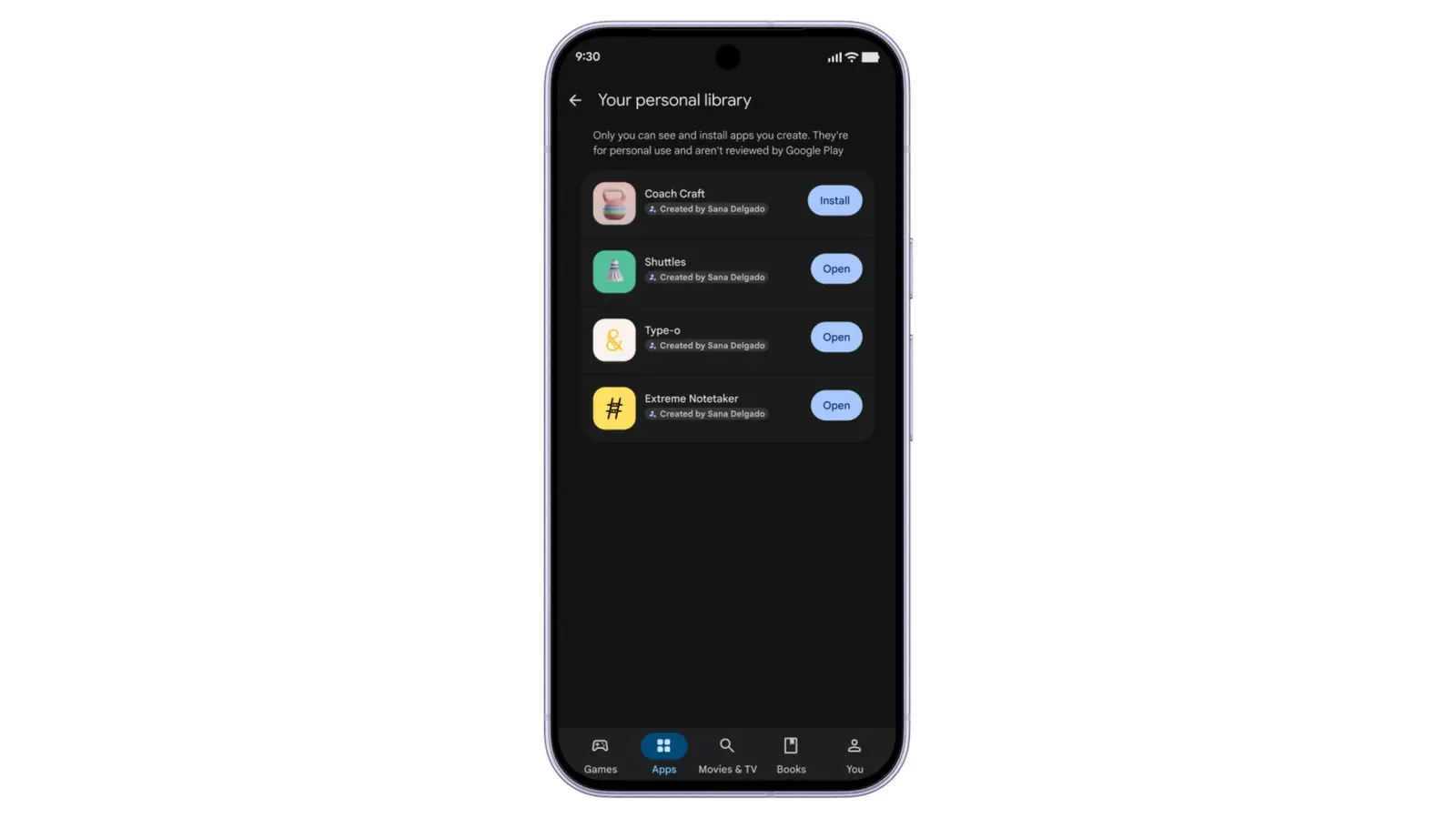
- Apps made in Google AI Studio will first appear in a personal library only on the creator's own devices.
- Google plans secure sharing with friends and family and a path to a professional developer account for global distribution and safety reviews.
- Play Store updates include AI-driven discovery, sports topic pages, layout changes for cars and Android XR, and gaming features such as Game Finder, Gamer DNA, playlists, Sidekick clips, Sprints, Community Posts, and Quests.
Google has announced a significant expansion of how Android apps can reach users. Under a new Play Store publishing process, anyone who uses AI tools to vibe code an Android app will be able to distribute it with just a Google account. The change removes, at least initially, the requirement for a paid developer account and opens app distribution to a much broader group of creators. It is part of a wider set of updates to the Play Store that touch publishing, recommendations, sports content, in-car experiences, extended reality, and mobile gaming.
The new publishing route is designed for apps generated with Google AI Studio. That service can create applications from a written prompt to Gemini, and creators can refine the result with additional prompts or by editing the generated code directly. Instead of sideloading APK files, which has become more complicated over the past year, users will be able to upload a vibe-coded Android app through Google's own pipeline. The feature will roll out in the United States and other select markets to users who are 18 years and older.
At first, the app will not be available to the public. It will live in a new "personal library" section and will only be accessible on the creator's own devices. That includes tablets and computers that can access the Play Store. The personal library approach gives creators a controlled space to test and use their own AI-generated apps without exposing them to the wider world. Google has said it eventually plans to let users securely share their vibe-coded apps with friends and family. For creators who want a global audience, Google says it will be possible to "graduate" to a professional developer account and submit apps to the Play Store's normal safety reviews.
This is a notable shift because the Play Store has traditionally been a curated marketplace with formal developer registration, identity checks, fees, and policy enforcement. Android has always allowed sideloading, which lets users install apps from outside official channels. But sideloading is not the same as publishing through the Play Store. It requires users to find and trust an APK, manage permissions, and often bypass warnings. By letting AI-generated apps enter the Play Store ecosystem through a simpler account-based process, Google is lowering the barrier between creation and distribution. The company is also responding to a market where AI coding tools are making it possible for non-developers to build simple applications.
Why publishing with a Google account matters
The traditional path to Google Play distribution involves a developer account, a one-time registration fee, and compliance with a long list of policies. Those requirements exist to reduce spam, malware, impersonation, and fraud. They also create friction for hobbyists, students, and people experimenting with AI-generated code. The new system appears to split the difference. A creator can use a standard Google account to publish to a personal library, then choose whether to move into the professional developer program when they want broader distribution. That two-tier approach could keep casual experimentation separate from the public store while still offering a bridge to full publishing.
For Google, the benefit is strategic. AI-assisted development is becoming a core part of its product story, and AI Studio is one of its main vehicles for turning prompts into working software. If users can generate an app and then publish it through the Play Store with minimal friction, the company makes its AI tools more useful and more sticky. It also creates a pipeline of new apps that might eventually become formal Play Store titles. At the same time, Google must balance openness with safety. Vibe-coded apps may contain bugs, security flaws, or unintended behavior. A personal library limits exposure, while secure sharing and professional review create layers of oversight before an app reaches a global audience.
App discovery gets more AI and more sports
Beyond publishing, Google is changing how people find apps on the Play Store. The company already introduced Ask Play at its 2026 I/O conference, described as one of its biggest changes to app discovery. Now it is bringing similar capabilities to Gemini. The AI assistant will be able to surface direct links to Play Store apps inside chats, which means a conversation about a task, hobby, or problem could lead directly to a relevant app listing. That could shorten the path from intent to install and make Gemini a new front door for app discovery.
Google is also expanding sports topic pages in the Play Store. These pages appear during live matches and will now cover soccer games from the Premier League, Major League Soccer, and other competitions. For users watching a game, the Play Store may become a place to find related apps, games, or content in real time. In cars with Google built-in and on Android XR devices, Google is updating the Play Store layout so it better fits the size of the physical or virtual screen. That matters as Android expands beyond phones into vehicles and headsets, where app discovery needs to work across very different form factors.
New gaming features and developer tools
For people who mainly use the Play Store to find games, Google is adding a Game Finder feature. It recommends titles based on a user's unique taste. The recommendations are powered by what Google calls Gamer DNA, a taste profile that users can fine-tune with preferences and favorite genres. During a press roundtable, Google suggested it hopes to make filters and genre tags increasingly granular. That could eventually allow players to search for very specific attributes, such as games that offer controller support. Google is also introducing game playlists, which let users recommend a collection of mobile games for other people to try.
The playing experience on Android is getting updates as well. The Sidekick overlay now has a feature that can record 30-second clips of gameplay, making it easier to capture and share highlights. Developers are receiving a collection of new tools intended to increase engagement. These include Sprints, Community Posts, and an expansion of Quests. Sprints are 48-hour in-game challenges that match players of similar skill levels to compete for the highest score. Quests previously allowed developers to reward players with Play Points, and now they can also provide in-game rewards. Community Posts adds a Q&A section to store pages so players can ask and answer questions about games directly in the Play Store.
The bigger fight over app distribution
The changes arrive as Google faces legal and regulatory pressure to open the Play Store to competitors. Third-party app stores can now be installed through the Play Store in some markets, which means Google is no longer the only gateway for Android software. At the same time, the company is trying to keep its own store competitive by injecting AI into discovery, publishing, and gaming. The vibe-coded app publishing plan is a direct response to a world where AI can generate software quickly and where users may expect to distribute what they make without jumping through traditional developer hoops.
That does not mean the Play Store is becoming an anything-goes marketplace. The personal library is private by default, and global distribution still requires graduating to a professional developer account and passing safety reviews. The structure suggests Google wants to encourage experimentation without flooding the public store with unreviewed AI-generated apps. The success of the approach will depend on how well Google can verify creators, detect harmful code, and prevent spam while still making the process feel simple. It will also depend on whether users trust AI-generated apps enough to install them, share them, and recommend them.
The broader Play Store updates show how Google is trying to remake its app marketplace for an AI era. Publishing becomes more accessible, discovery becomes more conversational, sports and live events become more integrated, and gaming gets more social and personalized. For developers, the message is that the Play Store is changing quickly. For users, the message is that the apps they see and the ways they find them may soon be shaped by AI recommendations, personal taste profiles, and a new category of apps built from prompts. The helpfulness of these features will depend heavily on faith in AI's ability to build apps and offer recommendations. But they are a clear sign that Google is trying to stay competitive with third-party app stores and with a new generation of AI-assisted creators.
Source:Engadget News