

Google’s Perspective API is set to disappear on December 31, and any moderation pipeline still calling the service will fail the next day. The shutdown leaves platforms, publishers, marketplaces and community operators scrambling for a replacement for one of the most widely used tools for scoring online comments for toxicity. Hindsight AI is using that deadline to pitch a different kind of migration: not just a like-for-like model swap, but a specialized moderation system backed by a $1 million professional guarantee against documented harm caused by content its model misses.
Key Facts
- Perspective API shuts down on December 31; pipelines calling it will fail starting January 1.
- Hindsight AI is offering up to $1 million in financial support if its model labels a post Safe and that post causes a documented liability event.
- The company says its system detected 97.9% of coded-language cases in a benchmark of 2,205 real online posts, while other models scored 65% and below.
- Hindsight uses three classes — Red Flag, Yellow Flag and Safe — instead of a binary safe-or-unsafe system.
- The system was pre-trained on 110 languages and is built on three specialized base models, each with fewer than 600 million parameters.
- The company is capping its launch cohort at four commercial clients to allow custom calibration against each platform’s policies and risk profile.
A deadline that forces a harder question
Most organizations will treat the Perspective shutdown as a routine engineering ticket: find another vendor, redirect API calls, retest the pipeline, move on. Hindsight argues that the forced migration should instead prompt a harder question. Was the old tool delivering accurate protection in the first place? Perspective scores how toxic a comment sounds on the surface. That approach works reasonably well on obvious insults and explicit abuse. It performs poorly on language designed to look harmless, which is precisely where bad actors have shifted their efforts.
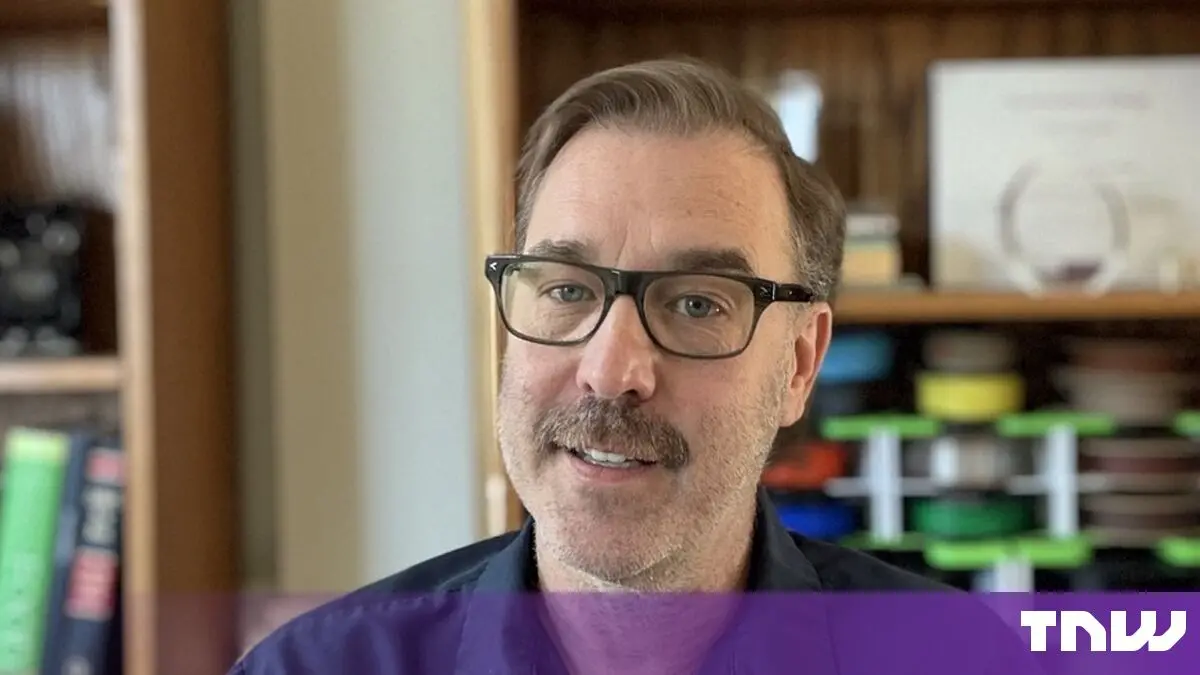
Hindsight’s founder, Dean Gebert, describes coded language as the new slur, but one that is ridiculously hard to catch consistently. A simple model or tool swap, he argues, only moves Perspective’s blind spots to a different vendor. The company is positioning its system as a way to catch the content that surface-level toxicity scoring tends to miss, while giving enterprise buyers a financial backstop if the system fails in a documented way.
Coded language and the limits of surface scoring
Perspective was built to score whether a comment sounds toxic. That works on familiar insults and overt harassment. It struggles with language that is engineered to appear harmless while carrying extremist, hateful or harassing meaning. Bad actors know this. They use numeric codes such as 1488, extremist slang such as boogaloo, swapped characters often called l33tspe@k, and misspellings that mimic a slur’s phonetic sound, such as phag. These signals can appear in forums, posts, comments, bios, direct messages, printed material and other places where moderation teams are expected to maintain safe environments.
The challenge is not limited to English. Even a platform that serves only US users will often host posts in Spanish and dozens of other languages, so coded language travels with those communities. Hindsight says it was pre-trained on 110 languages, allowing it to follow coded language across those languages without maintaining a separate model for each one. That matters for global platforms and for smaller communities that cannot staff dedicated moderation teams for every language they encounter.
A forced migration becomes an enterprise audit
The stakes around missed moderation are not theoretical. From 2016 to mid-2022, the Anti-Defamation League found that extremists raised at least $6.2 million across 324 crowdfunding campaigns. More than 30 federal cases against a major gaming platform allege that its safeguards failed young users. Merchandise with white nationalist messaging still appears on major online marketplaces. Behind each of these examples was a moderation system that was supposed to be working. The Perspective shutdown creates an opening for platforms to rethink whether their current systems are actually catching the content that creates liability.
For executives, the choice is not simply between a strict system and a lenient one. Many moderation tools rely on rigid binary logic: Safe or Unsafe. That creates a lose-lose trade-off. Tune the system to be strict, and it floods human reviewers with false alarms on everyday slang. Tune it to be lenient, and it misses the content that creates legal, reputational and safety risk. Hindsight’s three-class approach — Red Flag, Yellow Flag and Safe — is designed to create a middle lane for ambiguous, context-dependent language. Automation can clear the easy cases, allowing human reviewers to spend time on the harder edge cases. Those edge cases can then go back into fine-tuning that client’s instance.
Why context matters in moderation
Gebert acknowledges that these conversations can be uncomfortable, so he uses what he calls a safest example: the word bitch. It can be derogatory or adoring depending on context. Aimed at a person in anger, as in a hostile question about who someone is, it is a clear Red Flag. Between friends, as in a comment about someone being the baddest bitch I know, it is likely Safe. A binary model still cannot reliably tell these apart. The company says consistently sorting contextual text into an accurate Yellow Flag category was extremely painful, requiring equal doses of obsession, stubbornness and caffeine. But the payoff, according to Hindsight, is that clients can rely less on human oversight while getting more accurate results.
What the benchmarks show
Hindsight benchmarked nine AI content moderation models from major providers against a fixed set of 2,205 real online posts. A human labeled each post as Red Flag, Yellow Flag or Safe, and Hindsight’s model variants never saw any of the posts during development or training. On coded language, Hindsight detected 97.9% of cases, while other models scored 65% and below. Its missed-flag rate was 3.3% and its false-alarm rate was 8.2%. The company publishes the full benchmark methodology and results on its website and says companies can test Hindsight with their own data.
The results are also a challenge to the assumption that larger models always perform better. Hindsight does not use one large, general-purpose base model. It builds on three specialized base models, each with fewer than 600 million parameters, and the company says the result outperforms models up to 14 times its size. Gebert describes the approach as more sniper, less shotgun. Its training data is intentionally narrow: 83 MB of real online posts drawn from 18 datasets, roughly the size of 37 Harry Potter books, including 292,000 posts labeled by human reviewers. Across 164 trained variants, the company tracked how each performed and promoted the best variant to Champion.
What the $1 million guarantee changes
Enterprise AI content moderation is typically sold as a cost center. It reduces risk, but few vendors guarantee an outcome. Hindsight is trying to change that. If its model labels a post as Safe and that post causes a documented liability event, the client can receive up to $1 million in financial support, rather than an apology and a patch. For teams facing the December 31 deadline, the practical pitch is simple: replacing Perspective takes a single API call, and Hindsight says it catches the coded language that similar tools were never built to see.
Gebert’s suggested path is to run Hindsight and Perspective side by side for a week, then examine the delta where they disagreed. Those disagreements can show where a toxicity score alone may have been falling short. Hindsight is capping its launch cohort at four commercial clients to allow custom calibration of model instances against each platform’s unique community policies and risk profile. Founder pricing will be offered to that first group. Platforms that want to test the system with their own data can join the launch list, but the company’s immediate focus is on a small number of clients that need a calibrated replacement before the service window closes.
Source:TNW | Contributed News