

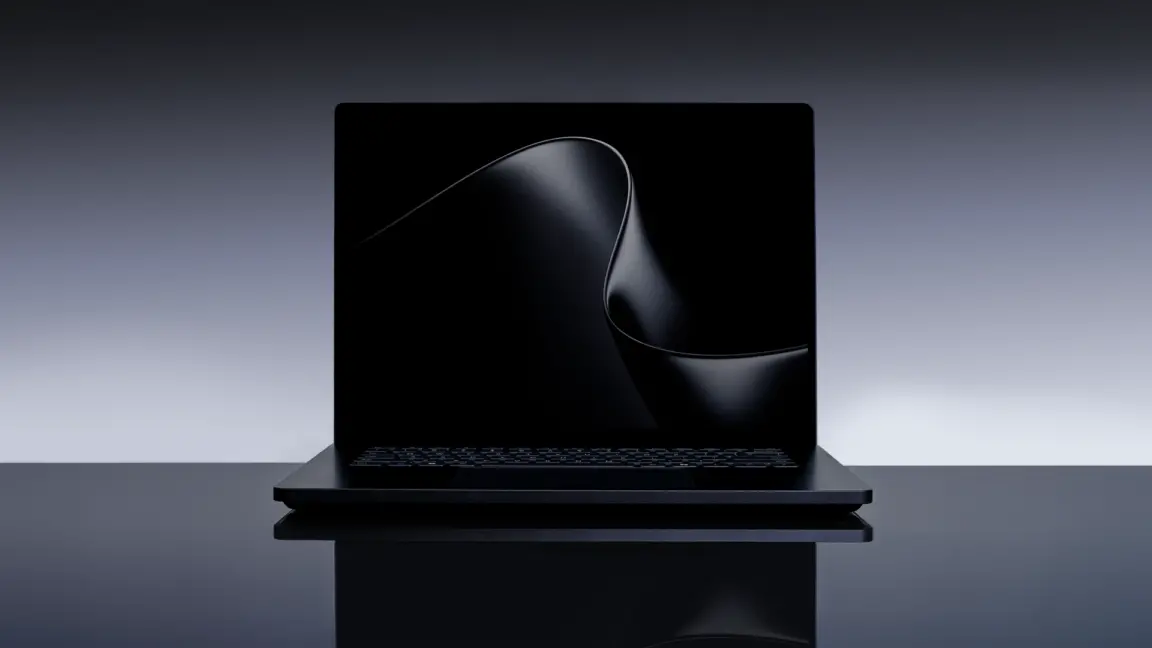
Microsoft returned to a live stage for the first time in two years with a message that personal computing is being reorganized around local artificial intelligence, agentic software, and hardware that runs models close to the user instead of relying entirely on distant cloud servers. The company introduced the Surface Laptop Ultra, a new RTX Spark Dev Box, and a slate of Windows 11 changes that touch Copilot, search, security, and the way applications can allocate memory and compute. The presentation mixed developer-focused specifications with consumer-friendly demonstrations, signaling that Microsoft wants the same AI infrastructure to serve coders, enterprises, and home users.
Key facts at a glance
- Surface Laptop Ultra is Microsoft’s first device using Nvidia’s RTX Spark system-on-a-chip, starts at $2,599, and ships October 16.
- It offers 5120-core or 6144-core Blackwell GPU configurations and up to 128GB of LPDDR5x unified memory.
- The RTX Spark Dev Box costs $5,999, includes 128GB of unified memory, and claims one petaflop of AI compute.
- Windows 11 is getting a redesigned Copilot with Home, Code, and Autopilot tabs.
- Windows Search will gain the ability to execute system-level tasks from the search bar.
- Microsoft Execution Containers provide a sandbox and policy layer for AI agents.
- Hybrid Intelligence emphasizes local AI, memory allocation, and support for frameworks such as llama.cpp plus Deepseek and Nvidia Nemotron models.
Surface Laptop Ultra: a developer-first machine with gaming muscle
After an earlier tease, the Surface Laptop Ultra arrives as Microsoft’s first product built around Nvidia’s RTX Spark system-on-a-chip. The starting price is $2,599, and the laptop will be offered in multiple SoC and memory configurations. Buyers can choose between a 5120-core or 6144-core Blackwell GPU and up to 128GB of LPDDR5x unified memory. Preorders are open now, and shipping is scheduled to begin on October 16.
Although the machine is clearly aimed at developers, Microsoft spent time demonstrating graphical performance to show that the hardware can handle more than model training and inference. By relying on unified memory allocation instead of the physical VRAM limits of a traditional GPU, the laptop can assign resources across modern gaming tasks, local AI development, and deployment. The company showed Gears of War: E-Day running on the system, an illustration that AAA games may be viable even without a conventional gaming GPU. That flexibility could appeal to developers who want one machine for coding, testing agents, and entertainment, though the high entry price will limit its audience.
The emphasis on unified memory is important because local AI workloads often need to move large models and data sets between CPU and GPU. A pool of memory that can be shared rather than divided into fixed VRAM and system RAM can simplify some workflows and allow larger models to run on a single device. It does not eliminate performance trade-offs, and software still has to manage memory carefully, but it gives Microsoft a clearer story for why a premium laptop should be treated as an AI workstation rather than a conventional notebook.
RTX Spark Dev Box: a compact workstation for frontier developers
Microsoft also unveiled the Surface RTX Spark Dev Box, a $5,999 anodized aluminum black box designed for frontier developers. The company described it as a system built to meet the needs of developers working at the edge of AI research and deployment. It ships with a custom developer-optimized build of Windows 11 that is pre-configured for AI development and local AI use. The box includes 128GB of unified memory and an onboard Nvidia RTX GPU, and Microsoft claims one petaflop of AI compute performance, which equals 1,000 teraflops.
Nvidia’s Jensen Huang and Microsoft CEO Satya Nadella joined the stage, while President of Windows and Devices Pavan Davuluri introduced the device. Its design is unusually sleek for a developer workstation. The unit looks more like an Android TV box or a game console than a traditional desktop PC, and the vent pattern on top is reminiscent of the Xbox Series X. According to Microsoft’s press materials, the RTX Spark Dev Box has 1,000 chassis air vents as a nod to its 1,000 teraflops of AI performance. The industrial design may help the device fit into a living room or studio, but the name and price make clear that it is not intended for casual buyers.
Windows 11 gets deeper AI integration
Beyond hardware, Microsoft outlined a host of changes headed for Windows 11 this fall. OS builds featured on the Surface Ultra and Spark Box will arrive with an updated Windows software suite designed to support local model testing out of the box. The broader Windows ecosystem will see related features roll out over time, with Copilot and search receiving the most visible changes.
Copilot overhaul
Microsoft’s built-in Windows AI, Copilot, is getting a major overhaul. The new layout divides the experience into three tabs. Home is a starting place where users can interact with large language models. Code is the space where Microsoft claims that users with no previous coding experience will be able to prompt their way to developing widgets and Windows applications. Autopilot is the tab for interacting with AI agents, and it is where users will oversee their agentic bot tasks. The structure suggests that Microsoft wants Copilot to become less of a single chat box and more of a control center for model access, lightweight development, and delegated work.
The Code tab is likely to draw the most scrutiny. Microsoft is promising that non-programmers can describe what they want and receive functional Windows widgets or applications, but the quality of such output will depend on the models, the guardrails, and the debugging tools provided. For experienced developers, the tab could serve as a fast prototyping environment, while for beginners it could lower the barrier to entry. The risk is that generated code may be insecure, inefficient, or difficult to maintain, which is why the surrounding security story matters as much as the prompt interface.
New Windows Search experience
A new Windows Search experience is coming to Windows PCs later this year. The update will allow users to execute system-level tasks directly from the search bar. Instead of opening Control Panel to adjust display settings, a user will presumably be able to describe the action they want and have the system execute it directly from the taskbar tray. That sounds convenient, but it also turns search from a tool for finding files and apps into an interface for changing system state. Microsoft will need to make clear when a request will be executed, how users can undo changes, and which actions require additional confirmation.
Microsoft Execution Containers
For users who feel uneasy about handing their digital lives and files to AI agents, Microsoft announced the availability of Microsoft Execution Containers, or MXC. The security framework is designed to keep agent activities confined to a sandbox. It is available to developers today, and it allows system administrators and organizations to monitor active agents working within their systems and to set specific guardrails for each one. That gives organizations control over exactly what each agent can access.
MXC acts as a policy layer that directs compute traffic to the appropriate isolation backend. Depending on the workload, MXC can shift to a process container, a session container, a WSL container, or even an experimental hardware-backed isolation called MicroVM. The range of backends reflects the fact that agents may need different levels of isolation depending on whether they are reading files, running code, browsing the web, or interacting with enterprise applications. The framework does not answer every security question, but it gives administrators a vocabulary and a control point for agent deployment.
Hybrid Intelligence
Microsoft is tying the new agentic workflow together with traditional Windows through a concept it calls Hybrid Intelligence. The approach represents a move away from cloud-backed AI solutions and toward local ones. Hybrid Intelligence will allow Surface Laptop Ultra or RTX Spark Dev Box users to allocate memory as they see fit for any specific application. It will also offer native support for local frameworks such as llama.cpp and models from the Deepseek and Nvidia Nemotron families. For developers, that means fewer obstacles to running and testing open models on Windows, and for enthusiasts it means more control over where data and compute reside.
The local-first pitch has obvious appeal. It can reduce latency, keep sensitive data on the device, and allow AI features to work without a constant network connection. It also creates new challenges. Local models must fit within memory and power budgets, updates may be less frequent than cloud models, and users may struggle to understand which model is running and what it can access. Microsoft’s answer is partly hardware, partly software, and partly policy, with MXC providing the isolation layer and Hybrid Intelligence providing the resource-management story.
Security, adoption, and price remain open questions
Microsoft is betting big on local AI with the changes announced at the event, but questions about security and user acceptance remain. The company has faced past missteps around Windows features and recent AI agent mishaps across the industry, and those incidents have made buyers more cautious about giving software permission to act on their behalf. A sandbox and policy layer can reduce risk, but they cannot remove the need for clear consent, audit logs, and reliable recovery when an agent makes a mistake.
The pricing also matters. A $2,599 starting price for the Surface Laptop Ultra and a $5,999 price for the RTX Spark Dev Box place both devices in premium territory. Developers may be willing to pay for unified memory, local model testing, and a Windows environment that supports their existing tools, but they will compare the hardware with workstations and cloud compute credits. Home users will need a clearer reason to upgrade, especially if the most compelling AI features are also available through cloud services or lower-cost devices.
The Surface Laptop Ultra is scheduled to ship on October 16, with preorders open now. The RTX Spark Dev Box and the Windows 11 features will roll out on their own timelines. The first independent reviews and enterprise deployments will show whether the trade-off between local control and premium pricing is acceptable, and whether the new hardware can justify its cost before the broader Windows ecosystem catches up.
Source:Ars Technica News