

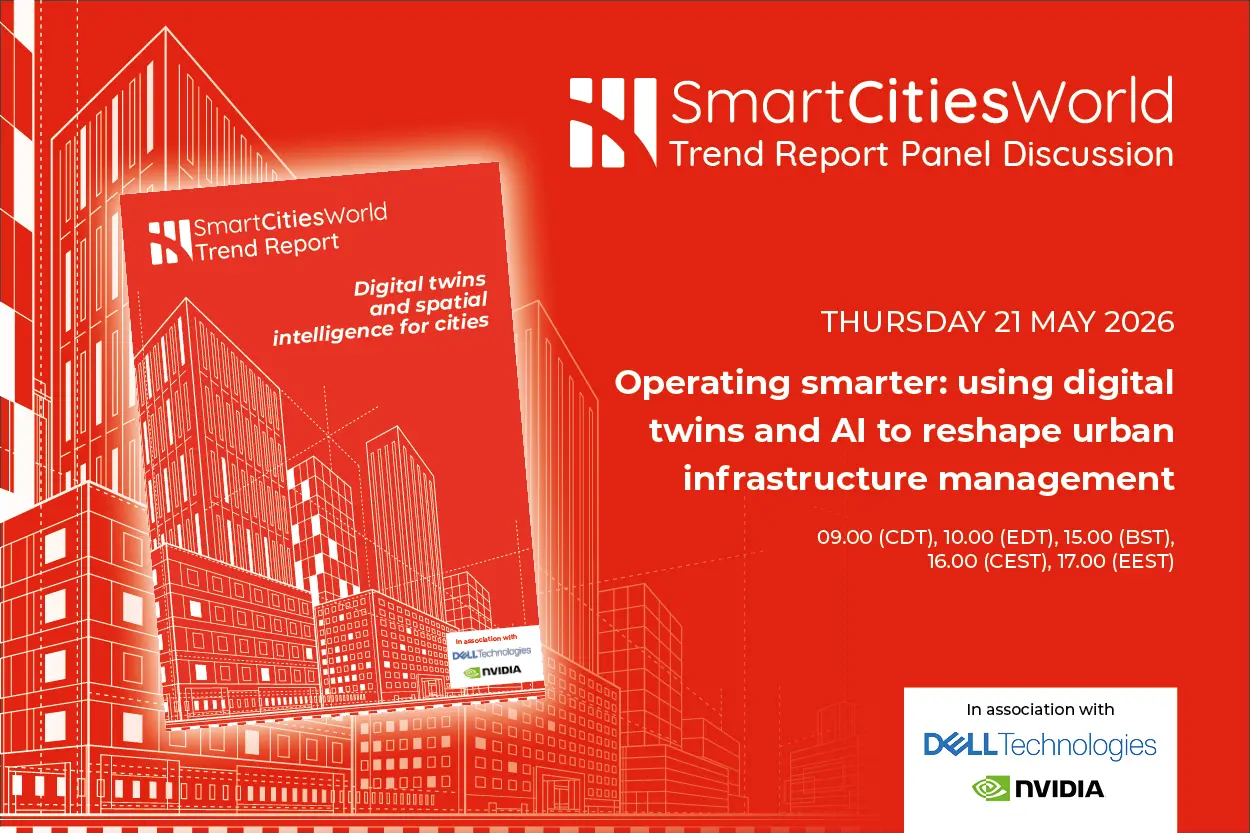
An on-demand trend report panel discussion has brought together urban technology leaders to examine how digital twins, artificial intelligence and edge computing are reshaping the management of city infrastructure. The central message is direct: cities are generating more data than ever, but data alone does not improve services. To operate smarter, local authorities need to turn that data into faster decisions, more responsive services and infrastructure that can adapt to changing pressures.
The discussion focused on practical ways that cities can strengthen workforce decision-making. According to the panel, the most effective approach combines unified data, agentic AI and secure digital foundations. Unified data gives teams a single view of assets, operations and citizen needs. Agentic AI can act on that data with greater autonomy, helping staff prioritise tasks and respond to incidents. Secure digital foundations ensure that automation does not come at the expense of privacy, resilience or public trust.
Key facts from the panel discussion
- AI, edge computing and computer vision can help cities turn growing volumes of urban data into smarter, faster decisions and more responsive services.
- Local authorities can strengthen workforce decision-making by combining unified data, agentic AI and secure digital foundations.
- Cities face combined pressures from climate change, infrastructure resilience and digital transformation.
- A major urban innovation summit during London Climate Action Week will bring together city leaders and partners to explore how these agendas intersect and how strategy can become practical action.
- Malaysia is leading AI-powered urban innovation at the first Southeast Asian smart city expo in Kuala Lumpur.
- Singapore continues to build its reputation as one of the smartest nations in the world.
- Sunderland is repositioning itself as a leading smart city through digital infrastructure and low-carbon innovation, aiming for a resilient, future-focused economy.
- Professor Jung Hoon Lee has explored how AI is moving from pilots to real-world impact in cities worldwide.
- The latest Global Smart City Index highlights an emerging AI super gap between cities.
- Professor Lee argues that the next phase of urban innovation depends on data platforms, AI-ready infrastructure and effective governance.
- Smart sensor networks can improve indoor safety by detecting risks early, improving situational awareness and supporting healthier, more secure and sustainable buildings.
- Gareth Tang, President of Urban Solutions at ST Engineering, explains how urban AI applications are set to evolve, detailing projects where AI is already making significant impact.
- Panel discussions and webinars are examining how to unlock value from buildings, data and AI, and how AI and data are transforming transport operations and services.
- Editorial newsletters continue to pull together city interviews, special reports and guest opinions for urban leaders.
Digital twins become operational tools, not just models
Digital twins are moving from visualisation exercises to operational systems. A digital twin is a virtual representation of a physical asset, network or entire city district. When connected to real-time data from sensors, cameras, maintenance records and traffic systems, it can simulate how infrastructure will behave under different conditions. For urban infrastructure management, this means teams can test scenarios before they happen: a flood, a heatwave, a power outage, a sudden surge in public transport demand.
The panel discussion emphasised that digital twins are most valuable when they are linked to decision-making workflows. A twin that only produces dashboards may look impressive, but it does not change how a city operates. A twin that feeds into maintenance scheduling, emergency response or capital planning can reduce downtime, extend asset life and improve service reliability. This shift requires data models that are consistent across departments, as well as governance rules that determine who can access and act on the twin outputs.
AI and edge computing bring intelligence closer to the asset
Artificial intelligence is increasingly embedded in urban infrastructure. AI models can detect anomalies in water networks, predict equipment failures, optimise energy use in buildings and classify incidents from video feeds. Edge computing supports these applications by processing data near the source, whether that is a traffic camera, a pump station or a building management system. This reduces latency, lowers bandwidth costs and allows cities to respond in near real time.
Computer vision is a particularly active area. Cameras equipped with computer vision can identify blocked roads, illegal dumping, safety hazards or crowding. When combined with edge computing, the analysis can happen on-device, with only relevant events sent to central systems. This approach can improve privacy and reduce the load on city networks. The panel noted that these technologies are not replacements for human judgement. Instead, they give workers better situational awareness and free them from repetitive monitoring tasks.
Agentic AI and the workforce
Agentic AI describes systems that can pursue goals with a degree of autonomy, such as scheduling inspections, dispatching crews or adjusting building systems based on changing conditions. For local authorities, the appeal is clear: many infrastructure teams are under pressure, with ageing assets, limited budgets and growing service expectations. Agentic AI could help prioritise work, automate routine coordination and provide recommendations that staff can approve or override.
However, the panel stressed that agentic AI depends on secure digital foundations. Cities need identity management, access controls, audit trails, data quality checks and clear accountability. Without these, automation can amplify errors or create new risks. The most successful projects tend to start with a specific operational problem, prove value in a controlled setting, and then scale with human oversight. This is how AI moves from a pilot to a trusted part of daily operations.
Climate resilience and digital transformation converge
Cities are confronting climate change, infrastructure resilience and digital transformation at the same time. These are not separate agendas. A digital twin can help a city plan for sea-level rise. AI can optimise cooling in public buildings during extreme heat. Edge sensors can detect leaks in water networks during drought. Secure data platforms can coordinate responses across agencies during a flood. The panel discussion argued that cities need to connect these workstreams rather than treat them as isolated technology projects.
A summit during London Climate Action Week will bring urban leaders and partners together to explore exactly this intersection. The goal is to translate strategy into practical action. That means moving beyond pilots and proving that digital twins, AI and edge computing can deliver measurable improvements in resilience, cost and service quality.
Global momentum: Malaysia, Singapore and Sunderland
The push toward smarter urban infrastructure is global. Malaysia is leading AI-powered urban innovation at the first Southeast Asian smart city expo in Kuala Lumpur. The event signals growing regional ambition to use AI for urban services, mobility and sustainability. Singapore continues to build its reputation as one of the smartest nations in the world, with deep investment in digital infrastructure, data platforms and smart nation initiatives. Sunderland is repositioning itself as a leading smart city, using digital infrastructure and low-carbon innovation to build a resilient, future-focused economy.
These examples show different routes to the same goal: using data and AI to improve how cities operate. Some cities focus on national-scale digital identity and services, while others concentrate on industrial transition and low-carbon growth. In each case, the ability to integrate data across silos is a common success factor.
The AI super gap and the governance challenge
Professor Jung Hoon Lee has explored how AI is moving from pilots to real-world impact in cities worldwide. In a podcast conversation, he discussed the latest Global Smart City Index and an emerging AI super gap between cities. Some cities are pulling ahead because they have strong data platforms, AI-ready infrastructure and effective governance. Others risk falling behind if they cannot connect data, build skills and manage AI responsibly.
Professor Lee argues that the next phase of urban innovation depends on these foundations. Data platforms make it possible to share information across departments. AI-ready infrastructure ensures that computing, networks and sensors can support advanced applications. Effective governance sets the rules for procurement, privacy, transparency and accountability. Without governance, cities may face public resistance or operational failures that undermine trust.
Indoor safety, buildings and transport
Smart sensor networks are improving indoor safety by detecting risks early. Sensors can monitor air quality, temperature, occupancy, smoke, gas leaks and structural vibrations. When integrated with building management systems, they can improve situational awareness and support healthier, more secure and sustainable buildings. This matters not only for offices and public buildings but also for schools, hospitals and transport hubs.
Gareth Tang, President of Urban Solutions at ST Engineering, has explained how urban AI applications are set to evolve. He detailed projects where AI is already making significant impact, from transport operations to infrastructure maintenance. Panel discussions are also examining how to unlock value from buildings, data and AI, while webinars focus on how AI and data are transforming transport operations and services. These conversations reflect a broader shift: cities are moving from collecting data to acting on it.
From data collection to operational intelligence
The panel discussion made clear that the future of urban infrastructure management is not about any single technology. Digital twins, AI, edge computing and computer vision are most powerful when combined. A digital twin can simulate a scenario. AI can predict what might happen next. Edge computing can detect an event in real time. Computer vision can classify what is happening. Unified data can give responders a common operating picture. Secure digital foundations can ensure the system is trustworthy.
For local authorities, the practical steps include building data governance, investing in interoperable platforms, training workforces and starting with high-value use cases. The panel message was that operating smarter is achievable, but it requires deliberate integration. Cities that treat digital twins and AI as standalone projects may see limited returns. Cities that embed them into daily operations can improve resilience, reduce costs and deliver more responsive services.
As urban leaders prepare for upcoming summits and global exchanges, the focus is shifting to implementation. Malaysia, Singapore and Sunderland offer examples of how different cities are approaching the challenge. Professor Lee analysis of the AI super gap adds urgency. Gareth Tang account of evolving urban AI applications shows what is already possible. The next phase will depend on how well cities connect data, AI and governance into everyday infrastructure management.
Source:Smart Cities World News