

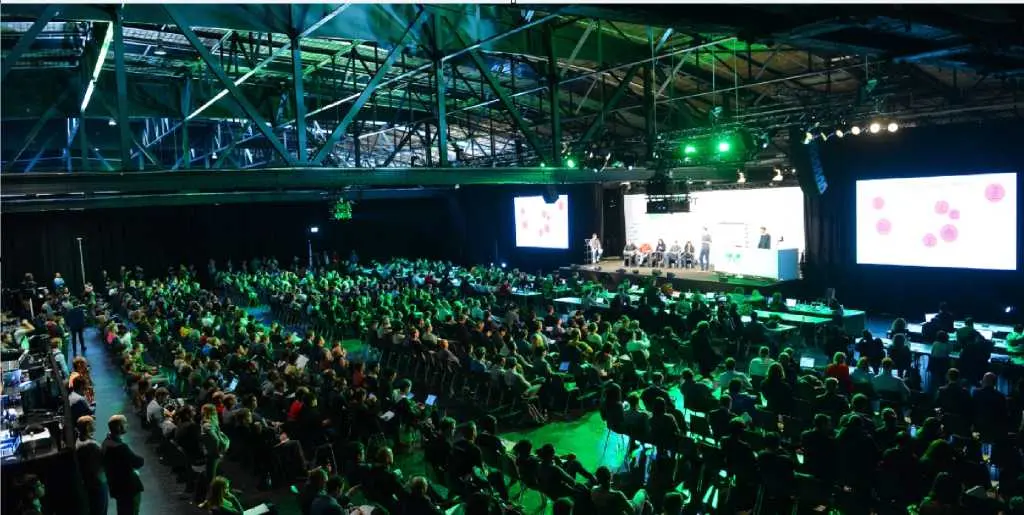
With only three days remaining before a major technology conference opens in San Francisco, the software industry is turning its attention to the next phase of artificial intelligence in software development. The event, scheduled for October 13-15 at the Moscone West Convention Center, will bring together startup founders, investors, AI researchers, software engineers, and technology builders from around the world. Over three days, attendees will have access to more than 200 sessions across six stages, led by more than 250 technology leaders. The central question driving many of those sessions is simple: what will AI do for developers next?
The evolution of AI in coding has been rapid. First, AI provided code completion, predicting lines of code, functions, and boilerplate based on what developers had already typed. Then came code suggestions and code generation, where AI writes new code or improves existing code based on a natural language prompt. Today, coding agents can look at a codebase, suggest improvements, compile and test the improved code, and iterate on that to produce something better, faster, and safer. They can plan, write, test, review, and debug code, and chat with developers about all of the above. They can tackle complex development workflows entirely on their own.
That shift from assistant to autonomous agent is not just a technical curiosity. It is changing how software teams are organized, how code is reviewed, and how quickly products move from idea to deployment. At the upcoming conference, several sessions will examine how AI agents and generative AI are changing software engineering, developer tools, enterprise software, and information security. Others will look at how AI is reshaping SaaS and cloud infrastructure, how companies are building and deploying AI systems, and how AI is driving innovation in finance, healthcare, manufacturing, and other industries.
Key facts about the event
- Dates: October 13-15, 2026.
- Location: Moscone West Convention Center, San Francisco.
- Scale: More than 200 conference sessions across six stages.
- Speakers: More than 250 technology leaders.
- Focus: AI agents, generative AI, software engineering, developer tools, enterprise software, security, SaaS, cloud, and industry applications.
- Featured session: Technical staff from Anthropic will discuss how the company uses fleets of coding agents in its own software engineering work, with practical patterns for delegating agents, reviewing their output, and recovering when they get things wrong.
- Notable companies represented: Amazon, Anthropic, Atlassian, Databricks, Flock, Glean, Google, NVIDIA, Okta, OpenAI, Replit, Runware, Together AI, and others.
The presence of so many AI and software companies reflects how quickly the market has moved. Only a few years ago, AI coding tools were mostly limited to autocomplete. Developers treated them as a convenience, a way to avoid typing repetitive syntax. Now, entire workflows are being delegated to agents. That raises new questions about trust, verification, and accountability. If an agent writes code, tests it, and reviews it, who is responsible when something breaks? How do teams audit the decisions made by an AI system? How do they recover when an agent goes down the wrong path?
Those questions are likely to be central to the Anthropic session. The company, which builds AI models and developer tools, has been using fleets of coding agents in its own engineering work. Its technical staff members Steve Androulakis and Sachin Malhotra will share practical patterns for delegating agents, reviewing their output, and recovering when they get things wrong. Their talk is expected to go beyond hype and focus on the operational realities of working with autonomous coding systems. That includes how to scope tasks, how to evaluate agent output, how to handle failures, and how to keep humans in the loop without slowing down development.
From code completion to coding agents
The progression from code completion to coding agents has happened in distinct stages. In the first stage, AI predicted the next line or block of code. It was trained on large repositories and could suggest common patterns. In the second stage, AI moved from prediction to generation. Developers could describe what they wanted in natural language, and the AI would produce code. That made it possible to prototype faster, but the output still required careful review. In the third stage, AI became more interactive. It could answer questions about code, explain errors, and suggest fixes. In the fourth stage, AI began to act more like an agent. It could plan a task, write code, run tests, review results, and iterate. That is where the industry is now.
The next stage is likely to involve multiple agents working together. Instead of a single coding assistant, a team might deploy a fleet of agents, each with a specific role. One agent could handle architecture, another could write tests, another could review security, and another could manage deployment. These agents could communicate with each other, share context, and coordinate their work. That vision is already being explored by several companies. The conference will provide a snapshot of how far those experiments have progressed and what obstacles remain.
For developers, the implications are mixed. On one hand, AI agents can automate repetitive tasks, reduce boilerplate, and help teams move faster. On the other hand, they can introduce new risks. An agent might generate code that passes tests but has subtle security flaws. It might use outdated libraries or ignore architectural constraints. It might produce code that is difficult for humans to understand or maintain. Those risks are driving interest in new tools for agent oversight, code provenance, and automated review. The conference will feature sessions on these topics, including how AI is changing information security and how companies are building and deploying AI systems responsibly.
What attendees will learn
Attendees at the upcoming event will have the opportunity to learn from technology leaders across a wide range of fields. Sessions will cover what’s next in AI and tech, how AI agents and generative AI are changing software engineering, developer tools, enterprise software, and information security. They will also explore how AI is reshaping SaaS and cloud infrastructure, how companies are building and deploying AI systems, and how AI is driving innovation in finance, healthcare, manufacturing, and other industries. The lineup includes speakers from Amazon, Anthropic, Atlassian, Databricks, Flock, Glean, Google, NVIDIA, Okta, OpenAI, Replit, Runware, Together AI, and many other companies on the cutting edge of AI and software tech.
For software engineers, the most practical sessions may be those that focus on workflows. How do you integrate AI agents into an existing development pipeline? How do you review agent-generated code without spending more time than you save? How do you handle failures when an agent goes off track? How do you measure the impact of AI on productivity, quality, and security? Those are not abstract questions. They are the daily concerns of teams that are already using AI in production. The conference will offer case studies, technical deep dives, and panel discussions that address them.
For startup founders and investors, the event will provide a view of where the market is heading. AI coding agents are attracting significant investment, and new startups are emerging to address every part of the developer workflow. Some are building agents that specialize in specific languages or frameworks. Others are building platforms for agent orchestration, evaluation, and governance. Still others are focused on security, compliance, and observability. The conference will be a place to see which approaches are gaining traction and which are still experimental.
For enterprise technology leaders, the conference will offer guidance on how to adopt AI safely and at scale. Large organizations have different constraints than startups. They need to integrate AI tools with existing systems, comply with regulations, and manage risk. They need to train employees, update policies, and measure return on investment. The sessions on enterprise software, cloud infrastructure, and information security will be particularly relevant. They will explore how companies are building and deploying AI systems, and how they are addressing the challenges that come with them.
Why the timing matters
The timing of the conference is significant. AI is moving quickly, and the software industry is still figuring out how to use it effectively. The first wave of AI coding tools focused on individual productivity. The next wave is about team productivity and organizational transformation. That shift requires new skills, new processes, and new ways of thinking about software development. It also requires a clear-eyed view of the limitations of AI. No matter how capable agents become, they are not a replacement for human judgment. They are tools that amplify human capabilities, for better and for worse.
That is why the practical patterns shared at the conference matter. Delegating work to an agent is not as simple as giving it a prompt and walking away. It requires careful task definition, clear success criteria, and a plan for verification. Reviewing agent output is not the same as reviewing human code. Agents can produce plausible-looking code that hides serious problems. Recovering from agent failures requires a different approach than debugging human mistakes. The Anthropic session is expected to offer concrete guidance on these points, drawing on the company’s own experience with fleets of coding agents.
Beyond the technical sessions, the conference will also be a place
Source:InfoWorld News