

Key Facts
- Wayve CEO Alex Kendall said AI driving will eventually be required in vehicles like seatbelts and emergency braking.
- Kendall spoke with Stellantis CEO Antonio Filosa at an industry event in Turin on Friday.
- Stellantis and Wayve announced a partnership in May to put the Wayve AI Driver into the STLA AutoDrive platform.
- The first launch is targeted for 2028 in North America, offering hands-free, supervised driving.
- Demonstration rides at the event used a Fiat 500e and a Maserati Grecale.
- Wayve aims for hardware costs below $1,000 to reach mass scale.
- Wayve also has a deal with Mercedes-Benz and runs a supervised robotaxi service in London with Uber.
- Wayve has training data from more than 100 countries and has tested in 600 to 700 cities.
- Performance is improving by more than an order of magnitude each year, following scaling curves similar to language models.
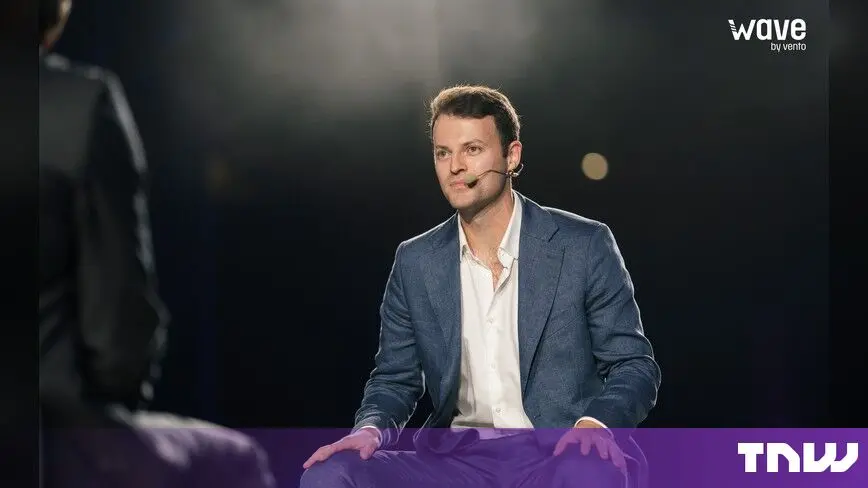
Every car may one day need an AI driving system as standard equipment, just as it needs seatbelts and emergency braking, according to Wayve chief executive Alex Kendall. He made the argument during a conversation with Stellantis chief executive Antonio Filosa at an industry event in Turin on Friday. The two leaders discussed the partnership between their companies, the path from supervised hands-free driving to fully driverless vehicles, and why artificial intelligence is becoming central to automotive safety.
Kendall said the technology is now affordable enough for mass-market cars, and that the status quo on roads is unacceptable. He argued that it is morally wrong not to include some form of intelligence in vehicles that could save lives. His comparison to seatbelts and emergency braking frames AI driving not as a luxury feature but as a safety necessity that regulators and automakers will eventually treat as mandatory.
Stellantis and Wayve Build Hands-Free Driving
Stellantis and Wayve announced their partnership in May. Under the deal, Stellantis is integrating the Wayve AI Driver into its STLA AutoDrive platform for hands-free, supervised driving. The first launch is targeted for 2028 in North America, according to Stellantis. At the Turin event, the companies offered demonstration rides in a Fiat 500e and a Maserati Grecale, showing how the same core AI can be tuned for very different vehicles.
The idea to put the system in the Fiat 500 came from a handshake about five months ago, Kendall said. Wayve tunes the AI to drive in what he described as Italian style. He also said he drove the Maserati on a track in Turin the night before the event, in pouring rain. The anecdote underscored a key point: the AI must handle real-world conditions, not just ideal test environments.
One AI, Many Brand Personalities
Each Stellantis brand will drive differently, Filosa said. Artificial intelligence will make each vehicle a self-learning machine. A Jeep will learn differently from a Peugeot or a Maserati. Customers will feel the difference between a Maserati and a Jeep, Kendall said, though both are built for safety first. That balance between brand identity and safety is one of the central challenges for automakers adopting AI driving systems.
The partnership works because the two sides complement each other, Filosa said. Wayve brings the AI. Stellantis brings brand, vehicle and safety knowledge, and the scale that brings costs down. Stellantis develops a product in 24 months today, and AI can shorten that timeline, he said. Faster development cycles matter because software-defined vehicles require continuous updates and improvements long after a car leaves the factory.
From Supervised to Driverless
Kendall sees supervised driving as a stepping stone to eyes-off and driverless cars, not a separate business. Starting with supervised systems introduces customers to the technology and builds the data needed to improve it, he said. It also gives a head start on supply chains and hardware, which take years to develop in the car industry. The automotive sector cannot pivot overnight, so early deployment in supervised mode creates a bridge to more advanced autonomy.
To go unsupervised, a system must be safer than a safety-conscious human driver, Kendall said. That is a higher bar than an average driver. Wayve has training data from over 100 countries and has tested in 600 to 700 cities. It proves safety in simulation first, using its generative world model, Gaia, before it deploys on public roads. Simulation allows Wayve to test rare and dangerous scenarios at scale, long before a vehicle encounters them in real life.
Hardware Costs and Mass Scale
Wayve wants systems that run on less than $1,000 of hardware so they can reach mass scale, Kendall said. Cost is a critical factor for mass-market adoption. If AI driving remains limited to premium vehicles, it cannot deliver the broad safety benefits that Kendall describes. By targeting affordable hardware, Wayve aims to make the technology accessible to ordinary car buyers, not just luxury customers.
The company also has a deal to put its AI into Mercedes-Benz production cars. It runs a supervised robotaxi service in London with Uber. These deployments give Wayve experience across consumer vehicles and commercial ride-hailing, two markets with different technical and regulatory demands. The Mercedes deal signals that major automakers see AI driving as a differentiating technology, while the Uber robotaxi service provides real-world feedback from paying passengers.
Data, Simulation, and the Gaia World Model
Wayve's approach relies heavily on data and simulation. Training data from more than 100 countries helps the system handle diverse road rules, driving cultures, weather conditions, and infrastructure. Testing in 600 to 700 cities provides additional validation. But public-road testing alone cannot cover every edge case. That is why Wayve uses Gaia, its generative world model, to create simulated environments where safety can be evaluated before deployment.
A generative world model can produce realistic driving scenarios, including rare events that might take millions of miles to encounter on real roads. This is similar to how language models are trained on vast datasets and then improved through targeted evaluation. For autonomous driving, the stakes are higher because errors can cost lives. Wayve's strategy is to prove safety in simulation first, then transfer that validated intelligence to vehicles.
Scaling Like Language Models
Performance is growing by more than an order of magnitude a year, Kendall said. The scaling curves look like those of language models. That comparison is significant. It suggests that AI driving is not improving at a linear rate but at an accelerating pace driven by more data, better models, and greater compute. If the trend continues, the gap between supervised and unsupervised driving could close faster than many industry observers expect.
Kendall wants Wayve to be the intelligence layer for vehicles, and later for robotics too. That ambition extends beyond cars. The same AI that learns to drive safely could be adapted to other machines that move through the physical world. But vehicles are the first target because they are already highly instrumented, increasingly connected, and subject to strong safety standards. Last month, he said Wayve's AI would reach Mercedes cars within two years.
Safety, Regulation, and the Road Ahead
The idea that AI driving will be required like a seatbelt raises important regulatory questions. Seatbelts became mandatory after years of advocacy, evidence, and rulemaking. Emergency braking followed a similar path, moving from optional feature to expected standard. If AI driving is to become mandatory, regulators will need clear safety benchmarks, testing protocols, and accountability frameworks. Automakers will need to prove that their systems are safer than human drivers, not merely convenient.
Kendall's argument is that the technology is already affordable enough for mass-market cars, and that waiting would cost lives. He frames the issue in moral terms: it is wrong not to have some system, some intelligence in the vehicle to save those lives. That framing puts pressure on both industry and government. Automakers that delay may face criticism for prioritizing cost over safety. Regulators that hesitate may be asked why they are not accelerating the adoption of proven safety technology.
Stellantis and Wayve are positioning their partnership as a practical path to that future. The first launch is targeted for 2028 in North America, with hands-free, supervised driving. From there, the companies expect to move toward eyes-off and driverless capabilities. Each Stellantis brand will retain its own driving character, but safety will be the common foundation. Wayve will continue to develop its AI across Mercedes-Benz vehicles, London robotaxis with Uber, and eventually other forms of robotics.
The scale of the challenge is enormous. Roads are unpredictable. Weather varies. Human behavior is inconsistent. Legal systems differ by country. Yet the potential benefits are equally large: fewer crashes, fewer fatalities, and greater mobility for people who cannot drive. Kendall's seatbelt comparison may sound bold, but it reflects a growing belief in the industry that AI driving will not remain a niche feature forever. It will become part of the baseline expectations for every vehicle.
As performance improves by more than an order of magnitude each year, the timeline for unsupervised driving may shorten. Wayve's data from over 100 countries, testing in 600 to 700 cities, and simulation-first safety validation are all designed to support that transition. The company's $1,000 hardware target aims to keep the technology within reach of mass-market buyers. The partnership with Stellantis adds manufacturing scale, brand diversity, and safety expertise. Last month, Kendall said Wayve's AI would reach Mercedes cars within two years.
Source:TNW | Self-driving News