

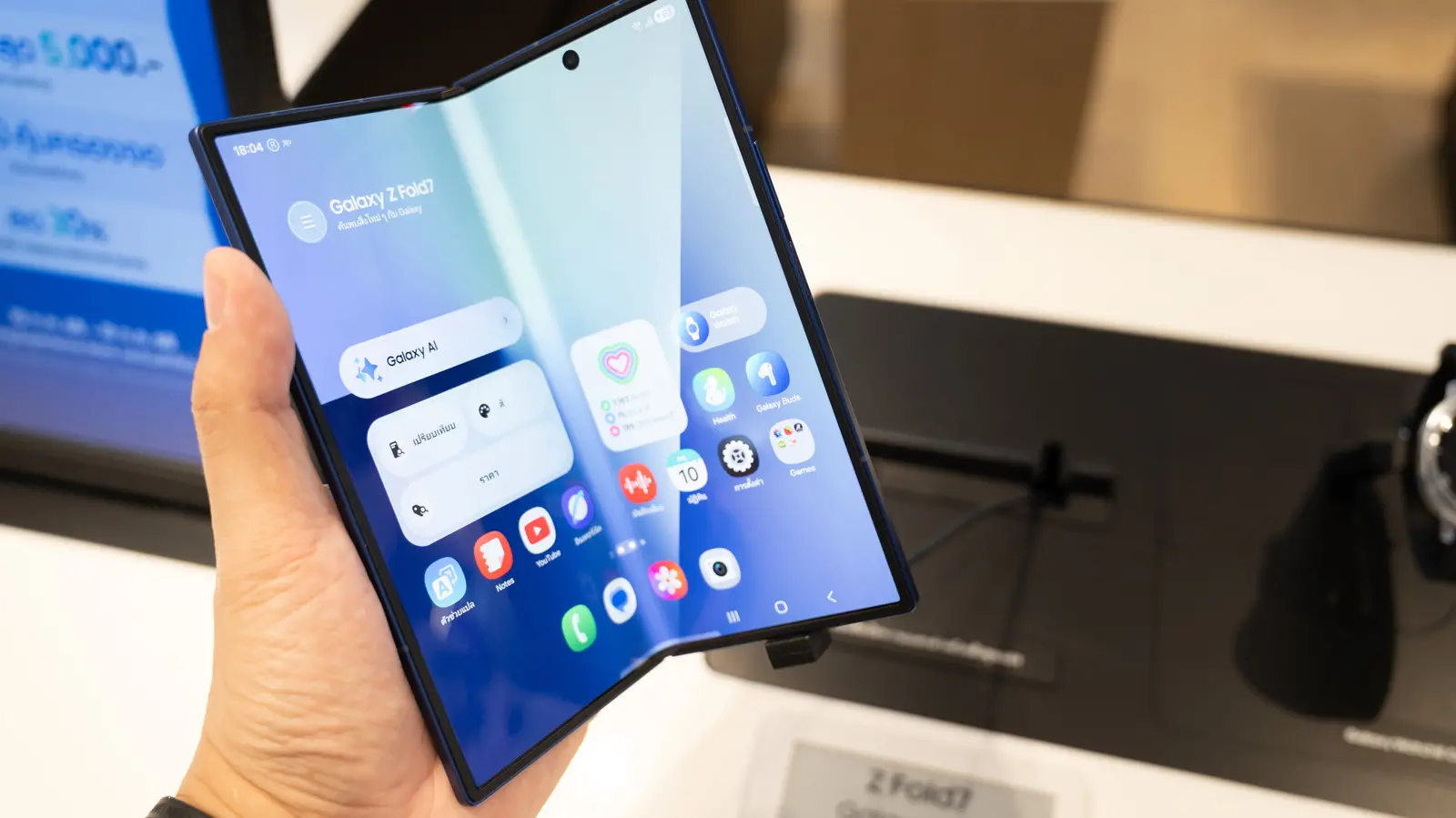
Just like all of our everyday gadgets, cellphone technology has come a very long way. One of the most intriguing innovations in this area is the foldable phone, which changes the game in terms of form factor and portability. An unconventional concept, folding phones are available in both horizontal 'book' and vertical 'flip' varieties. Since their arrival in the mainstream, foldable phones have been quite divisive. Some love them for the dual functionality of the screens, both inside and out, and the versatility they offer. If you have switched to this type of model, though, you'll probably be well aware that the unique setup has its drawbacks too. From the familiar issue of the hinge to the aspect ratio it can force through its screen size and shape, here are some issues that owners of foldable models often report with their phones. If you're considering one, make sure you take these factors into account. They might even be dealbreakers for you.
Hinge Problems: A Delicate Mechanism Under Constant Strain
Just like their classic flip-phone predecessors, modern foldables require a hinge and, as a result, are extremely reliant on it. The phones are designed to perform many 'folds,' but it's still a vulnerable point on any foldable that could immediately prove problematic if it develops a defect. The hinge on any foldable is delicate and can easily be damaged, and it may also become a hotbed of dirt, dust, or other detritus you might encounter. In a Reddit discussion about the durability of the Galaxy Fold in particular, users gave a mixed range of opinions about the system's mechanics and how well it withstands use over time. One user commented that they accidentally dropped their phone in the dirt, and some dirt got into the hinge mechanism, so it would no longer close completely flat as it was supposed to. This is one of those things that's sure to be an annoyance. After all, even the best of us will drop our phones at times, and they can fall at the most awkward angles, whether or not the user has a heavy-duty case.
More sophisticated and hardier hinge systems are contributing to improvements in this area, with Which? reporting in October 2025 that its extensive lab testing (30,000 'folds') was withstood by almost all models it tested. Nonetheless, wear in this area is a constant concern. Manufacturers are experimenting with materials like stainless steel and advanced polymers to reduce friction and prevent dust ingress. For instance, Samsung's latest Galaxy Z Fold series uses a dual-rail hinge structure with tiny brushes to keep particles out. Still, no design is foolproof. Users report that after several months of use, hinges can develop a slight wobble or produce creaking sounds, which indicates internal wear. The hinge is also often the most expensive component to repair if it breaks, sometimes costing several hundred dollars out of warranty. For those who rely on their phone daily, this vulnerability remains a significant worry.
The Division in the Middle of the Screen: The Persistent Crease
There are some excellent folding smartphones you can buy, but switching to one is sure to be an adjustment. There's a fundamental difference in the way they're designed, after all, because the model will need to make compromises in order for its folding feature to work. You'll typically notice it develops a pronounced bend or screen crease in the center. This mark begins to develop as the phone performs fold after fold, because it's a fact of the design that the materials will show wear to some extent. The seam in the middle of the screen gradually forms as slow but steady stress builds up in the flexible materials that make up the display. Because these screens are softer than standard glass, they are also more susceptible to other light surface damage, such as scratches. This is a design issue that manufacturers find difficult to mitigate (though progress has been made), because any attempt to do so can mean a compromise elsewhere.
For many owners, the crease is more of an aesthetic issue, but it's sure to be a prominent one. After all, the core appeal of a foldable model is the ability to use a wide, open screen, and any imperfection, such as a dead pixel, can be a minor nuisance or a deal-breaker depending on the user's preferences. After prolonged use, the crease can become very objectionable. Some users report that the crease is visible even when the screen is off, casting a shadow that ruins the look of the device. When watching videos or reading text, the crease can create a subtle distortion, especially at certain viewing angles. Manufacturers like Huawei and Motorola have introduced ultra-thin glass (UTG) layers to reduce the prominence of the crease, but it hasn't been eliminated entirely. The crease is an inherent trade-off: the flexibility required for folding means the screen cannot be made of rigid glass, and any plastic-based layer will eventually develop a memory of its folded state. Future innovations, such as self-healing polymers or micro-hinge arrays inside the display, may eventually solve this, but for now, it remains a common complaint.
The High Price Compared to More Conventional Designs
As we've seen, there are significant pros and cons to models with folding screens. This is to be expected with unconventional technology of this sort. Relatively speaking, it's still in its infancy, which means there are certain limitations to address. It also means, unfortunately, that embracing foldable phones can be very expensive. One Reddit discussion about the Galaxy Fold line in particular suggested an annual rise in complaints about the price of the newest model, tying this to the various complex factors associated with their production. Though the Samsung Galaxy Z Fold7 is a very impressive model, beginning at $1,999.99, there's no doubt that it's a very pricey prospect.
Cost is a primary deal-breaker when making a purchase decision, and it could certainly reduce adoption of new foldable models. Whether the latest foldable model is a worthy purchase is, of course, up to the individual to decide. It's also true, though, that resale models and previous editions are available for those who want to embrace the tech without the cost of a brand-new flagship. But even older models, like the Galaxy Z Fold3 or Fold4, still carry a premium price compared to standard flagship phones of the same era. The high cost stems from the expensive components: the flexible display, the multi-axis hinge, the additional battery, and the dedicated internal and external screens. Additionally, foldable phones require more complex assembly and quality assurance, which drives up manufacturing costs. The market for foldables is still relatively niche, so economies of scale have not yet brought prices down. Some analysts predict that as more brands enter the foldable space and competition increases, prices will gradually drop, but for now, consumers must pay a significant premium for the folding form factor.
The Aspect Ratio Issue: Black Bars and Crooked Content
Sometimes, users might find that a larger phone lacks the usable screen real estate they expected due to pesky black bars. Because more conventional designs dramatically outnumber foldable models, it makes perfect sense that content is typically designed to adhere to aspect ratios that suit them. Unfortunately for users of foldables, this can mean that models often have square-shaped screens, particularly on the interior. As those experienced with classic games consoles on modern TVs will know, though, some aspect ratios translate poorly. In another Reddit discussion about the practicality of foldable phones, several potential users lamented another major bugbear of the design: the unsightly, vision-limiting black bars along the top and bottom of the display when watching standard widescreen video. This can be the very worst thing for those who want their phones as media machines. It's certainly dependent on the type of media and the specific apps and content you consume, because some types will be better suited to or adapt better to the aspect ratio than others.
Overall, though, it's an important issue that many different types of foldable models can share and that customers need to bear in mind. The other complicating factor is that, because such models have screens on both the inside and the outside, they differ in how they display content. On a device like the Samsung Galaxy Z Fold, the outer cover screen is narrow and tall (roughly 23:9), while the inner unfolded screen is nearly square (around 1.1:1 or 4:3). This means that apps optimized for standard 16:9 or 18:9 ratios may appear stretched or cropped on one of the screens. Many Android apps are not yet optimized for foldable displays, leading to inconsistent experiences. For example, Instagram Stories might be cut off at the edges on the inner screen, while video streaming services like Netflix might add black bars on top and bottom when using the full inner display. Some users circumvent this by zooming in to fill the screen, but that crops out portions of the video. The aspect ratio also affects gaming, with many mobile games designed for tall screens leaving large empty areas on the sides of a foldable's inner display. As foldable adoption grows, developers are beginning to update their apps, but the fragmentation remains a significant hurdle.
Beyond media consumption, the aspect ratio also impacts productivity. Split-screen multitasking on a foldable can be excellent, but if two apps are each designed for a different ratio, the combined layout may feel cramped or uneven. Some users report that the square inner screen is excellent for reading PDFs or viewing documents, but less ideal for browsing websites that expect a vertical scroll. These usability quirks are part of the adjustment period for new foldable owners. While manufacturers have added software features like app continuity that seamlessly transition content from the outer to inner screen, the aspect ratio mismatch remains a fundamental challenge of the form factor. Until more content and apps are redesigned specifically for foldable screens, users will continue to encounter black bars and odd layouts. This issue underscores that foldable phones, despite their promise, are still a work in progress in terms of ecosystem maturity.
Source:SlashGear News