

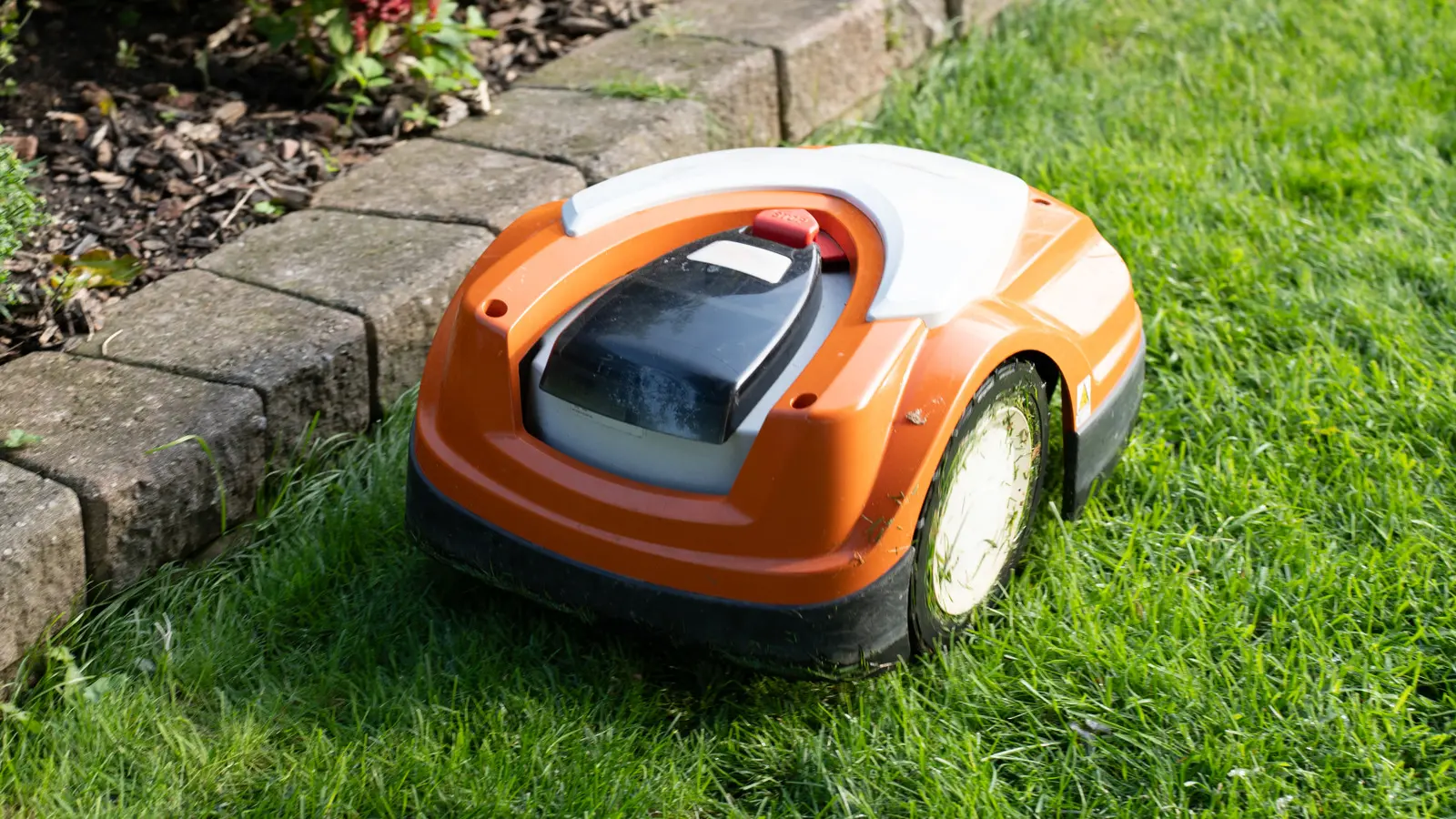
Maintaining a large lawn often means choosing between a riding mower and a robot mower. Riding mowers have been the traditional choice for decades, but robot mowers have advanced rapidly, especially after their prominent showcase at CES 2026. These autonomous machines offer a set-it-and-forget-it approach that riding mowers simply cannot match. Below are five distinct capabilities that set robot mowers apart.
1. Scheduled mowing without human presence
The most obvious advantage of a robot mower is that it does not require anyone to operate it. Riding mowers, as the name implies, need a person to sit on them and steer. Robot mowers, by contrast, can be programmed to mow at any time of day or night, regardless of weather conditions (within limits). Once the lawn is mapped and a schedule is set, the mower handles the rest independently.
However, it is important to understand that robot mowers are designed for maintenance rather than heavy cutting. Traditional mowers typically run once a week and remove a significant amount of grass. Robot mowers excel when they run several times a week, trimming only a few millimeters each time. This approach keeps the lawn consistently neat and avoids the shock of a major cut. Manufacturers advise trimming the grass to no more than 6 centimeters before initial setup, as longer grass can hinder the robot's performance. Most robot mowers use spinning discs with multiple razor blades rather than solid metal blades, which works well for frequent light trims.
The convenience is immense: after setup, the lawn stays at a uniform height all season. The only manual work remaining is trimming edges that the robot cannot access—a task also required with riding mowers.
2. App connectivity for full control
Robot mowers integrate seamlessly with smartphone applications, giving users complete command from anywhere. Through the app, owners can set mowing schedules, start or stop sessions remotely, pilot the mower manually, and even direct it to mow specific sections of the lawn. This is especially useful when the weather changes unexpectedly or when you need to postpone mowing for a special event.
The app also provides real-time status updates: how far into a mow the robot is, whether it is charging, and alerts for blade changes or if the mower gets stuck. Some advanced models even send notifications with photos of obstacles, allowing the user to identify and resolve issues from afar. This level of remote interaction is impossible with a riding mower, which requires physical presence for every operation.
While app connectivity relies on Wi-Fi (and occasionally 4G in premium models), the benefits are substantial. Users can manage their lawn care while traveling or even from another continent, as long as the mower remains connected.
3. Navigating rough terrain and steep hills safely
Riding mowers are inherently unstable on slopes and uneven ground. The risk of rollover is significant, and even a small miscalculation can lead to injury or damage. Robot mowers, being lightweight and low to the ground, can handle inclines up to 20–25 degrees with ease. Many models use spiked wheels or tank-like treads to grip slippery or loose surfaces, allowing them to traverse terrain that would be dangerous for a rider.
This capability opens up lawns with challenging topography that might otherwise require manual trimming with a string trimmer or a specialized slope mower. However, robot mowers are not without their own limitations: they can get stuck on large branches, holes, or other obstacles that a riding mower would roll over. Regular inspection of the lawn to remove potential snags is advisable. Still, for most uneven yards, a robot mower provides a safer and more reliable solution.
Additionally, the absence of a human rider means there is no risk of operator fatigue or distraction. The robot simply follows its programmed route, adjusting to the terrain using sensors and GPS.
4. Built-in string trimmer for edge work
One of the most innovative features appearing on recent robot mowers is an integrated string trimmer, also known as a weed whacker or weed eater. Traditional riding mowers cannot trim along fences, walls, or garden beds; that job typically requires a separate manual tool. Two notable examples are the Yarbo, which offers a string trimmer attachment, and the EcoVacs GOAT A3000 LiDAR Pro, which uses its onboard LiDAR sensor to detect fences and trim right along the edge automatically.
This built-in capability saves significant time and effort. Instead of walking the perimeter with a handheld trimmer after mowing, the robot handles both tasks in a single pass. The EcoVacs implementation is particularly impressive, as it can precisely follow contours and avoid obstacles without human input. As this technology becomes more common, it will further reduce the need for manual lawn care.
For now, only a few models offer this feature, but it represents a clear advantage over riding mowers. Future robot mowers are likely to incorporate similar systems, making edge trimming as automated as the rest of the mowing process.
5. Camera monitoring and security
Many robot mowers are equipped with cameras and vision sensors for navigation. These cameras serve multiple purposes: they help the mower avoid obstacles, and they can also stream live video to the user's smartphone. Some models, like the Dreame A3 AWD, go a step further by capturing still images of potential obstacles and sending them to the app, asking the user to identify what is blocking the path.
This camera feed can double as a basic security feature, allowing owners to check on their property remotely. However, there is a caveat: the mower needs a stable internet connection to transmit images. In larger yards, the mower may occasionally lose Wi-Fi signal, though some premium units include 4G connectivity to maintain contact. The camera quality is typically sufficient for identifying objects, but it is not a replacement for a dedicated security system.
Nevertheless, the ability to see what your mower sees adds a layer of convenience and peace of mind. It also helps troubleshoot problems without walking out to the lawn. Riding mowers offer nothing comparable; their operators must be physically present to monitor the mowing process.
In evaluating these advantages, extensive hands-on testing of over a dozen robot mowers from brands like Segway, Ecovacs, Lymow, Sunseeker, and others has confirmed the reliability and utility of these features. Each mower uses different navigation technologies—LiDAR, GPS, RTK beacons, or pure vision—but the core benefits remain consistent. Meanwhile, research into popular riding mower brands such as Cub Cadet, Toro, and Troy-Bilt highlights the trade-offs in comfort, speed, and cost. Robot mowers are not suitable for every situation; they work best for routine maintenance and smaller to medium-sized lawns. But for those willing to embrace automation, the five capabilities described here make robot mowers a compelling alternative to riding mowers.
Source:SlashGear News